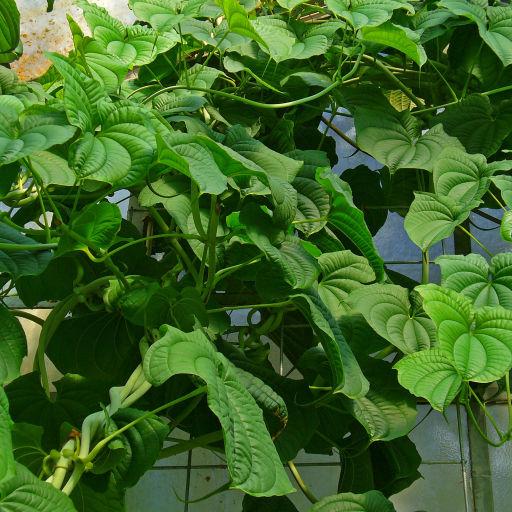
Plant Overview
Known affectionately as the Lesser Yam or Asiatic Yam, Dioscorea esculenta is the sweeter, more delicate cousin of the giant yams found in tropical markets. Unlike its massive relatives that can grow to the size of a human leg, this plant produces clusters of small, potato-sized tubers that are prized for their creamy texture. Native to Southeast Asia, it is a graceful climber that has traveled the world as a reliable "hunger-gap" crop.
🔍 How to Identify
- 🍃 The Foliage: Look for distinctively heart-shaped (cordate) leaves that grow alternately along the stem. The leaves are usually soft and can be slightly hairy on the underside.
- 🧗 The Twining Vine: This is a vigorous climber that twines to the left (counter-clockwise). Unlike many other yam species, the stems of the Lesser Yam are often armed with small, sharp thorns near the base to protect it from foraging animals.
- 🥔 The Tubers: If you dig at the base, you won't find one giant root. Instead, you'll find a cluster of many small, cylindrical tubers with thin, brownish-yellow skin and white or ivory flesh.
🏡 In Your Garden
- 🪵 Need for Height: This plant is a natural athlete. It requires a sturdy trellis, fence, or even a nearby tree to climb. Providing vertical space isn't just for aesthetics; it increases sunlight exposure and prevents the leaves from rotting on damp soil.
- 🥥 Loose Soil is Key: The reason this plant prefers sandy or loamy soil is that its tubers grow in "hands" or clusters. If the soil is too heavy or packed with clay, the tubers will become stunted and difficult to harvest without breaking their delicate skins.
⚠️ Safety & Toxicity
- ✅ Edibility Assessment: The tubers are highly edible and nutritious for humans. However, they should never be eaten raw.
- 🔥 Cooking Requirement: Like many wild yams, raw tubers contain calcium oxalate crystals and minor alkaloids that can cause a "scratchy" throat or digestive upset. Cooking neutralizes these compounds completely.
- 🐾 Pets & Kids: The raw foliage and uncooked tubers are considered mildly toxic to pets. If a dog or cat chews on the raw plant, they may experience mouth irritation or drooling.
✨ Fun Fact
Unlike the common "Greater Yam," the skin of Dioscorea esculenta is so thin and tender that it is often eaten along with the flesh after roasting, earning it the nickname "The Potato of the Tropics."

Detailed Care Instructions
| Humidity | Normal |
| Difficulty | Medium |
| Hibernation | Cold Period |
| Temperature | 23°C - 28°C |
| Hardiness Zones | 8 - 12 |
To grow Dioscorea Esculenta, also known as the air potato or Chinese yam, you can follow these steps:
- Obtain yam bulbs: Purchase or acquire healthy yam bulbs from a reputable source or local garden center. Make sure the bulbs are firm and haven't been damaged.
- Choose a suitable location: Select a sunny or partially shaded location in your garden that receives at least 6-8 hours of sunlight per day. Ensure the soil is well-draining and rich in organic matter.
- Prepare the soil: Before planting, loosen the soil and remove any weeds or rocks. Incorporate organic compost or well-rotted manure into the soil to improve fertility and drainage.
- Planting the bulbs: Plant the yam bulbs vertically or at a slight angle, burying them about 2-3 inches deep. Space the bulbs about 12-16 inches apart to ensure proper growth. Cover the bulbs with soil and gently firm it around them.
- Watering: After planting, water the bulbs thoroughly to settle the soil and provide moisture to the plant. Keep the soil consistently moist but not waterlogged. Avoid excessive watering as it can lead to rotting.
- Support: As the plants grow, you may need to provide them with support structures such as trellises or stakes. This will help the vines climb and provide stability.
- Fertilization: Dioscorea Esculenta benefits from regular fertilization. Apply a balanced, slow-release fertilizer, or use organic options such as compost or well-rotted manure. Follow the instructions on the fertilizer package for dosage and application.
- Weed control: Regularly check for weeds and remove them promptly. Weeds can compete for nutrients and resources, affecting the growth of your yam plants.
- Harvesting: Dioscorea Esculenta requires a long growing season of around 6-9 months. Harvest the yams when the leaves start to turn yellow and die back. Dig carefully around the roots to avoid damaging them.
- Storage: After harvesting, allow the yam bulbs to cure in a warm, dry place for about two weeks. Then, store them in a cool and dark location, preferably at temperatures around 50-60°F (10-15°C). Properly cured and stored yams can last several months.
Remember to check your local regulations regarding Dioscorea Esculenta cultivation, as it can be invasive in some regions. It's important to manage the plant responsibly to prevent it from spreading into natural areas.
Dioscorea Esculenta plant prefers to be watered when the soil becomes slightly dry to the touch, but not completely dry. It is important not to keep the soil too wet as this can cause root rot. To water, gently pour water around the base of the plant, avoiding wetting the leaves. Allow the water to soak into the soil, then drain any excess water from the saucer or tray underneath the pot. The frequency of watering will vary depending on factors such as the size of the pot, the temperature and humidity of the environment, and the intensity of light the plant receives. It is recommended to monitor the soil moisture level regularly and adjust the watering accordingly.
To fertilize the plant, mix a balanced fertilizer into the soil before planting or apply a slow-release fertilizer every month during the growing season. Provide additional nutrients by adding compost or organic mulch around the base of the plant. Be careful not to over-fertilize as this can lead to excessive leaf growth and reduced tuber development. Water the plant well after fertilizing.
The best soil for Dioscorea Esculenta plant is a well-draining, moist, and nutrient-rich soil. The soil should have a pH level of 5.5-7.5. It is beneficial to add organic matter such as compost or aged manure into the soil to improve soil structure and fertility. Avoid using heavy clay soils as it can retain too much water, which can lead to root rot and other problems. It is also recommended to plant the Dioscorea Esculenta in an area with good air circulation and plenty of sunlight.
Dioscorea Esculenta is a member of the Dioscoreaceae family. It is propagated by the process of vegetative propagation. This can be done by taking a cutting from the plant and rooting it in soil or water.
To take a cutting from the plant, select a healthy stem and cut a section that is around 10-15 cm long. Remove any leaves from the lower half of the stem, and dip the cut end of the stem in rooting hormone powder. This will help encourage root growth.
Plant the cutting in a pot with well-draining soil, and keep the soil moist. Place the cutting in a warm and humid location, out of direct sunlight. After around 2-3 weeks, the cutting should have developed roots and can be transplanted into a larger pot.
Another way to propagate Dioscorea Esculenta is by dividing the plant. This involves digging up the parent plant and separating the sections into smaller clumps. Each clump should have a good root system and some shoots. Plant each clump into a separate pot with well-draining soil and keep the soil moist. These clumps will grow into individual plants that can be transplanted into bigger pots as they develop.








