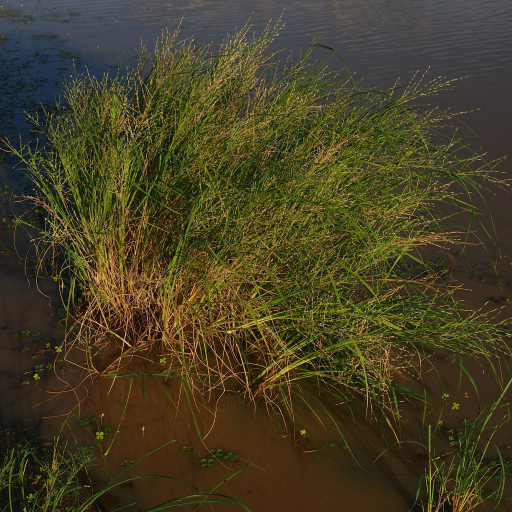
Plant Overview
Widely known as Brown Beetlegrass or Sprangletop, Diplachne fusca is a resilient, hardy grass that thrives where other plants struggle. Often found dancing in the breeze near wetlands or rice paddies, this plant is a master of adaptation, capable of growing in waterlogged or highly saline soils. While some farmers view it as a persistent weed, it plays a vital role in stabilizing soil and managing salt levels in delicate ecosystems.
🔍 How to Identify
- 🌾 The Seed Heads: Its most striking feature is the "sprangled" look. The flowering tops (panicles) are long, airy, and branched, often turning a leaden-gray or brownish color as they mature.
- 🍃 Leaf Texture: The leaves are long, narrow, and have a slightly rough feel if you run your finger along the edges. They often have a prominent white mid-vein running down the center.
- 📐 Growth Habit: This grass typically grows in upright tufts, reaching anywhere from 1 to 4 feet tall, depending on how much water it can find.
🏡 In Your Garden & Landscape
- 💧 The "Wet Feet" Expert: Unlike most garden grasses that rot in puddles, Beetlegrass loves moisture. It is an excellent choice for "rain gardens" or low-lying areas of a property that collect water after a storm.
- 🧂 Salt Tolerance: If you live near the coast or have soil that is too salty for traditional turf, this species acts as a natural pioneer. It actually helps improve soil quality over time by thriving in harsh, alkaline conditions.
- 🌾 Self-Seeding Nature: Be mindful that it is a prolific seed producer. If you don't want it spreading across your entire landscape, it’s best to trim the feathery tops before the seeds turn dark and drop.
⚠️ Safety & Toxicity
- ✅ Status: Non-toxic and generally safe.
- 🐾 Details: There are no known toxic effects for dogs, cats, or humans. However, like many ornamental grasses, the dried seed heads can occasionally cause mechanical irritation (getting stuck in fur or ears) if pets run through tall stands of it.
✨ Fun Fact
- 🧪 A Biological Filter: Diplachne fusca is considered a "halophyte," meaning it loves salt. In some parts of the world, scientists use it for "bioremediation" to help suck excess salt out of degraded farmland, eventually making the soil healthy enough to grow food crops again!

Detailed Care Instructions

Place in a bright room that is sun drenched almost all day. Or directly in a south-facing window.

Some plants require more regular watering than others, which should be done every few days. It's critical to maintain the soil moist all of the time. The water requirements of the same plant placed in pots with varying sizes will differ. Because the water in the smaller pot evaporates faster than the water in the larger pot, it will require more watering. Regardless of pot size, the surface should constantly be maintained moist.








