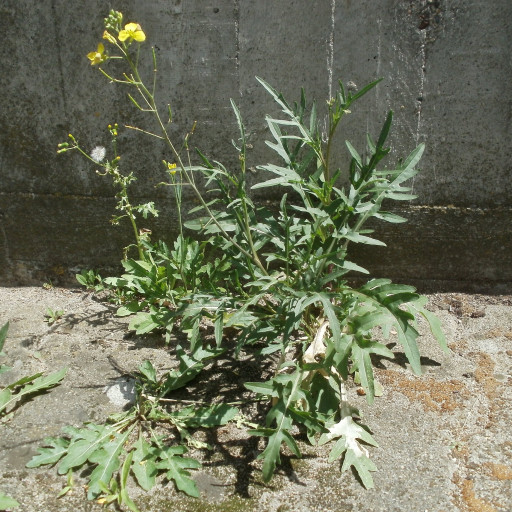
Plant Overview
Often hailed as the "Wild Rocket" or "Perennial Wall Rocket," Diplotaxis tenuifolia is the sophisticated, spicier cousin of the common garden arugula. Originating from the Mediterranean, this hardy plant has been a staple in Italian "misticanza" salads for centuries. It is beloved by chefs for its intense, peppery punch and its ability to thrive in the harshest of conditions, often found springing up from the cracks in ancient stone walls.
🔍 How to Identify
- 🌿 The Foliage: Look for deeply lobed, narrow, dark green leaves that grow in a basal rosette. Unlike standard arugula, these leaves are more jagged and have a distinct, pungent aroma when bruised.
- 🌼 The Blooms: It produces small, bright yellow flowers with four petals arranged in a cross shape. These flowers are not just pretty; they are also edible and carry a milder version of the leaf's heat.
- 🌱 Growth Habit: This is a perennial plant that develops a slightly woody base over time. It can reach up to 2 feet in height when in full bloom, standing much taller than its annual relatives.
🏡 In Your Garden
- 🧱 The "Wall" Specialist: True to its name, this plant loves well-drained, even poor-quality soil. It is an excellent choice for rock gardens or gravel paths where other vegetables might struggle.
- ☀️ Heat Endurance: While most salad greens "bolt" (turn bitter and go to seed) the moment the sun gets hot, Wild Rocket is surprisingly heat-tolerant. It provides a steady harvest throughout the summer.
- ✂️ Cut and Come Again: To keep the leaves tender and the flavor from becoming too overwhelming, harvest the young outer leaves frequently. This encourages the plant to stay productive for several years.
⚠️ Safety & Toxicity
- 🥗 Safe for Humans: Entirely edible and highly nutritious, packed with Vitamin C and iron. However, its high glucosinolate content (which gives it that spicy kick) can be intense for those with sensitive stomachs if eaten in massive quantities.
- 🐾 Pet Perspective: Generally considered non-toxic to dogs and cats in small amounts. However, like many brassicas, it can cause mild digestive upset or gas if a pet grazes on it excessively.
✨ Fun Fact
The name Diplotaxis comes from the Greek words "diploos" (double) and "taxis" (row), referring to the way the seeds are arranged in two neat rows inside the seed pods!

Detailed Care Instructions
| Humidity | Dry |
| Lighting | Full Sun |
| Difficulty | Medium |
| Hibernation | Cold Period |
| Hardiness Zones | 5 - 9 |
To grow Diplotaxis Tenuifolia, also known as wild arugula or perennial wall rocket, follow these steps:
- Choose the right location: Select a sunny spot in your garden that receives at least 6 hours of direct sunlight per day. The soil should be well-draining with a pH range of 6.0-7.5.
- Prepare the soil: Before planting, loosen the soil using a garden fork or tiller. Remove any weeds, rocks, or debris from the area. Add organic matter such as compost or well-rotted manure to improve the soil's fertility and drainage.
- Sow seeds or transplant seedlings: Diplotaxis Tenuifolia can be grown from seeds or seedlings. If planting seeds, sow them directly into the prepared soil, spacing them about 6-12 inches apart. If using seedlings, dig holes slightly larger than the root ball and gently place the plants in the holes, firming the soil around them.
- Water regularly: Keep the soil consistently moist but not waterlogged. Water deeply and thoroughly, ensuring the water reaches the plant's roots. Avoid overhead watering to prevent fungal diseases.
- Mulch: Apply a layer of organic mulch, such as straw or wood chips, around the plants to suppress weeds, retain moisture, and regulate soil temperature.
- Fertilize: Diplotaxis Tenuifolia does not require heavy fertilization. However, you can incorporate a slow-release organic fertilizer or apply a balanced liquid fertilizer every few weeks during the growing season to promote healthy growth.
- Prune and harvest: Regularly prune the plant by snipping off the outer leaves to encourage bushier growth. Harvest the leaves when they are young and tender, typically 30-45 days after planting. Diplotaxis Tenuifolia is a perennial plant, so it will continue to produce leaves for several years.
- Control pests and diseases: Monitor the plants regularly for pests such as aphids, flea beetles, or caterpillars. Use organic pest control methods like neem oil spray or handpicking to remove these pests. Diplotaxis Tenuifolia is generally resistant to diseases but may occasionally suffer from fungal infections. Ensure good air circulation around the plants and avoid watering the leaves to minimize the risk of diseases.
By following these guidelines, you can successfully grow Diplotaxis Tenuifolia and enjoy its spicy and flavorful leaves throughout the growing season.

Place in a window with dappled sun or a spot in the middle of a room. Or directly in a window facing west or east.

Diplotaxis tenuifolia is a small plant that requires a consistent watering schedule to stay healthy and beautiful. When watering this plant, it is essential to avoid over-watering, which can lead to root rot and other issues that may kill the plant.
To properly water Diplotaxis tenuifolia, first, you need to determine the type of soil in which it is planted. This will help you determine how often and how much to water the plant.
If your soil is sandy, it may need to be watered more frequently. In contrast, if your soil is clay-based, it can retain more moisture, and you may not need to water as often.
When watering, it's essential to water deeply and thoroughly. This helps the roots grow deep into the soil, which makes the plant more resilient to drought and other environmental stresses.
It's also essential to avoid watering the leaves. Plant the Diplotaxis tenuifolia a bit away from other plants to allow water to reach the roots directly. Leaves left wet can create the environment for fungal diseases, and it may also cause the plant to wither.
To ensure you water your Diplotaxis tenuifolia correctly, consider using a drip irrigation system, which will provide consistent moisture at the roots without over-watering or under-watering. The frequency and amount of water for your plant depend on its location and the water level in the soil.
Most importantly, water the plant when the soil seems dry a few inches below the surface. This helps you not only conserving the water but also increases the plant's survival rate.
- Prepare a balanced fertilizer with equal amounts of nitrogen, phosphorus, and potassium.
- Apply the fertilizer once every four weeks during the growing season.
- Water the plant thoroughly before and after fertilizing.
- Avoid applying fertilizer to dry soil as it may damage the roots.
- Use a low-concentration fertilizer to prevent burning the plant.
- Monitor the plant for signs of over-fertilization such as yellowing of leaves or stunted growth.
- Adjust the amount and frequency of fertilization based on the plant's growth and health.
When growing Diplotaxis Tenuifolia, it is recommended to use well-draining soil that is rich in nutrients. The soil should have a slightly acidic to neutral pH level and be kept moist but not waterlogged. A mixture of sand, perlite, and peat moss can provide the ideal growing conditions for this plant. It is important to avoid using heavy soils or soil that is high in clay content, as this can lead to poor drainage and root rot. Additionally, the use of organic matter such as compost or aged manure can improve soil fertility and provide essential nutrients for healthy plant growth.
To propagate this plant, take stem cuttings from a healthy and mature plant, making sure that the cutting is around 4 to 5 inches long. Remove any excess leaves from the bottom of the cutting, leaving only two sets of leaves.
Dip the cut end of the cutting in a rooting hormone powder to encourage root growth. Then, plant the cutting in a pot with well-draining soil. Keep the soil moist and in a warm, bright spot but not in direct sunlight.
Within a few weeks, the cutting should start to develop roots and new growth. Once it has grown roots and established new growth, it can be transplanted into a larger pot or into a garden bed.
It is important to monitor the plant for any pests or diseases and provide it with adequate sunlight and water to ensure successful propagation.
Common pests of the perennial wild arugula include Aphids, larvae, snails, springtails. Make a habit of checking your perennial wild arugula frequently for pests so that any infestations can be caught and managed early.








