Plant Overview
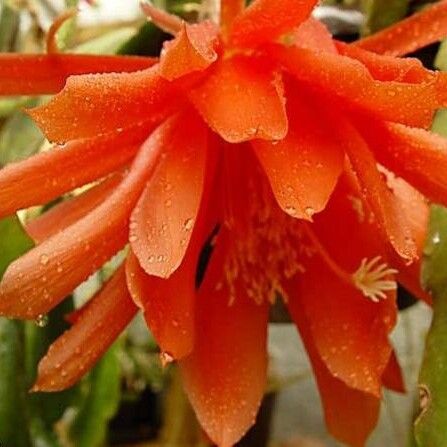
Commonly known as the Orange Sun Cactus, this vibrant climber hails from the humid forests and rocky cliffs of Central America. Unlike desert cacti that bake in the sand, this species is an epiphyte, meaning it prefers to scramble over tropical tree branches or hang gracefully from mountain ledges. Its show-stopping, fiery orange blooms make it a prized possession for those looking to add a "jungle aesthetic" to their indoor garden.
🔍 How to Identify
- 🌵 The Stems: Long, arching, and multi-angled stems that typically feature 3 to 5 prominent ribs. They start upright but eventually trail downward, reaching lengths of several feet.
- 🧡 The Blooms: Large, funnel-shaped flowers that burst into shades of vivid orange or reddish-gold. These spectacular blossoms usually appear in late spring and are designed to attract hummingbirds in the wild.
- 🛡️ The Spines: Clustered along the ribs are small, needle-like spines that range from yellowish to brown. While they aren't as intimidating as a Barrel Cactus, they are sharp and grow in dense groups.
🏡 In Your Garden
- 💧 The Epiphytic Edge: Because this plant naturally grows on trees, it hates "wet feet." Use a chunky, well-draining mix—like a cactus soil amended with orchid bark or perlite—to ensure the roots can breathe.
- 🌤️ Dappled Light: Think of its home in the canopy; it loves bright, indirect light. Direct, harsh midday sun can turn the stems a stressed reddish-purple or cause "sunburn" scars, so an eastern window is often the "Goldilocks" spot.
⚠️ Safety & Toxicity
- 🐾 Non-Toxic: The Disocactus aurantiacus is generally considered non-toxic to cats, dogs, and humans if ingested.
- 🩹 Physical Hazard: The primary safety concern is the spines. They are small and brittle, meaning they can easily lodge in skin or a pet's paw. It is best displayed in a hanging basket, safely out of reach of curious toddlers or pets.
✨ Fun Fact
The species name aurantiacus is Latin for "orange-colored," referring to its signature glow. In its native habitat, these bright flowers don't just look pretty—they function like glowing neon signs for pollinators in the dim light of the tropical forest understory.

Detailed Care Instructions







