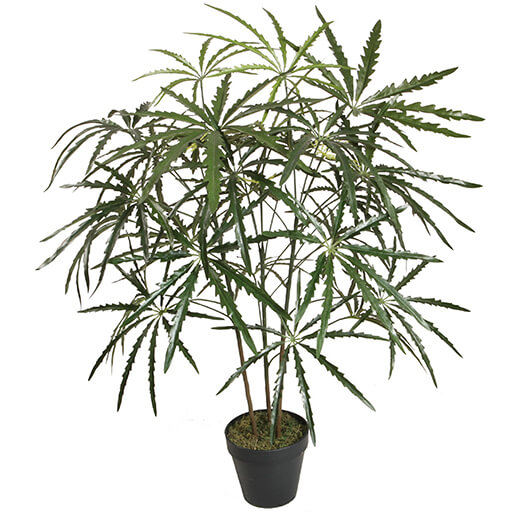
Plant Overview
Often called the "False Aralia," this plant is a gothic masterpiece originally from the mist-shrouded islands of New Caledonia. With its deeply serrated, lace-like foliage that darkens as it matures, it brings a sophisticated, "spidery" texture to any indoor collection. It is the perfect choice for those who want the look of a delicate fern but in the form of a sturdy, upright woody shrub.
🔍 How to Identify
- 🍃 Leaf Structure: Features long, narrow leaflets that radiate from a central point like the fingers of a hand, earning it the nickname "Finger Aralia."
- 🎨 Color Palette: Young leaves often start as a coppery-red or bronze, eventually maturing into a deep, metallic charcoal-green that can look almost black in soft light.
- 🪚 Serrated Edges: The margins of the leaves are heavily notched and jagged, giving the plant a distinct, saw-toothed silhouette that feels both ancient and modern.
🏡 In Your Garden
- 🎭 The "Diva" Effect: This plant is notorious for dropping its leaves if it feels stressed. It "protests" sudden changes in temperature or being moved to a new room. To keep it happy, pick a "forever home" with consistent light and leave it there.
- ☁️ Humidity is Key: Coming from the South Pacific, it craves moisture in the air. If the environment is too dry—especially during winter heating—the leaf tips will turn brittle and brown. It thrives best in kitchens, bathrooms, or near a humidifier.
- 🏺 Root Sensitivity: The False Aralia has a relatively small and delicate root system. It prefers to be slightly root-bound and hates "wet feet," so ensure your pot has excellent drainage to prevent the roots from suffocating.
⚠️ Safety & Toxicity
- 🐾 Mildly Toxic: While it isn't among the most dangerous plants, it is categorized as toxic to dogs, cats, and humans.
- 👄 Irritation: The plant contains calcium oxalate crystals. If leaves are chewed or swallowed, they can cause a burning sensation in the mouth, drooling, and swelling of the throat. The sap may also cause mild skin irritation for those with sensitive skin.
✨ Fun Fact
- 🦋 The Shape-Shifter: The False Aralia is "heteroblastic," meaning its appearance changes drastically with age. While we love the narrow, lacy leaves as houseplants, if the plant grows to its full height in the wild (up to 50 feet!), the leaves transform into large, broad, lobed shapes that look nothing like the juvenile version!

Detailed Care Instructions
To grow a Dizygotheca Elegantissima plant, also known as False Aralia, follow these steps:
- Choose the right location: It prefers bright, indirect sunlight, but can tolerate low light conditions. Avoid placing it in direct sunlight as it can scorch the leaves.
- Soil requirements: Use a well-draining potting mix rich in organic matter. A mix of peat moss, perlite, and sand works well.
- Watering: Keep the soil lightly moist but not soggy. Water the plant when the top inch of soil feels dry. Overwatering can lead to root rot, so it's important to let the topsoil dry out between waterings.
- Humidity: Dizygotheca Elegantissima prefers higher humidity levels. Mist the leaves regularly or place the pot on a tray filled with pebbles and water to increase humidity.
- Temperature: It thrives in a warm environment with a temperature range of 65-80°F (18-27°C). Protect the plant from cold drafts or extreme temperature fluctuations.
- Fertilizer: Feed the plant with a balanced liquid fertilizer diluted to half strength once a month during the growing season (spring and summer). Do not fertilize in winter.
- Pruning: Prune the plant to maintain its shape and encourage branching. Remove any yellow or brown leaves regularly to promote healthy growth.
- Repotting: Every 2-3 years, repot Dizygotheca Elegantissima into a slightly larger container using fresh potting soil. Spring is the best time to repot.
- Pest control: Monitor the plant for common pests like spider mites, mealybugs, and aphids. If you spot any, use organic or chemical pest control methods to eliminate them.
Following these care instructions should help your Dizygotheca Elegantissima plant thrive and grow into a beautiful specimen.

Place in a window with dappled sun or a spot in the middle of a room. Or directly in a window facing west or east.

The watering requirements for this plant can vary based on a few different factors. The soil should be kept consistently moist but not waterlogged, as this can lead to root rot. It is important to avoid letting the soil dry out completely, as this can cause the leaves to wilt and drop.
The best way to water this plant is to monitor the soil moisture level regularly and only water when the top inch of soil feels dry to the touch. Water the plant thoroughly, allowing the water to soak all the way through to the bottom of the pot. After watering, allow any excess water to drain out of the bottom of the pot. Avoid getting water on the leaves or the stem of the plant, as this can cause damage or encourage the growth of mold or fungus.
In general, this plant will require more frequent watering in the summer months when it is actively growing, and less frequent watering in the winter when growth slows down. It is also important to be mindful of the humidity levels in the room – higher humidity levels can help the plant thrive and may reduce the need for frequent watering.
- Select a balanced fertilizer that's designed for use on houseplants.
- Dilute the fertilizer according to the manufacturer's instructions.
- Water the plant thoroughly before applying any fertilizer.
- Apply the fertilizer to the soil around the base of the plant.
- Be careful not to get any fertilizer on the foliage or stem of the plant.
- Water the plant again after fertilizing to help distribute the nutrients.
- Repeat the fertilizing process every two to four weeks during the growing season.
- Decrease the frequency of fertilizing during the winter months when the plant is dormant.
Dizygotheca Elegantissima prefers well-draining soil that allows water to flow freely through it. It is recommended to use a rich, nutrient-dense soil that is high in organic matter, such as compost or peat moss. The pH level of the soil should be slightly acidic, between 5.5 to 6.5. It is also important to ensure that the soil is not compacted and allows for air circulation around the roots. Use a potting mix that has perlite, vermiculite, or sand mixed in to ensure good drainage. Avoid using heavy, clay soil as it tends to retain too much moisture and can lead to root rot.
To propagate this plant, take a stem cutting with a sharp, clean knife or pruning shears. The cutting should be at least 4 inches long and have several leaves. Remove the lower leaves, leaving only a few at the top. Dip the cut end of the stem in rooting hormone powder to encourage root growth. Plant the cutting in a well-draining soil mixture and water it well. Place the cutting in a warm, bright location but avoid direct sunlight. Keep the soil moist but not waterlogged. After a few weeks, you should see new growth and roots forming at the base of the stem.
Common pests of the false aralia include Scale insect, mealybugs, thrips. Make a habit of checking your false aralia frequently for pests so that any infestations can be caught and managed early.







