Plant Overview
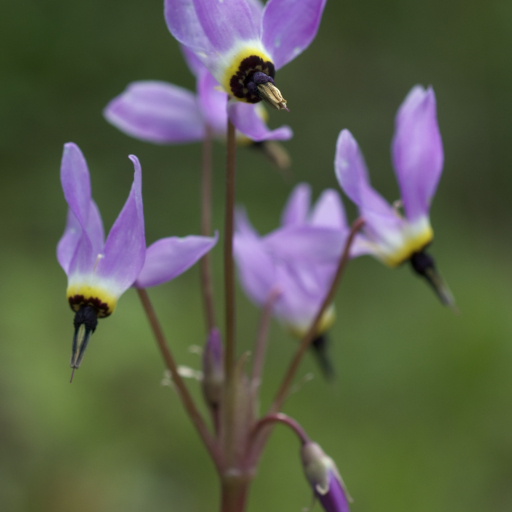
Often called the "Shooting Star" or "Mead’s Shooting Star," this enchanting North American wildflower looks like a tiny floral rocket frozen in mid-flight. Its swept-back petals and pointed "noses" give it an aerodynamic appearance that has charmed gardeners and poets for centuries. As a spring ephemeral, it brings a burst of celestial beauty to the garden floor before retreating underground to hide from the summer heat.
🔍 How to Identify
- 🚀 Flower Shape: The most striking feature is the flower head, where five petals reflex (bend sharply backward) away from a downward-pointing cluster of yellow stamens, resembling a shooting star or a badminton birdie.
- 🍃 Basal Rosette: The leaves don't climb the stem; instead, they form a flat, tongue-shaped rosette at the very base of the plant, often tinged with reddish-purple near the center.
- 🎨 Color Palette: Flowers range from crisp white to delicate lavender or deep magenta, usually featuring a distinct yellow "beak" at the tip where the pollen is held.
🏡 In Your Garden
- 💤 Summer Dormancy: It is vital to remember that this plant is a "spring ephemeral." Once the heat of summer arrives, the entire plant will yellow and disappear completely. Don't dig it up! It isn't dead; it is simply resting until next spring.
- 💧 Moisture Balance: In the wild, it thrives in prairies and open woods. It loves "spring dampness" but requires well-drained soil. If the roots sit in stagnant water during its winter nap, they may rot, so a slope or rocky soil is ideal.
- 🐝 Buzz Pollination: This plant is a favorite for bumblebees. They use a technique called "sonication" or buzz pollination, where they vibrate their wing muscles at a specific frequency to shake the pollen out of the narrow floral tubes.
⚠️ Safety & Toxicity
- ✅ Safe Status: Dodecatheon meadia is generally considered non-toxic to humans, cats, and dogs.
- 🌱 Garden Safety: While safe to touch and grow, it is a delicate species. It is best to admire its unique architecture rather than picking the flowers, as the plant relies on its limited spring growth to store energy for the following year.
✨ Fun Fact
The genus name Dodecatheon translates to "Twelve Gods." The famous botanist Linnaeus believed the clusters of flowers looked like a tiny assembly of the twelve principal Greek deities sitting atop the stem.

Detailed Care Instructions
To grow Dodecatheon meadia, also known as shooting star or American cowslip, follow these steps:
- Choose a suitable location: Dodecatheon meadia prefers partial shade to full sun and moderately moist, well-draining soil. It is native to North America and typically thrives in woodlands, meadows, or along stream banks.
- Propagation: Dodecatheon meadia can be propagated from seeds or divided clumps. If starting from seeds, sow them in fall or early spring, as they require a period of cold stratification. Lightly press the seeds onto the soil surface, as they need light to germinate. Keep the soil consistently moist but not waterlogged. Seedlings should emerge within two to three weeks.
- Transplanting: When the seedlings have developed several leaves, transplant them to their permanent location. Make sure to space the plants about 9 to 12 inches apart. If dividing clumps, do so in spring or fall by carefully separating the root mass into individual smaller plants and replanting them elsewhere.
- Watering: Keep the soil consistently moist, but avoid overwatering, as excessive moisture can lead to root rot. Water the plants when the top inch of soil feels dry, providing deep irrigation rather than frequent shallow watering.
- Mulching: Apply a layer of organic mulch around the base of the plants to help retain moisture, moderate soil temperature, and suppress weed growth.
- Fertilizing: Dodecatheon meadia generally does not require heavy fertilization. However, you can apply a balanced, slow-release fertilizer in early spring if desired, following the package instructions.
- Maintenance: Regularly check for pests such as slugs or snails and remove them manually or use appropriate techniques to control them. Deadhead spent flowers to encourage more blooms and prevent self-seeding if desired.
- Winter care: Dodecatheon meadia is typically winter hardy, especially in colder climates. Ensure the plants have adequate mulch around their base before the onset of winter for added protection.
With proper care and attention, Dodecatheon meadia should thrive and produce its beautiful and unique shooting star flowers.

Place in a window with dappled sun or a spot in the middle of a room. Or directly in a window facing west or east.

To properly water this plant, you should first ensure that the soil is evenly moist. This can be achieved by watering the plant slowly and deeply, allowing the water to soak in gradually instead of flooding the area. It is important to avoid getting water on the leaves or stem of the plant, as this can cause damage or encourage the growth of mold or mildew. Additionally, it is important to water regularly but not excessively, as overwatering can cause root rot and other issues. Finally, a layer of mulch can help to retain moisture in the soil and prevent evaporation, which can also help to keep the plant healthy and happy.
When fertilizing this plant, it is important to use a nitrogen-rich fertilizer with a low-phosphorus content. Apply the fertilizer in the early spring, just as new growth is emerging. Be sure to water the plant thoroughly before applying the fertilizer to avoid burning the roots. Repeat the fertilization process every 4-6 weeks throughout the growing season. Avoid fertilizing in the fall as this can encourage new growth that may be damaged by winter frosts.
The best soil for this particular plant is a well-draining soil that is rich in organic matter. It needs soil that is moist but not waterlogged, so it should also have good drainage. It is best to avoid heavy clay soils that may become waterlogged and compacted. The soil pH should be slightly acidic to neutral, with a pH range between 6.0 to 7.0. The plant prefers soils that are not too nutrient-rich, as excessive fertilization can actually harm the plant. Therefore, it is best to use a balanced slow-release fertilizer applied sparingly in the early spring, before the plant has started growing. Overall, the soil should provide good drainage, moderate moisture retention, and a balanced nutrient level for the Dodecatheon Meadia plant.
To propagate the plant, the first step is to select a healthy mature plant. Once the plant has finished flowering, it is best to wait until the plant goes into dormancy in the late fall or early winter. At this time, carefully dig up the root system of the plant. Using a sharp, clean knife or pruners, cut the root system into sections, making sure that each section has several healthy roots and a bud or shoot.
Next, prepare a pot or container of good quality potting soil and insert the root sections into the soil, making sure they are planted to the same depth they were in the ground. Water the soil thoroughly to settle it around the roots. Place the container in a cool, shaded location and keep the soil moist but not too wet.
Once new growth appears, the newly propagated plants can be planted into a permanent location in the garden or a larger container. Water regularly and fertilize with a balanced fertilizer approximately once a month during the growing season. With proper care, the new plants should thrive and produce beautiful flowers.








