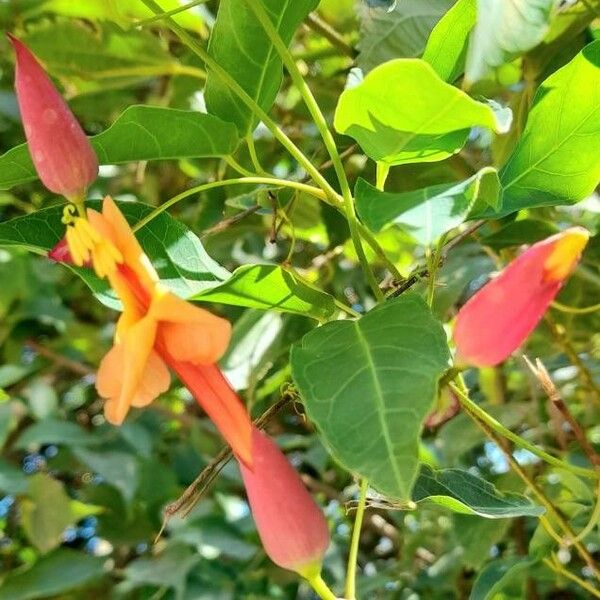
Plant Overview
Known as the Argentine Trumpet Vine or Sacha Huasca, this vigorous climber is a true vertical acrobat of the plant world. Native to the humid forests of South America, it is celebrated for its ability to transform a plain fence into a curtain of fiery orange and red. It is a "storyteller" plant, often used in its native lands to signify the lushness of riverbank ecosystems.
🔍 How to Identify
- 🌿 The "Cat's Claws": Look closely at the leaves; the plant features a unique three-forked tendril at the tip of its leaf stalks that looks exactly like a tiny bird or cat claw, which it uses to hook onto surfaces.
- 🎺 Fiery Trumpets: It produces spectacular, funnel-shaped flowers that are usually a deep, burnt orange or brick red, often with a paler yellowish throat.
- 🍃 Glossy Foliage: The leaves are typically dark green, oval, and have a leathery, polished texture that reflects sunlight beautifully.
🏡 In Your Garden
- 🧱 Structural Support: This is a "clinging" vine rather than a "twining" one. It thrives on masonry, brick, or rough-barked trees where its claws can find purchase. Avoid planting it against delicate wooden siding, as the claws can be difficult to remove.
- ✂️ Growth Management: Because it is such a fast grower, it requires regular pruning to keep it from "smothering" neighboring plants. It’s best to prune it immediately after its flowering season to maintain a tidy shape.
⚠️ Safety & Toxicity
- 🟢 General Status: Dolichandra cynanchoides is generally considered non-toxic to humans and common household pets like cats and dogs.
- 🧤 Physical Irritation: While not chemically toxic, the "claws" and woody stems can be quite sharp. Always wear gardening gloves when pruning to avoid scratches or skin irritation from the vigorous vines.
✨ Fun Fact
In its native habitat along the Paraná River, these vines grow so thick and strong that they create "aerial highways," allowing small monkeys and arboreal mammals to cross between tree canopies without ever touching the ground!

Detailed Care Instructions
To grow Dolichandra Cynanchoides (golden trumpet vine), follow these steps:
- Climate and location: Ensure that you live in a suitable climate for growing this plant, as it thrives in warm, tropical or subtropical regions. Choose a location that receives full sun to partial shade for optimal growth.
- Soil: The plant prefers well-draining soil that is rich in organic matter. Prepare the planting area by loosening the soil and incorporating organic compost.
- Planting: Dig a hole twice as wide and deep as the plant's root ball. Place the plant in the hole and backfill with soil, gently firming it around the base of the plant. Water thoroughly after planting.
- Watering: Dolichandra Cynanchoides requires regular watering during its initial establishment period. Water deeply, ensuring the soil stays evenly moist but not waterlogged. Once established, it is drought-tolerant and requires less frequent watering.
- Mulching: Apply a layer of organic mulch around the base of the plant to retain moisture, suppress weeds, and regulate soil temperature. Keep the mulch a few inches away from the stem to prevent rotting.
- Fertilization: Use a balanced, slow-release fertilizer during the growing season to promote healthy growth. Follow the manufacturer's instructions for dosage and application frequency. Avoid over-fertilization as it may result in excessive foliage growth at the expense of flowers.
- Pruning: Dolichandra Cynanchoides benefits from regular pruning to control its size and shape. Prune in late winter or early spring before new growth appears. Remove dead or damaged branches and thin out crowded areas to improve air circulation.
- Trellis or support: Provide a trellis, arbor, or any supportive structure for the vine to climb on. As Dolichandra Cynanchoides is a vigorous climber, it will attach itself to structures via tendrils.
- Pests and diseases: The plant is generally resistant to pests and diseases. However, occasional attacks by aphids, scale insects, or spider mites may occur. Treat any pest infestations using appropriate insecticides or organic methods.
- Propagation: Dolichandra Cynanchoides can be propagated through stem cuttings or by layering. Take 6-8 inch long stem cuttings from healthy plants, remove the lower leaves, and plant them in a well-draining potting mix. Keep the soil moist until roots develop.
By following these steps, you can successfully grow Dolichandra Cynanchoides and enjoy its beautiful golden trumpet-shaped flowers.

Place in a bright room that is sun drenched almost all day. Or directly in a south-facing window.

To water this plant, you should first assess the soil moisture level by sticking your finger 1-2 inches into the soil. If the soil feels dry, it is time to water. Choose a watering can or hose with a gentle spray to avoid damaging the leaves. Slowly water the soil around the base of the plant until it is moist but not waterlogged. Avoid getting water on the foliage or flowers as this can lead to fungal disease. In hot and dry weather, you may need to water more frequently, but be sure to allow the soil to dry out slightly between waterings.
To fertilize this plant, use a balanced fertilizer with an N-P-K ratio of 10-10-10. Apply the fertilizer once every two weeks during the growing season. Mix the fertilizer with water and apply it to the soil around the base of the plant. Be careful not to get any fertilizer on the leaves or stem as this can cause damage. Water the plant after fertilizing to help the nutrients reach the roots.
When planting this plant, it is recommended to use well-draining soil that is rich in nutrients. The soil should have a pH level between neutral and slightly acidic. A mixture of loamy soil, sand, and organic matter can provide the ideal growing conditions. The soil should also be slightly moist but not waterlogged. A layer of mulch can be added on top to help retain moisture and regulate the temperature of the soil. It is important to avoid using heavy clay soil, as it can lead to poor drainage and waterlogging of the roots. Additionally, the plant should not be planted in soil with high salt content, as this can cause damage to the roots and overall health of the plant.
To propagate this plant, you will need to take stem cuttings. Choose a mature and healthy stem of the plant from which to take a cutting. Using a sharp, sterile knife, cut a stem that is approximately 6-8 inches in length.
Remove any leaves from the lower half of the stem, leaving only a few at the top. This will prevent excess moisture loss and help the cutting to root more easily.
Dip the cut end of the stem into rooting hormone powder, which will encourage the growth of new roots. Place the stem cutting into a pot containing a mixture of potting soil and sand, which will provide good drainage. Cover the pot with a plastic bag or sheet of clear plastic to provide high humidity and prevent moisture loss.
Place the pot in a warm and bright location, but out of direct sunlight. Keep the soil moist, but not waterlogged, by misting it regularly or by watering it from the bottom. After a few weeks, the cutting should take root and begin to produce new leaves. Once the plant has established a healthy root system, it can be transplanted into a larger pot or directly into the ground.








