Plant Overview
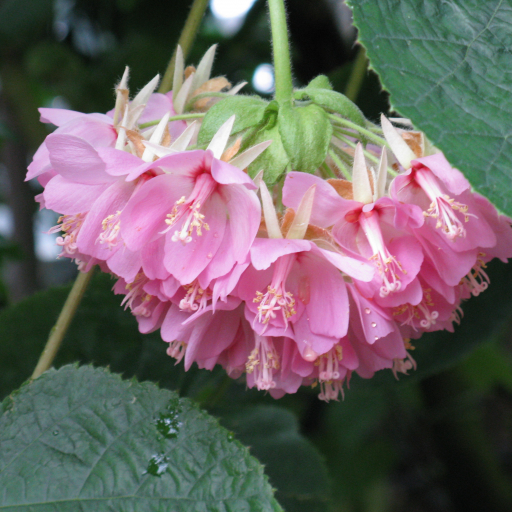
Known as the Pink Ball Tree or the Tropical Hydrangea, Dombeya wallichii is a botanical masterpiece hailing from the forests of Madagascar. It is most famous for its massive, drooping clusters of salmon-pink flowers that look like cheerleader pom-poms hanging among giant, velvety leaves. Beyond its beauty, it is a sensory delight, often filling the air with a scent reminiscent of warm caramel, chocolate, or vanilla frosting.
🔍 How to Identify
- 🌸 The "Pink Balls": The most striking feature is the dense, pendulous globes of flowers. Dozens of tiny, five-petaled pink blossoms cluster together to form a heavy sphere that hangs downward on a long stem.
- 🍃 Heart-Shaped Foliage: The leaves are enormous, often reaching 8–10 inches across. They are heart-shaped (cordate), deeply green, and have a soft, fuzzy, almost "felt-like" texture on both sides.
- 🌳 Growth Habit: This is a fast-growing, multi-stemmed evergreen shrub that can easily reach the size of a small tree (up to 20–30 feet if not pruned). It has a rounded, spreading canopy that provides dense shade.
🏡 In Your Garden
- 🦋 Pollinator Magnet: If you want a garden buzzing with life, this is your plant. Bees, butterflies, and even sunbirds are obsessively attracted to the nectar-rich flower globes during its winter and spring blooming season.
- ✂️ The "Brown" Phase: One nuance of the Dombeya is that the flowers do not fall off when they die; they turn a papery brown and remain on the tree. To keep the plant looking tidy, you will need to prune or "deadhead" these spent clusters manually.
- ☀️ Sun & Space: It thrives in full sun but requires a lot of "elbow room." Because of its rapid growth and large leaves, it can quickly overwhelm smaller plants, so give it a dedicated corner where it can expand.
⚠️ Safety & Toxicity
- 🟢 Non-Toxic: Dombeya wallichii is generally considered non-toxic to humans and common household pets like cats and dogs.
- 🧤 Skin Sensitivity: While not poisonous, the fine hairs on the leaves and stems can occasionally cause mild skin irritation or "itchiness" for people with sensitive skin during heavy pruning. It is always a good idea to wear gloves when handling the foliage.
✨ Fun Fact
The scent of the Pink Ball Tree is so distinctively like baked goods that in some regions, it is nicknamed the "Sugar Cookie Tree." The fragrance is strongest in the late afternoon and early evening as the air cools!

Detailed Care Instructions
To grow Dombeya wallichii, also known as the Pink Ball Tree or Tropical Hydrangea, follow these steps:
- Climate: Make sure you live in a climate suitable for growing Dombeya wallichii. It thrives in tropical or subtropical regions with average temperatures between 60°F (15°C) and 80°F (27°C). It can tolerate a light frost but may require protection in colder regions.
- Sunlight: Choose a location that receives full to partial sun. Dombeya wallichii enjoys bright, indirect sunlight throughout the day. If planted indoors, place the plant near a window where it can receive ample sunlight.
- Soil: Provide well-draining soil rich in organic matter. A mix of garden soil with compost or peat moss works well. Dombeya wallichii prefers soil with a slightly acidic to neutral pH level.
- Planting: Dig a hole twice as large as the root ball of the plant. Gently place the plant into the hole, making sure it sits at the same depth as it was in the nursery pot. Backfill the hole with soil, firmly tamping it down around the plant's base.
- Watering: Keep the soil consistently moist but not waterlogged. Water deeply, allowing the top few inches of soil to dry out before watering again. During hot summers, Dombeya wallichii may require more frequent watering.
- Fertilizer: Apply a balanced, slow-release fertilizer during the growing season, typically in spring and summer. Follow the instructions on the fertilizer packaging for proper dosage. Avoid over-fertilizing, as it can lead to excessive leaf growth instead of flowering.
- Pruning: Prune lightly to maintain its desired shape and remove any dead, diseased, or crossed branches. Pruning is generally done after flowering to encourage new growth and shape the plant.
- Mulching: Apply a layer of organic mulch, such as wood chips or bark, around the base of the plant to conserve moisture, suppress weed growth, and improve soil quality. Avoid piling mulch against the plant's stem.
- Propagation: Dombeya wallichii can be propagated through stem cuttings. Take a 6-8 inch long cutting from a healthy plant in spring or early summer. Remove the lower leaves, dip the cut end in rooting hormone, and plant it in a small container filled with a mix of moist sand and peat moss. Keep the cutting in a warm, humid environment until it develops roots.
- Pests and diseases: Dombeya wallichii is generally resistant to pests and diseases. However, keep an eye out for aphids, mealybugs, or spider mites. Treat infestations with insecticidal soap or neem oil.
By following these guidelines, you can successfully grow Dombeya wallichii and enjoy its beautiful pink ball-shaped flowers.

Place in a bright room that is sun drenched almost all day. Or directly in a south-facing window.

The best way to water this plant is by using a watering can or a hose with a gentle flow. It is important to avoid overwatering as it may lead to root rot. The soil should be allowed to dry out slightly between each watering, but not completely. Checking the soil moisture level by feeling the top layer of soil can help determine when it's time to water. Avoid getting the leaves wet while watering, as this can lead to fungal diseases. The plant should also be watered at the base rather than from overhead. During the winter months, the frequency of watering should be reduced as the plant will naturally go into a state of dormancy.
- Choose a suitable fertilizer for acid-loving plants.
- Apply a balanced granular fertilizer in the early spring before new growth appears.
- Water the plant deeply before and after fertilizing to prevent root burn.
- Spread the fertilizer evenly around the base of the plant, avoiding the trunk.
- Use a slow-release fertilizer to provide nutrients over an extended period.
- Monitor the plant's growth and adjust the fertilization schedule as needed.
- Avoid over-fertilization, which can lead to excessive growth, weak stems, and susceptibility to pests and disease.
- Keep the area around the plant free of fallen leaves and debris to promote air circulation and reduce moisture buildup, which can promote fungal growth.
Dombeya Wallichii plants require a well-draining soil that is rich in organic matter. The soil should have a pH level between 6.0 and 7.5. The ideal soil for this plant should be a mixture of peat moss, perlite, and sand. The peat moss will provide the necessary organic matter, while the perlite and sand will help with drainage. Additionally, a slow-release granular fertilizer that is high in phosphorus should be added to the soil mix to promote healthy growth. It is important to avoid using heavy clay soils or soils that are prone to waterlogging, as this can lead to root rot and other issues.
To propagate this plant, follow these steps:
- First, prepare a potting mix consisting of equal parts of perlite, peat moss, and sand.
- Take a cutting from a healthy plant. The cutting should be around 4-6 inches long and have at least two nodes.
- Remove the lower leaves and dip the end of the cutting in rooting hormone powder.
- Make a hole in the prepared potting mix and plant the cutting, burying the nodes in the soil.
- Water the cutting and place it in a warm, bright location with indirect sunlight.
- Keep the soil consistently moist but not waterlogged, and mist the cutting regularly to maintain moisture.
- After a few weeks, check for new growth and roots forming. Once the roots are well established, the cutting can be transplanted into a larger pot or planted in the garden.








