Plant Overview
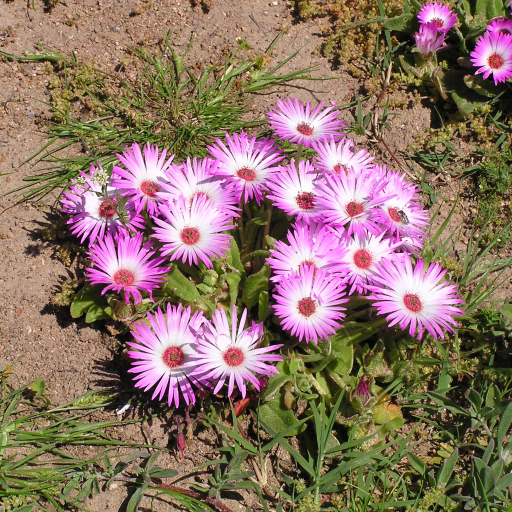
Meet the Livingstone Daisy, often affectionately called the "Bokbaaivygie" in its native South Africa. This low-growing succulent is famous for creating a neon-bright carpet that looks like a living disco floor under the midday sun. It is a "sun-worshiper" in every sense—without direct light, its satiny petals remain tightly tucked away, waiting for the sky to clear.
🔍 How to Identify
- 🌸 Neon Blooms: The flowers are daisy-like with thin, satiny petals in electric shades of pink, orange, yellow, and white, often featuring a contrasting dark ring around the center.
- 🍃 Ice-Crystalled Foliage: The leaves are fleshy, tongue-shaped, and covered in tiny, glistening "bladder cells" that look like frost or salt crystals, giving it a shimmering texture.
- 🌱 Low Profile: It stays very close to the earth, rarely growing taller than 6 inches, spreading horizontally to form a dense, succulent mat.
🏡 In Your Garden
- ☀️ The Light Trigger: This plant exhibits "photonasty," meaning its blooms are light-sensitive. They will close during cloudy weather and at night to protect their pollen, so place them in the brightest spot you have.
- 🏜️ Drought Strategy: Because it evolved in sandy South African coastal plains, it prefers "lean" soil. Avoid heavy fertilizers and rich potting mixes, which can lead to leggy growth and fewer flowers.
- 💧 Water Sensitivity: It is highly susceptible to root rot if kept in standing water. Think of it as a desert dweller—it prefers a deep soak followed by a period of complete drying.
⚠️ Safety & Toxicity
- ✅ Non-Toxic: The Livingstone Daisy is generally considered safe and non-toxic for humans, cats, and dogs.
- 👣 Physical Fragility: While not chemically dangerous, the plant is physically delicate. Its water-filled leaves are easily crushed, so it is best kept away from garden paths or areas where pets might trampe it.
✨ Fun Fact
Despite its common name and appearance, the Livingstone Daisy isn't a true daisy at all! It is actually a member of the Aizoaceae family, making it a closer relative to "Living Stones" and other desert succulents than to the common field daisy.

Detailed Care Instructions
| Humidity | Dry |
| Lighting | Full Sun |
| Difficulty | Easy |
| Temperature | 16°C - 30°C |
| Hardiness Zones | 11 - 12 |
To grow Dorotheanthus Bellidiformis, also known as Livingstone Daisy or Mesembryanthemum, you can follow these steps:
- Climate and Growing Conditions: Dorotheanthus Bellidiformis thrives in full sun and well-drained soil. It prefers warm temperatures and is suitable for USDA hardiness zones 9-11.
- Soil Preparation: Prepare the soil by loosening it with a garden fork or tiller. Mix in compost or well-rotted manure to improve drainage and provide nutrients.
- Planting: Plant seeds or seedlings in the desired location after the last frost date in your area. Space the plants around 6-12 inches apart to allow for proper air circulation.
- Watering: Keep the soil consistently moist but not waterlogged. Dorotheanthus Bellidiformis is somewhat drought-tolerant, so avoid overwatering.
- Fertilization: Provide a balanced fertilizer once every month during the growing season to enhance growth and flowering. Follow the package instructions for proper dosage.
- Mulching: Apply a layer of organic mulch around the plants to conserve moisture, suppress weeds, and regulate soil temperature.
- Deadheading: Regularly remove faded flowers to encourage continued blooming and maintain a tidy appearance.
- Pests and Diseases: Dorotheanthus Bellidiformis is generally resistant to pests and diseases. However, keep an eye out for common garden pests like aphids or snails, and take appropriate measures if necessary.
- Propagation: You can propagate Dorotheanthus Bellidiformis by collecting and planting seeds or by taking stem cuttings. Sow seeds indoors 6-8 weeks before the last frost or directly in the garden when the soil warms up. For stem cuttings, take 3-4 inch long cuttings from healthy plants, strip off the lower leaves, and root them in a well-draining soil mix.
- Winter Care: In colder climates, Dorotheanthus Bellidiformis is often grown as an annual. However, in its suitable zones, it can be overwintered outdoors. Apply a layer of mulch or dry leaves around the base of the plant to protect the roots during winter.
By following these guidelines, you can successfully grow Dorotheanthus Bellidiformis and enjoy its vibrant flowers throughout the growing season.

Place in a bright room that is sun drenched almost all day. Or directly in a south-facing window.

To water this plant, you should first check the soil to make sure it is dry before watering. Water the plant thoroughly, making sure that the water reaches the roots. Avoid getting water on the leaves or flowers as this can cause damage or disease. Allow the soil to dry slightly between waterings, as overwatering can lead to root rot. It is also important to water this plant during the early morning or evening hours to prevent evaporation and to avoid watering during the heat of the day to prevent scorching. Watering frequency will also depend on factors such as the climate, humidity, and light conditions.
To fertilize the plant, you should use a balanced liquid fertilizer. It should be mixed with water at half strength, and applied to the soil every two weeks during the growing season. Be careful not to over-fertilize, as this can cause the plant to become leggy and weak. Fertilization should be stopped during the plant's dormant period.
The ideal soil for this plant should be well-draining and sandy, with a pH between 6.0 and 7.5. The soil should be rich in organic matter and nutrient-rich, but not excessively fertile. It should be able to hold moisture, but not remain waterlogged, as this can cause root rot. Additionally, it is important to avoid using heavy clay soils as they can hold too much water and suffocate the roots of the plant. A soil that is able to retain water and at the same time allows good air circulation is best for this plant.
To propagate this plant, first take cuttings from healthy, mature stems using a sharp, clean cutting tool. Make a clean cut just below a node, which is where a leaf emerges from the stem. Remove any leaves from the bottom third of the cutting to expose the stem. If desired, dip the cut end of the cutting in rooting hormone to encourage root growth.
Prepare a container with well-draining soil and make holes for the cuttings. Place the cuttings in the soil and gently tamp the soil down around them. Water the cuttings thoroughly and place them in a warm, bright location that receives indirect sunlight.
Keep the soil moist, but not waterlogged, and mist the cuttings occasionally to provide humidity. After a few weeks, you should see new growth starting to emerge, indicating that the cuttings have rooted successfully. Gradually acclimate the new plants to more direct sunlight and continue to water as needed.
Once the new plants have established a strong root system and have grown a few inches tall, they can be potted up into larger containers or planted outdoors in a sunny location with well-draining soil.








