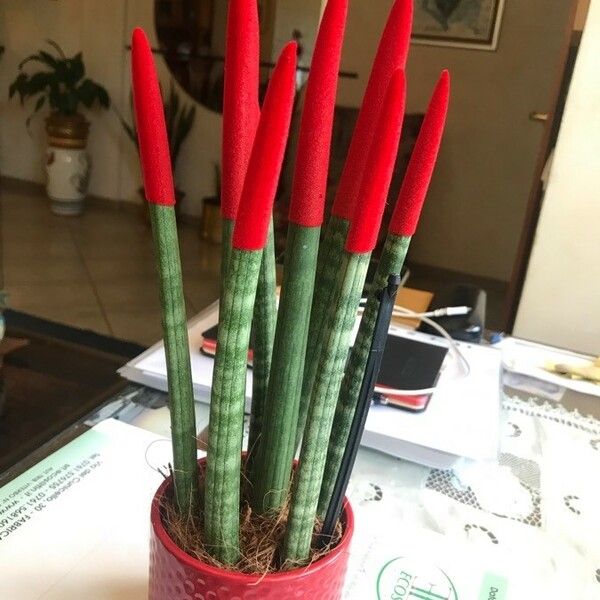
Plant Overview
Often called the "Mikado Snake Plant," Dracaena bacularis is the ultimate architectural companion for the modern home. Originally hailing from the tropical regions of West Africa, its stiff, upright spears look more like a piece of living sculpture than a traditional houseplant. It is a champion of neglect, thriving in those quiet corners where other plants might struggle to survive.
🔍 How to Identify
- 📏 Spear-Like Stems: Unlike flat-leaved snake plants, these leaves are perfectly round and cylindrical, tapering to a point at the top like a collection of vertical wands.
- 🦓 Tiger Stripes: Each spear features subtle horizontal, dark green banding—often called "tiger stripes"—against a slightly lighter green background.
- 🎋 Clustered Growth: The plant grows in tight, upright clusters. You will often see a purple-tinted sheath at the base of the stems where they emerge from the soil.
🏡 In Your Garden
- 🏜️ Succulent Logic: Treat this plant more like a cactus than a tropical shrub. It stores water in its thick, leathery leaves, meaning it prefers its soil to dry out completely. If you are in doubt, don't water it; it hates "wet feet" more than anything else.
- 🌥️ Low-Light Warrior: While it performs best in bright, indirect light, it is famous for its ability to survive in low-light offices or dim hallways. Just keep in mind that in lower light, its growth will slow down significantly.
- 🏺 Preferring the Squeeze: This plant actually enjoys being slightly root-bound. You don't need to rush to repot it; a tight pot ensures the soil dries out faster, which protects the sensitive rhizomes from rot.
⚠️ Safety & Toxicity
- 🐾 Toxic to Pets: Dracaena bacularis contains saponins, which are a natural defense mechanism for the plant but are toxic to cats and dogs. Ingestion can lead to nausea, vomiting, and drooling.
- 👶 Child Safety: While not considered highly dangerous to humans, eating the leaves can cause an upset stomach. Additionally, the pointed tips of the leaves can be quite sharp, so place it out of reach of high-traffic areas where children might run into it.
✨ Fun Fact
For decades, this plant was known as Sansevieria bacularis. In 2017, molecular signaling and DNA testing proved it was actually a member of the Dracaena genus! Despite the name change, it remains one of the top plants recognized for its ability to filter common household toxins like formaldehyde and benzene from the air.

Detailed Care Instructions
To grow a Dracaena Bacularis plant, follow these steps:
- Choose a suitable location: Dracaena Bacularis prefers bright, indirect light but can tolerate low light conditions. Avoid direct sunlight, as it can scorch the leaves.
- Select a well-draining pot: Use a pot with drainage holes to prevent waterlogged roots. The pot should be slightly larger than the root ball to allow for future growth.
- Soil and potting mix: Use a well-draining potting mix, such as a combination of regular potting soil, peat moss, and perlite. This will ensure good drainage and prevent water retention.
- Planting: Place the plant in the pot, making sure it is centered. Fill the remaining space with the potting mix, gently pressing it down around the roots.
- Watering: Water the plant thoroughly but allow the top inch of soil to dry out before watering again. Overwatering can lead to root rot, so it's important to find the right balance. Use a moisture meter or stick your finger into the soil to check moisture levels.
- Humidity: Dracaena Bacularis prefers moderate humidity levels. If your indoor environment is too dry, you can increase humidity by misting the leaves or placing a tray filled with water near the plant.
- Temperature: These plants prefer temperatures between 65-80°F (18-27°C). Avoid placing them near cold drafts or heat sources like radiators.
- Fertilization: Use a balanced liquid fertilizer for indoor plants during the growing season (spring and summer). Follow the instructions on the fertilizer packaging for application rates.
- Pruning: Trim off any yellow or brown leaves to maintain the plant's appearance. If the plant becomes too tall or leggy, you can cut back the main stem, and it will branch out from the cut.
- Repotting: As the plant grows, it may require repotting every 1-2 years. Choose a slightly larger pot than the current one, and follow the same planting process.
By following these steps, you can successfully grow a Dracaena Bacularis plant. Remember to provide it with proper care, and it will thrive in your home or office space.

Place in a window with dappled sun or a spot in the middle of a room. Or directly in a window facing west or east.

To properly water the Dracaena Bacularis plant, you should follow these guidelines:
1. Consider the potting soil: Dracaena Bacularis thrives in well-draining soil. Use a potting mix specifically formulated for indoor plants or a mix composed of equal parts of peat moss, perlite, and sand.
2. Observe the watering needs: Check the moisture level of the soil before watering. Insert your finger about an inch deep into the soil near the plant's base. If it feels dry, it's time to water. If it's still slightly moist, hold off watering for a few more days.
3. Be mindful of environmental factors: The frequency of watering varies depending on the indoor climate. Factors such as humidity, temperature, and air circulation can affect how quickly the plant's soil dries out. In general, Dracaena Bacularis plants prefer slightly dry conditions rather than being constantly moist.
4. Watering technique: When watering the plant, ensure that water reaches the root zone. Avoid merely wetting the soil surface. To do this, water the plant thoroughly until water begins to drain out of the pot's drainage holes. This ensures that water reaches the roots and flushes out any built-up salts. Empty out any excess water from the saucer or tray beneath the pot.
5. Water quality: Dracaena Bacularis prefers slightly acidic to neutral water, so tap water is generally suitable. However, if your tap water is heavily chlorinated or high in minerals, it is better to use filtered water or allow the tap water to sit overnight to allow chlorine to dissipate.
6. Water quantity: When watering, provide enough water to saturate the soil, but not excessively. Overwatering can lead to root rot and other moisture-related issues. Remember that it is easier to revive an underwatered Dracaena Bacularis than one that has been overwatered.
7. Watering frequency: Generally, Dracaena Bacularis plants require watering every 7-10 days, but frequency may vary based on factors such as temperature and humidity levels. It is always best to rely on the moisture level check using the finger test mentioned earlier.
By following these guidelines, you can provide appropriate watering care to your Dracaena Bacularis plant and ensure its health and vitality.
To fertilize the Dracaena Bacularis plant, you can follow these guidelines:
- Choose a balanced water-soluble fertilizer specifically designed for houseplants or foliage plants.
- Dilute the fertilizer according to the package instructions. Generally, a concentration of 1/4 to 1/2 strength is sufficient.
- The ideal frequency for fertilizing is every 2-4 weeks during the active growing season, which is typically from spring to early autumn.
- Before applying the fertilizer, ensure the soil is moist by watering the plant thoroughly. This helps prevent any potential root damage from the fertilizer.
- Pour the diluted fertilizer solution onto the soil around the base of the plant. Avoid applying the fertilizer directly on the leaves or the plant's trunk.
- After fertilizing, water the plant again to help distribute the nutrients evenly throughout the soil.
- During the winter months, when the plant's growth slows down, reduce the frequency of fertilization to once every two months or halt fertilizing altogether.
- Regularly monitor the plant's response to fertilization. If the foliage starts to turn yellow or if excessive growth occurs, it may indicate over-fertilization. In such cases, reduce the frequency of fertilization or dilute the fertilizer solution even further.
Remember to always follow the specific instructions provided by the fertilizer manufacturer, as different brands may have slightly different guidelines.
Dracaena bacularis prefers well-draining soil that retains some moisture but does not become waterlogged. It can thrive in a range of soil types, including loamy, sandy, or slightly acidic soil. The soil should have good aeration and be able to hold moisture without becoming overly compacted. It is beneficial to mix in organic matter, such as compost or peat moss, to improve the soil's texture and fertility. However, avoid heavy, clay-like soils that may retain too much water.
It is also necessary to ensure that the soil is not too alkaline or acidic as extreme pH levels can adversely affect the plant's growth. Aim for a slightly acidic to slightly alkaline soil pH, ideally in the range of 6.0 to 7.5, for optimal Dracaena bacularis health.
Furthermore, adding some perlite or coarse sand to the soil mixture can enhance its drainage properties, preventing waterlogging and minimizing the risk of root rot. The presence of these additives also aids in maintaining a loose and well-aerated soil structure.
When selecting a potting mix or preparing your own soil mixture, avoid using heavy garden soils or those containing high levels of clay, as these types can be overly compacted and have poor drainage. It is recommended to use a well-balanced, general-purpose potting mix or create a homemade mixture using a combination of peat moss, perlite, vermiculite, and/or coarse sand.
Lastly, regularly monitor the moisture levels in the soil and adjust your watering frequency accordingly. Dracaena bacularis prefers slightly moist but not soggy soil. Allow the top few inches of the soil to dry out between waterings to prevent overwatering, which can lead to root rot and other issues.
To propagate a certain species of the plant without specifying its common names, here is a guide on how to propagate Dracaena Bacularis:
- Select a healthy, mature Dracaena Bacularis plant that you wish to propagate. Choose a plant with several stems or canes for better success.
- Prepare a clean, sharp gardening knife or shears. Disinfect the cutting tool before use to minimize the risk of spreading any diseases or pests to the plant.
- Identify a suitable section on the plant for cutting. Ideally, choose a stem without any signs of damage or disease. Look for a stem that has several nodes, which are the areas where leaves or branches emerge.
- Using the clean gardening knife or shears, make a clean cut just below a node on the chosen stem. Make the cut at a slight angle to expose a larger surface area.
- Remove any lower leaves from the cutting, leaving only a few upper leaves intact. This helps reduce water loss and encourages energy to be directed towards root development.
- If desired, you can dip the cut end of the stem in a root hormone powder or liquid prior to planting. This can help stimulate root growth, although it is not necessary.
- Prepare a suitable rooting medium, such as a well-draining potting mix or a mixture of perlite and peat moss. Fill a small container or pot with the rooting medium.
- Create a small hole in the rooting medium using a pencil or your finger. Insert the cut end of the stem into the hole, ensuring that at least one or two nodes are buried in the medium.
- Gently firm the rooting medium around the stem to provide stability.
- Water the newly planted cutting until the excess water drains out from the bottom of the pot. Ensure that the soil remains slightly moist but not waterlogged throughout the rooting process.
- Place the potted cutting in a warm, bright location with indirect sunlight. Avoid exposing it to direct sunlight, as this can lead to leaf burn.
- Mist the foliage regularly to maintain humidity around the cutting. This can be done once or twice daily, depending on the environmental conditions.
- Monitor the cutting for signs of rooting, which typically takes several weeks to a couple of months. New growth and healthy, white roots emerging from the pot's drainage holes are an indication of successful rooting.
- Once the cutting has established a good root system, it can be gradually acclimated to its new environment. Increase the exposure to direct sunlight and reduce misting frequency.
- After sufficient growth and root development, the propagated Dracaena Bacularis can be repotted into a larger container with a suitable potting mix for mature plants.
By following these steps, you will be able to propagate your Dracaena Bacularis plant successfully without relying on its common names.








