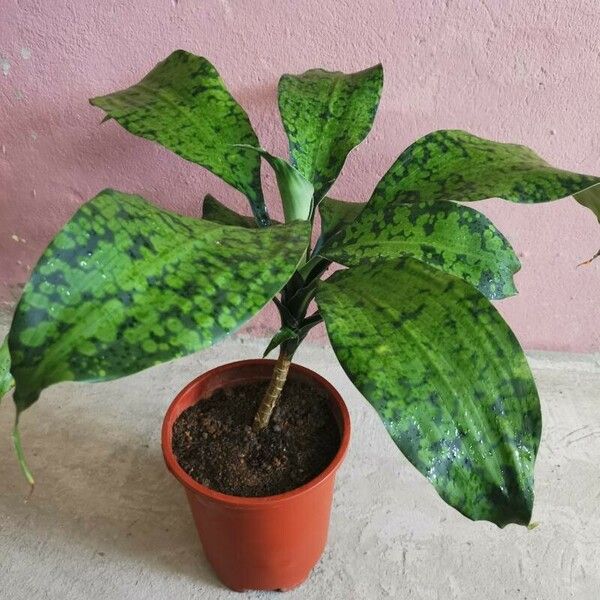
Plant Overview
Often called the Spotted Dracaena or Cantley's Dragon Tree, Dracaena cantleyi is a rare and elegant tropical treasure originating from the deep rainforests of Southeast Asia. Unlike its more common cousins, this species is a true collector's item, prized for its architectural form and striking variegated foliage. In its native habitat of Borneo and Singapore, it stands as a sentinel of the understory, bringing a touch of prehistoric mystery to any indoor jungle.
🔍 How to Identify
- 🍃 Mottled Foliage: The most striking feature is the long, lance-shaped leaves decorated with irregular, pale green or yellowish spots that look like dappled sunlight hitting a forest floor.
- 🎋 Cane-like Stems: As the plant matures, it develops sturdy, upright woody stems (canes) that give it a miniature tree-like appearance.
- 📏 Growth Habit: It features an arching leaf arrangement, where the leaves fountain out gracefully from the top of the stem, creating a lush, tiered silhouette.
🏡 In Your Garden
- 💧 Humidity Lover: Coming from the humid tropics, this Dracaena craves moisture in the air. While it survives in standard home conditions, it truly thrives when placed near a humidifier or on a pebble tray to prevent crispy leaf tips.
- 🧪 Water Sensitivity: Like many members of the Dragon Tree family, Dracaena cantleyi is sensitive to fluoride and salts found in tap water. For the healthiest, spot-free leaves, treat it to filtered water or rainwater.
- ⏳ Slow & Steady: This is a slow-growing species. It doesn't like to be moved or repotted frequently, as its root system prefers stability over constant expansion.
⚠️ Safety & Toxicity
- 🐾 Toxic to Pets: Like all Dracaena species, this plant contains saponins which are toxic to cats and dogs.
- 🤢 The Details: If leaves are chewed or swallowed, it can cause vomiting (occasionally with blood), drooling, and dilated pupils in cats. It is best kept on a high stand or in a room restricted from curious pets.
✨ Fun Fact
In its native Singapore, Dracaena cantleyi is considered a critically endangered species in the wild due to habitat loss, making the specimens grown by enthusiasts vital for the preservation of the species' genetics!

Detailed Care Instructions








