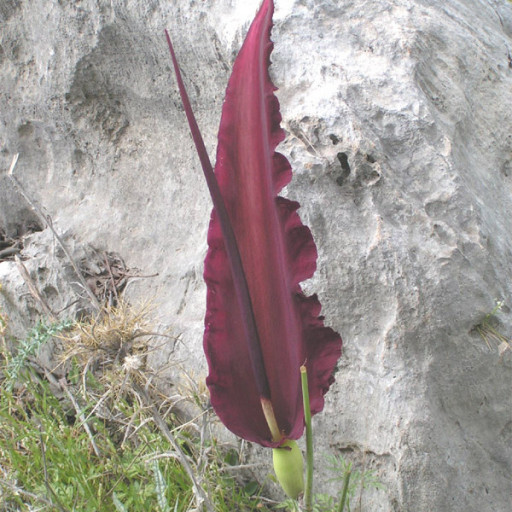
Plant Overview
Known as the "Dragon Lily" or "Voodoo Lily," this Mediterranean native is the ultimate gothic addition to any landscape. With its deep, blood-red spathe and a towering black spike, it looks like something plucked from a dark fantasy novel. While it is a visual masterpiece, be warned—it attracts its pollinators by mimicking the scent of decaying meat for a few days during its peak bloom.
🔍 How to Identify
- 🐉 The Spathe & Spadix: A massive, velvety maroon-to-purple bract (spathe) surrounds a long, slender, jet-black spike (spadix) that can reach up to 4 feet tall.
- 🐍 Snake-Skin Stem: The thick, fleshy stems are strikingly mottled with brown and cream spots, resembling the scales of a serpent or a dragon’s leg.
- 🌿 Lobed Foliage: Large, hand-shaped leaves with silver-white markings emerge in early spring, providing a lush, tropical backdrop before the dramatic flower emerges.
🏡 In Your Garden
- 🌞 Sun & Dormancy: This plant thrives in full sun but prefers its "feet" (the tuber) to stay cool. After the dramatic bloom fades in late spring, the plant quickly goes dormant and the foliage dies back—don't dig it up, as it is simply resting until the following year.
- 🪵 Drainage is Key: Because it grows from a large, heavy tuber, it is highly susceptible to rot in soggy soil. It prefers gritty, well-drained earth that mimics its rocky Grecian origins.
⚠️ Safety & Toxicity
- 🚫 Toxic Status: All parts of the plant are considered toxic if ingested. It contains calcium oxalate crystals which cause immediate burning and swelling of the mouth and throat.
- 🐾 Pets & Kids: Keep this plant away from curious pets and children. Additionally, the sap can cause skin irritation (dermatitis) for some gardeners, so it is best to wear gloves when handling or dividing the tubers.
✨ Fun Fact
During the first day of its bloom, the Dracunculus vulgaris can actually generate its own heat! This process, called thermogenesis, helps volatilize its pungent "rotting meat" aroma to attract carrion flies from great distances to ensure pollination.

Detailed Care Instructions
| Color | Purple-Black Or Deep Maroon |
| Soil Ph | Neutral |
| Lighting | Full Sun |
| Toxicity | Toxic |
| Soil Type | Rich, Moist, Well-Draining |
| Bloom Time | Early Summer |
| Plant Type | Perennial |
| Mature Size | 4 To 6 Ft. Tall |
| Native Area | Mediterranean |
| Sun Exposure | Full Sun To Partial Shade |
| Hardiness Zones | 5-8 |
To grow a Dracunculus Vulgaris plant, also known as the Dragon Arum or Voodoo Lily, you can follow these steps:
- Obtain a Dracunculus Vulgaris bulb: You can purchase bulbs from specialized nurseries, garden centers, or online. Make sure to choose healthy, large bulbs for better chances of success.
- Choose a suitable planting location: Dracunculus Vulgaris prefers a partially shaded spot in the garden that receives morning sunlight but is protected from intense afternoon sun. The soil should be fertile, well-draining, and slightly acidic.
- Prepare the planting area: Clear the planting area of weeds and other debris. Loosen the soil to a depth of about 12 inches (30 cm), incorporating compost or well-rotted manure for added nutrients and improved drainage.
- Planting the bulb: Dig a hole that is deep enough to accommodate the bulb, usually around 6 inches (15 cm) deep. Place the bulb in the hole with the pointed end facing upwards. Cover the bulb with soil, ensuring it is well-packed but not compacted.
- Watering and care: After planting, water the bulb thoroughly. Dracunculus Vulgaris prefers moist soil but not waterlogged conditions. Water regularly, especially during dry periods, but allow the soil to dry out slightly between waterings. Avoid over-watering, as it can cause the bulb to rot.
- Provide support: As the plant grows, it may require support due to its tall stature. Insert stakes or decorative supports around the plant to prevent it from toppling over.
- Fertilization: Apply a balanced, slow-release fertilizer in spring to provide essential nutrients for healthy growth. Follow the package instructions for application rates and timing.
- Mulching: Apply a layer of organic mulch, such as wood chips or bark, around the base of the plant. Mulching helps retain moisture, suppresses weeds, and provides insulation during colder months.
- Pest and disease control: Dracunculus Vulgaris is generally resistant to pests and diseases. However, keep an eye out for common garden pests like aphids or snails, and take appropriate measures to control them if necessary.
- Winter care: In areas with harsh winters, the bulb may need protection. Consider applying a layer of mulch or covering the plant with a layer of straw or burlap to insulate it from freezing temperatures.
With proper care and suitable growing conditions, your Dracunculus Vulgaris plant should thrive and produce its distinctive, fascinating blooms.

Place in a window with dappled sun or a spot in the middle of a room. Or directly in a window facing west or east.

Dracunculus Vulgaris plants require regular watering to maintain their health and vigor. When watering the plant, it is important to avoid getting water on the leaves, as this can encourage fungal growth and other diseases. Instead, water deeply around the base of the plant, making sure to saturate the soil to a depth of at least 6-8 inches. Be sure to water consistently, but not excessively, as too much moisture can lead to root rot and other problems. In addition to watering, Dracunculus Vulgaris plants benefit from regular fertilization and occasional pruning to encourage healthy growth and flowering.
To properly fertilize this plant, use a balanced fertilizer with equal parts of nitrogen, phosphorus, and potassium. Apply the fertilizer to the soil in early spring before the plant starts actively growing. Mix the fertilizer into the top layer of soil and water thoroughly. During the growing season, apply a liquid fertilizer every 3-4 weeks to promote healthy growth. Avoid over-fertilizing, as this can lead to burning or damaging the plant.
When cultivating the plant species commonly referred to as Dracunculus Vulgaris, it is important to select a soil type that is well-draining, rich in organic matter, and has ample nutrient content. It is recommended to use a soil that is somewhat acidic, with a pH around 6.0-6.5, as the plant prefers slightly acidic conditions. Additionally, it is important to avoid soils that are heavy or compacted, as this can cause root rot and inhibit proper growth. A good soil mix for Dracunculus Vulgaris may include a combination of peat moss, perlite, and compost, along with a balanced fertilizer to provide essential nutrients. Amending the soil with crushed eggshells can also be beneficial, as it provides a source of calcium for the plant. Overall, cultivating healthy and vibrant Dracunculus Vulgaris plants relies heavily on starting with a well-suited soil environment.
Dracunculus Vulgaris plant can be propagated through a process called division. This involves separating the plant into smaller sections and replanting them into new pots or locations.
Here are the steps to propagate Dracunculus Vulgaris plant:
- Choose a healthy mature plant that has several stems or bulbs.
- Carefully dig up the plant from the soil, being careful to disturb the roots as little as possible.
- Gently separate the stems or bulbs from the main plant, taking care to keep as much of the root system intact as possible.
- Replant each stem or bulb in a new pot or location with well-draining soil and moderate amounts of water.
- Keep the newly propagated plants in a shaded area for a few weeks until they start to grow new leaves.
- As the new growth appears, gradually increase the amount of light and water they receive until they are established.
Common pests of the dragon arum include Mealybugs, spider mites, thrips, snails. Make a habit of checking your dragon arum frequently for pests so that any infestations can be caught and managed early.








