Plant Overview
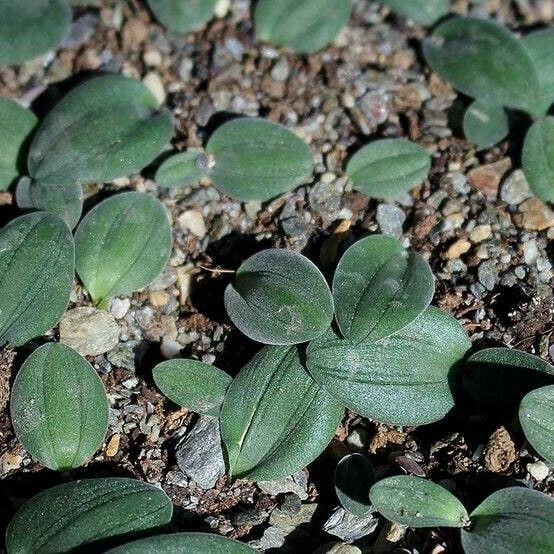
Often called the Pancake Lily or Flat-Leaved Drimia, this peculiar South African succulent is a master of minimalism. Hailing from the arid regions of Namaqualand, it has adapted to harsh sun by pressing itself as flat as possible against the cool earth. It spends the scorching summer dormant underground, only emerging during the winter rains to reveal its architectural, saucer-like leaves.
🔍 How to Identify
- 🍃 The Leaves: Features two massive, fleshy, heart-shaped leaves that lie completely prostrate (flat) on the soil surface, often overlapping like green dinner plates.
- 🍦 The Bloom: A short, dense flower spike emerges directly from the center, looking like a miniature frosted cone with greenish-white, star-shaped blossoms.
- 🧅 The Base: Beneath the surface lies a large, papery bulb that stores all the plant's energy during its long "summer nap."
🏡 In Your Garden
- 🏜️ The Dry Nap: This plant follows a strict "Winter Grower" schedule. If you water it during its summer dormancy when the leaves have withered, the bulb will likely rot. It thrives on neglect during the hot months.
- 🪨 Gritty Home: Because it grows in rocky, arid landscapes, it requires a very porous, mineral-heavy soil mix. Think of it as a desert dweller that hates "wet feet" more than anything else.
- ☀️ Light Logic: While it loves bright light to keep its leaves compact and flat, a little afternoon shade helps prevent the leaves from "sunburning" in extreme climates.
⚠️ Safety & Toxicity
- 🚫 Toxic Status: High. Like many members of the Hyacinth family, Drimia platyphylla contains cardiac glycosides.
- 🐾 Risk Level: It is dangerous if ingested by cats, dogs, or curious children. The sap can also cause mild skin irritation for those with sensitive skin, so wearing gloves during repotting is a smart move.
✨ Fun Fact
Because the flowers of the Pancake Lily sit so low to the ground, they aren't pollinated by bees or butterflies. Instead, they are primarily pollinated by scurrying rodents and beetles who find the nectar-rich spikes easily accessible at "ground level!"

Detailed Care Instructions








