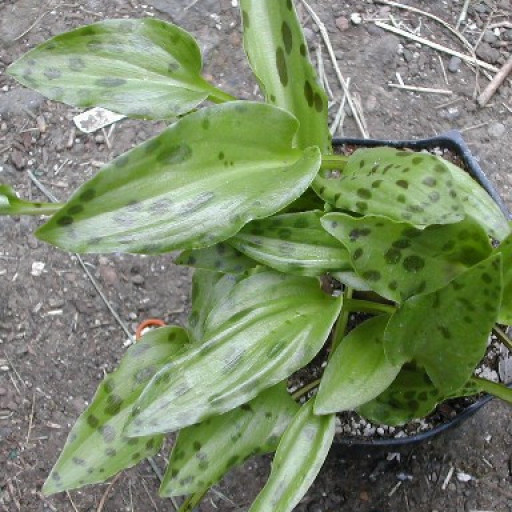
Plant Overview
Meet the Leopard Lily, a charming South African native that brings a dash of wild pattern to your indoor jungle. Often called "Little White Soldiers" for its upright, military-straight flower spikes, this bulbous beauty is beloved for its camouflage-patterned foliage. It’s a resilient survivor that thrives on a bit of neglect, making it a perfect companion for busy plant parents.
🔍 How to Identify
- 🍃 Spotted Foliage: The most striking feature is its heart-shaped, fleshy green leaves covered in dark purple or charcoal-colored spots that resemble a leopard's coat.
- 🧅 Exposed Bulbs: Unlike many plants, its teardrop-shaped bulbs often sit proudly above the soil line, looking like smooth, pale green pebbles.
- 🏹 Tiny "Soldiers": In spring and summer, it sends up slender stalks topped with tiny, pearl-like white flowers that slowly turn green as they age.
🏡 In Your Garden
- ☀️ The Light Trick: The intensity of the leaf spots is directly tied to light. If your plant starts losing its spots and turns solid green, it is "stretching" for more light and needs a sunnier windowsill.
- 💤 Winter Dormancy: Don’t be alarmed if your Leopard Lily loses its leaves in the winter! It is a deciduous bulb that likes to take a "nap." Simply move it to a cool spot, stop watering, and wait for the new spotted leaves to emerge in spring.
⚠️ Safety & Toxicity
- 🐾 Toxic to Pets: Drimiopsis maculata contains compounds that are toxic to cats, dogs, and horses. Ingestion can lead to vomiting, drooling, or lethargy.
- 👶 Keep Out of Reach: While not usually fatal to humans, the sap can cause mild skin irritation, and the bulbs are a choking hazard for small children.
✨ Fun Fact
The Leopard Lily is a "slow-motion" communicator; its leaves will actually arch and flatten out toward the ground when it is thirsty, standing back up tall almost immediately after receiving a drink!

Detailed Care Instructions
| Humidity | High |
| Lighting | Part Sun |
| Difficulty | Medium |
| Hibernation | Cold Period |
| Temperature | 18°C - 24°C |
| Hardiness Zones | Min 7B |
To grow Drimiopsis Maculata plant, you can follow these steps:
- Choose an appropriate location: Drimiopsis Maculata prefers bright, indirect sunlight. Place it near a window where it can receive a few hours of morning or evening sun.
- Select the right soil: Use a well-draining, sandy soil mix. You can mix equal parts of peat moss, perlite, and sand to create a suitable growing medium for your plant.
- Planting: Select a pot with drainage holes and fill it with the prepared soil mix. Plant the Drimiopsis Maculata bulb partially exposed, leaving the top third of the bulb above the soil surface.
- Watering: Water the plant thoroughly when the top inch of soil feels dry. Avoid overwatering as it can lead to rotting of the bulb. Allow the soil to dry out between waterings.
- Temperature and humidity: Drimiopsis Maculata prefers temperatures between 60-75°F (15-24°C). It can tolerate lower temperatures during the dormant period in winter. Maintain average indoor humidity levels, around 40-60%.
- Fertilization: Apply a balanced houseplant fertilizer diluted to half strength during the active growing season, which is typically spring and summer. Avoid fertilizing during the dormant period.
- Repotting: Every 2-3 years, you may need to repot your Drimiopsis Maculata when it outgrows its current container. Use a slightly larger pot and fresh soil mix when repotting.
- Pruning: Prune any yellow or dead leaves with clean, sharp gardening shears. This helps maintain the plant's appearance and health.
- Dormancy: Drimiopsis Maculata goes through a dormant period during winter. Reduce watering and provide cooler temperatures (around 50-60°F or 10-15°C) during this time. Limit watering to prevent rot during dormancy.
- Propagation: Drimiopsis Maculata can be propagated by offsets or division. Once your plant matures and produces offsets or bulblets, you can carefully separate them from the parent plant and replant them in their own pots.
By following these steps, you can successfully grow and care for your Drimiopsis Maculata plant.

Place in a dark room with little light, like a dark bedroom or a spot far away from a window or directly in a north-facing window.

To properly water this plant, you should ensure that the soil is completely dry before watering again. It is best to use a well-draining soil mix and water the plant sparingly, making sure that excess water is able to drain away. Ensure that the pot has proper drainage and that you do not allow the plant to sit in standing water. It is important to avoid getting water on the leaves or in the crown of the plant, as this can cause rot. Use a watering can or a small pitcher to water the soil gently, allowing the water to soak in slowly. Watering should be done infrequently, about every two weeks, and increased or decreased depending on the level of humidity in the environment.
To fertilize this plant, use a balanced liquid fertilizer diluted to half its recommended strength. Apply the fertilizer once a month during the growing season, which is generally from spring to late summer. Avoid fertilizing during the winter months when the plant is dormant. Water the plant well before and after fertilization to prevent root burn and to help distribute the nutrients throughout the soil.
The ideal soil for a particular plant is influenced by various factors and can differ for different plant species. For Drimiopsis Maculata, it is recommended to use well-draining, porous soil that is rich in nutrients. The soil should be slightly acidic with a pH level of 5.5 to 6.5. The plant prefers loose, sandy soil that is a little moist but not waterlogged. Avoid using heavy soils that retain too much moisture as it can lead to root rot and other fungal diseases. To provide better drainage, you can add perlite or sand to the soil. Also, use a pot that has drainage holes to prevent water from accumulating at the bottom.
To propagate this plant, use a sharp, clean pair of scissors or pruning shears to cut off a healthy leaf or stem from the mother plant. Make your cut just below a node or where the stem connects to the main plant.
Next, let the cutting callus over by placing it in a warm, dry area out of direct sunlight for a few days. Once callused, plant the cutting in a container filled with a well-draining soil mix that has been lightly moistened.
Keep the cutting in a warm, bright location, but out of direct sunlight. Mist the soil lightly once a day to help keep it moist. Over time, new growth should start to emerge from the cutting, indicating that roots have formed and the plant is established.
Once the plant has grown several inches tall, it can be transferred to a larger container or planted outdoors in a suitable location. Regular maintenance consisting of proper watering, light exposure, and fertilization is necessary to ensure the health and longevity of the plant.
Common pests of the leopard plant include Mealybugs, spider mites, snails. Make a habit of checking your leopard plant frequently for pests so that any infestations can be caught and managed early.








