Plant Overview
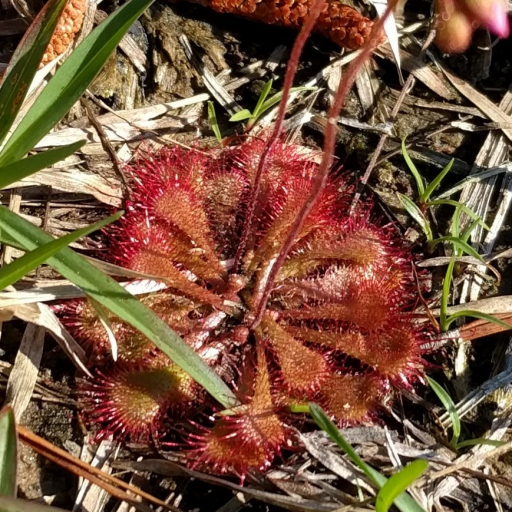
The Drosera brevifolia, commonly known as the Dwarf Sundew, is a tiny but fierce "living jewel" of the carnivorous plant world. As the smallest sundew species in North America, it often goes unnoticed until the sunlight catches the sparkling, glue-like droplets on its leaves, making it look like it’s covered in morning dew. In folklore, sundews were once believed to be a source of "youth water" because the dew on their leaves never evaporated, even in the hottest sun.
🔍 How to Identify
- 🔴 The Rosette: It grows in a very tight, circular ground-hugging pattern, rarely exceeding the size of a nickel or a quarter.
- 💎 Sticky Tentacles: The wedge-shaped leaves are covered in bright red, hair-like stalks tipped with clear, glistening mucilage (the "dew") used to trap insects.
- 🌸 Tall Blooms: It sends up a surprisingly tall flower spike (compared to its body size) featuring small five-petaled flowers that are usually white or pale pink to lilac.
🏡 In Your Garden
- 💧 Mineral Sensitivity: These plants have evolved to live in "starvation" conditions. They have a sensitive taproot and will quickly perish if given tap water; always use distilled, RO (reverse osmosis), or rainwater.
- ☀️ Light is Life: To achieve that brilliant ruby-red color, the Dwarf Sundew needs intense, direct light. In lower light, it will turn a pale green and lose its "sparkle" as it stops producing sticky mucilage.
- ⏳ Short-Lived Beauty: Unlike many larger sundews, Drosera brevifolia is often treated as an annual or a short-lived perennial in the garden, meaning it may die back after flowering and rely on its heavy seed production to return next year.
⚠️ Safety & Toxicity
- ✅ Non-Toxic: The Dwarf Sundew is considered non-toxic to humans, cats, and dogs.
- 🐜 Insect Danger Only: While safe for your skin, the sticky "dew" contains digestive enzymes specifically designed to break down the proteins of small gnats and ants.
✨ Fun Fact
The Dwarf Sundew is a master of "calculated distance." It grows its flowers on a long, thin stalk high above its leaves to ensure that it doesn't accidentally eat the very insects (pollinators) it needs to help it reproduce!

Detailed Care Instructions
To help your Drosera brevifolia plant grow, here are some tips:
- Provide the right growing conditions: Drosera brevifolia is a carnivorous plant that typically grows in wet, boggy environments. Mimic these conditions by growing it in a terrarium or keeping it on a saucer filled with water to ensure constant moisture. Additionally, place it in bright but indirect sunlight.
- Use the right soil: These plants prefer to grow in a mix of sphagnum moss and perlite. This combination provides good drainage while retaining moisture.
- Watering: Keep the soil constantly moist but not waterlogged. Use distilled or rainwater instead of tap water, as it is much purer and free of chemicals.
- Feeding: Drosera brevifolia mainly eats insects, so it is important to provide it with regular feedings. Allow small insects like fruit flies or fungus gnats to enter the terrarium or use freeze-dried bloodworms or fish food pellets. Avoid feeding it hamburger or other large foods, as they may rot.
- Humidity: Drosera brevifolia prefers high humidity levels. If your environment is dry, consider using a humidifier or placing a tray of water near the plant to increase humidity.
- Temperature: These plants prefer temperatures between 60°F to 80°F (15°C to 27°C). Avoid extreme temperatures or drafts.
- Pruning: Trim off any dead leaves or stems to maintain the plant's health and appearance.
- Repotting: Repot the plant when the soil becomes compacted or if it outgrows its current container. Use the same type of soil mix mentioned earlier.
Remember to research further or consult with experts, as the specific care requirements may vary slightly depending on your location and the specific conditions of your Drosera brevifolia plant.

Place in a dark room with little light, like a dark bedroom or a spot far away from a window or directly in a north-facing window.

To properly water Drosera Brevifolia plants, it is important to mimic their natural habitat. These plants thrive in boggy and wet environments, so maintaining consistently moist soil is crucial. Here's how to water them effectively:
1. Consider the soil: Drosera Brevifolia plants prefer well-draining soil to avoid waterlogged roots. Use a specially formulated carnivorous plant soil mix or create one by combining sphagnum peat moss, perlite, and sand. Ensure that the soil remains moist but not soggy.
2. Choose the right watering method: It is best to water these plants from the bottom rather than overhead. Place the pot in a tray or saucer filled with distilled or rainwater. This will allow the plant's roots to soak up water as needed without saturating the leaves.
3. Monitor water levels: Check the tray regularly to ensure that it has an adequate amount of water. It should be shallow enough for the roots to access it easily. Topping up the tray with water as it evaporates can maintain a constant level.
4. Avoid tap water: Drosera Brevifolia plants are highly sensitive to minerals and chemicals present in tap water. Thus, it is essential to use distilled, rainwater, or purified water. Avoid using water that contains chlorine or fluoride as this can harm the plant.
5. Monitor humidity levels: In addition to watering, these plants require high humidity levels to thrive. Consider placing a humidity tray or increasing the humidity around the plant by surrounding it with other moisture-loving plants or using a humidifier.
6. Avoid overwatering: While Drosera Brevifolia plants need consistently moist soil, be cautious not to overdo it. Soggy conditions can lead to root rot and other issues. Ensure the soil is damp to the touch, but not waterlogged. Adjust the watering schedule if needed.
7. Seasonal variations: Drosera Brevifolia plants may have different water requirements during different seasons. In warmer months or during active growth periods, they may require more frequent watering. Conversely, during cooler months or dormancy, reduce watering frequency.
Remember, while watering is an essential aspect of caring for Drosera Brevifolia plants, maintaining other important environmental factors like light, temperature, and humidity is crucial for keeping them healthy.
To fertilize Drosera Brevifolia, follow these instructions:
- Use a diluted liquid carnivorous plant fertilizer. Look for a product specifically formulated for carnivorous or insectivorous plants.
- Mix the fertilizer with water according to the instructions on the package. Generally, a dilution ratio of 1:4 or 1:8 is recommended.
- Take care not to over-fertilize, as this can harm the plant. Follow the recommended dosage and frequency indicated on the fertilizer package.
- Apply the diluted fertilizer solution to the soil around the base of the Drosera Brevifolia plant. Avoid directly pouring the fertilizer on the leaves or traps of the plant.
- Water the plant with clean, distilled or rainwater after the fertilizer application. This is important to flush out any excess fertilizer and prevent its buildup in the soil.
- Fertilize Drosera Brevifolia during the active growing season, which is typically spring to summer. Reduce or avoid fertilizing during winter dormancy.
Remember, it is essential to use a fertilizer specifically formulated for carnivorous plants and to follow the instructions provided. This ensures the appropriate balance of nutrients for the plant's unique requirements.
Drosera Brevifolia is a carnivorous plant that requires a specific type of soil to thrive. This plant is known for its unique ability to capture and digest insects in order to obtain vital nutrients.
The ideal soil for Drosera Brevifolia should be a well-draining mix that mimics its natural habitat. It is important to avoid using regular garden soil or potting soil, as these tend to retain too much moisture and can cause root rot in carnivorous plants.
A suitable soil mix for Drosera Brevifolia consists of a combination of sphagnum peat moss and perlite. Sphagnum peat moss forms the base of the mix, providing excellent water retention and acidifying properties. This is crucial for Drosera Brevifolia as it requires high humidity and acidic conditions to survive.
Perlite, on the other hand, is a lightweight volcanic mineral that improves drainage and aeration in the soil mix. This prevents the roots from becoming waterlogged and allows for the proper exchange of gases.
To create the optimal soil mix, combine approximately two parts sphagnum peat moss with one part perlite. Thoroughly mix the components together until they are well incorporated. This will ensure that the soil is evenly distributed and provides the necessary conditions for healthy root growth.
When potting Drosera Brevifolia, make sure to use a container with drainage holes to further aid in proper drainage. This will help prevent water from accumulating at the bottom, thereby reducing the risk of root rot.
Overall, providing the right soil conditions is essential for the successful growth and development of Drosera Brevifolia. By using a well-draining mix of sphagnum peat moss and perlite, you can create an environment that closely resembles its natural habitat, enabling the plant to flourish.
Drosera Brevifolia is a carnivorous plant native to North America and is known for its unique and intriguing characteristics. If you are interested in propagating this plant, here are some detailed steps to follow:
- Select a healthy parent plant: Choose a mature and vigorous Drosera Brevifolia plant from which you can take cuttings. Look for a plant that is disease-free, has strong and vibrant leaves, and is well-established.
- Prepare your tools and materials: You will need a sharp and sterilized pair of pruning shears, a clean and sterile work surface, a container or pot filled with a suitable growing medium, and a clear plastic bag or a humidity dome.
- Choose the appropriate time: It is best to propagate the Drosera Brevifolia during its active growing season, which is typically in late spring or early summer. This will provide the plant with optimal conditions for successful propagation.
- Locate suitable stems for cutting: Identify healthy and non-flowering stems with several mature leaves. These stems should preferably be relatively long to allow for a sufficient length to work with during the propagation process.
- Take a stem cutting: Using the sterilized pruning shears, carefully cut off a stem section from the parent plant with at least three to four mature leaves. Make sure to make a clean and precise cut just below a leaf node.
- Remove lower leaves: Once you have the stem cutting, gently remove the lower leaves near the base of the cutting. This will create a clean stem surface that will be planted into the growing medium.
- Prepare the growing medium: Use a suitable growing medium such as a mixture of sphagnum moss and perlite, or peat moss with sand, to create a well-draining and nutrient-poor environment. Moisten the medium slightly beforehand to ensure optimal conditions for root development.
- Plant the stem cutting: Make a small hole in the growing medium using a pencil or your finger. Place the stem cutting into the hole, making sure that the lower part is fully inserted into the medium while the upper leaves are above the surface.
- Create a humid environment: To promote successful rooting, enclose the potted cutting within a clear plastic bag or cover it with a humidity dome. This will trap moisture and create a humid microclimate which aids in the growth of new roots.
- Provide appropriate lighting and temperature: Place the potted cutting in a well-lit area, preferably under fluorescent grow lights that provide 12-16 hours of simulated sunlight per day. Maintain a temperature range between 70-85°F (21-29°C) to mimic the plant's natural environment.
- Monitor and maintain moisture: Check the moisture levels of the growing medium regularly, ensuring it remains consistently damp but not waterlogged. Mist the leaves with distilled water occasionally to provide additional humidity.
- Wait for root development: It can take several weeks for the cutting to develop roots. During this time, monitor the plant for signs of growth and maintain the desired environmental conditions. Once the roots have developed, you can remove the plastic bag or humidity dome.
By following these detailed steps, you should be able to propagate Drosera Brevifolia successfully. It's important to note that due to the specific characteristics of this plant, it may require some patience and care throughout the propagation process.








