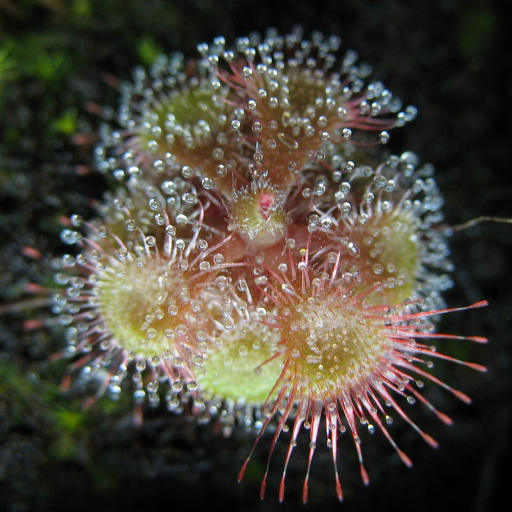
Plant Overview
Known as the "Tropical Sundew," Drosera burmannii is a tiny but formidable carnivore that looks like a shimmering ruby dropped in the mud. Found across Southeast Asia and Australia, it is legendary among plant enthusiasts for its "lightning-fast" movements—at least by plant standards. It’s a master of the bog, turning poor soil into a feast by trapping unsuspecting insects in its glistening, sticky traps.
🔍 How to Identify
- 🍃 Wedge-Shaped Rosettes: The plant grows in a flat, circular rosette of fan-shaped leaves that rarely exceed an inch or two in diameter.
- 💎 Glistening "Dew": The leaves are covered in sensitive reddish tentacles tipped with translucent, sticky mucilage that sparkles like diamonds in the sun.
- 🌸 Tall Flower Spikes: It sends up a surprisingly long, leafless stalk topped with tiny white or pink flowers, keeping its pollinators safely away from its deadly leaves.
🏡 In Your Garden
- ☀️ The Redder, The Better: While it can survive in green hues, this sundew turns a brilliant, deep crimson when exposed to intense, direct sunlight.
- 🦟 The Gnat Snatcher: It is an exceptional choice for indoor growers struggling with fungus gnats or fruit flies, as its sticky leaves act like natural flypaper.
- 💧 Pure Water Only: This plant has a very sensitive root system; it "breathes" through the water, so it requires distilled, rain, or reverse-osmosis water to avoid mineral burn.
⚠️ Safety & Toxicity
- ✅ Non-Toxic Status: Drosera burmannii is considered non-toxic to humans, cats, and dogs. It doesn't have "teeth" or "venom" that can harm larger mammals.
- 🐜 Insect Warning: While safe for pets, it is a "death trap" for small invertebrates. Keep it away from your pet's favorite butterfly-watching window if you want the local bugs to thrive!
✨ Fun Fact
Most sundews take minutes or even hours to react to a meal, but Drosera burmannii is the "sprinter" of the genus. Its outer "snap tentacles" can bend 180 degrees in less than a second, catapulting an insect into the center of the leaf where the digestive enzymes await!

Detailed Care Instructions
To grow Drosera Burmanni plants, follow these steps:
- Choose the right growing conditions: Drosera Burmanni plants thrive in warm and humid environments. They require bright, indirect sunlight for at least 6-8 hours a day. Maintain a temperature range of 65-85°F (18-29°C) and humidity levels around 50-70%.
- Select the right container: Use a shallow container or a pot with good drainage to prevent waterlogging. The plant is typically grown in a terrarium or in a small pot with a peat-based soil mix.
- Prepare the soil mix: Drosera Burmanni prefers well-draining acidic soil. Make a soil mix by combining equal parts of peat moss and perlite or sand. This mixture provides the necessary drainage and aeration for the plant.
- Sow the seeds or propagate from cuttings: You can either sow fresh Drosera Burmanni seeds in the soil mix or propagate the plant from leaf cuttings. Place the seeds or cuttings on the soil surface, gently pressing them in.
- Keep the soil moist: Water the plant regularly to keep the soil consistently moist. Use distilled or rainwater, as tap water may contain minerals that can harm the plant. Ensure the container drains excess water well and avoid waterlogging.
- Provide adequate lighting: Place the container in a well-lit area where the plant can receive bright, indirect sunlight. Avoid direct sunlight, as it can scorch the leaves.
- Maintain appropriate humidity: Create a humid environment for the plant by covering the container with a transparent lid or placing it in a terrarium. Mist the plant regularly to maintain humidity levels around 50-70%.
- Feed the plant: Drosera Burmanni is carnivorous and relies on insects for nutrients. The plant will capture and digest small insects, but if growing conditions are limited, you may need to supplement its diet with small insects like fruit flies or mosquitoes.
- Prune when needed: Trim off any dead or decaying leaves to maintain the plant's appearance and prevent overcrowding.
- Be patient: It may take some time for the Drosera Burmanni plant to establish and grow. With proper care and patience, you should start to see new leaves and growth in a few weeks.
Remember to research further or consult a local horticulturist for specific care instructions tailored to your growing conditions.

Place in a bright room that is sun drenched almost all day. Or directly in a south-facing window.

Drosera Burmanni is a type of carnivorous plant that requires specific care to thrive. To water this plant, you should first assess its soil moisture level by testing the moisture content with your fingers or a soil moisture gauge. If the soil feels dry, it's time to water.
The best way to water Drosera Burmanni is to use distilled water or rainwater. This is because tap water contains minerals that can build up in the soil and harm the plant. Fill a tray or saucer with distilled or rainwater and place your plant's pot in it, making sure the water level is no higher than the bottom of the pot. The plant will absorb the water it needs through the drainage holes in the bottom of the pot.
Avoid watering the plant from above, as this can damage the delicate leaves and trigger digestion of the plant's prey. If you do choose to water from above, use a fine mist or spray bottle and avoid getting water on the leaves.
Water Drosera Burmanni regularly to keep the soil evenly moist, but never let the plant sit in standing water. During the winter months, the plant may require less water, so monitor the soil moisture more closely. With proper care, your Drosera Burmanni plant will flourish and provide a unique and fascinating addition to your collection.
To fertilize this plant, use a diluted, water-soluble fertilizer with balanced nutrients (NPK). Mix the fertilizer with water at half the recommended strength and apply to the soil once a month during the growing season. Avoid over-fertilizing as it can damage the plant's delicate roots. Additionally, avoid using any fertilizers that contain urea or high concentrations of phosphorus, as these can be harmful to the plant.
Drosera Burmanni, a type of carnivorous plant, requires a specific type of soil for optimal growth and survival. The ideal soil for this plant is typically a mixture of sphagnum peat moss and perlite, which provides a well-draining, nutrient-poor environment. This type of soil mimics the plant's natural habitat and helps prevent soil compaction, which can impede root growth and lead to plant death. Additionally, it is important to avoid using soil that contains high amounts of minerals or organic matter, as this can negatively impact the plant's ability to digest insects for nutrients. Overall, growing healthy and happy Drosera Burmanni requires careful attention to soil composition and quality.
To propagate this specific plant, you should first choose a mature and healthy specimen to take cuttings from. Using a clean and sharp pair of scissors, make a clean cut on the stem, ensuring that there is at least one leaf node on the cutting. Before planting the cutting, dip the cut end in rooting hormone powder to encourage root growth. Next, plant the cutting in a small container filled with moist sphagnum moss or a well-draining soil mix, being careful not to bury the cutting too deeply. Provide bright, indirect light and keep the soil moist but not waterlogged. The cutting should begin to develop roots within a few weeks, and once established, can be transplanted into the desired container or location.
Common pests of the tropical sundew include Aphids. Make a habit of checking your tropical sundew frequently for pests so that any infestations can be caught and managed early.







