Plant Overview
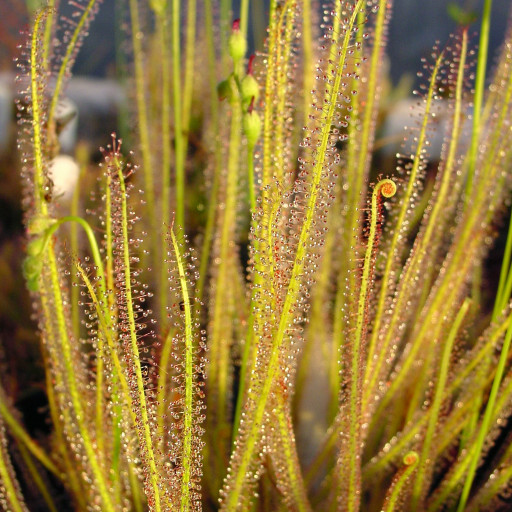
Often called the Thread-leaved Sundew, this carnivorous beauty looks like an explosion of dewy, crystalline wires reaching for the sky. Native to the bogs and pine barrens of North America, it is a specialized predator that uses shimmering, glue-like droplets to lure and trap unsuspecting insects. Unlike its ground-hugging cousins, this sundew stands tall and proud, appearing like a jewel-encrusted harp when caught in the morning light.
🔍 How to Identify
- 🌿 The Leaves: Long, slender, thread-like leaves that grow strictly upright. They can reach heights of 10 to 15 inches, resembling vibrant green blades of grass covered in morning mist.
- 💎 The Glands: Hundreds of tiny, red-tipped hairs (tentacles) cover the leaves. Each hair produces a globule of "mucilage"—a sticky, glistening substance that looks like water but acts like superglue.
- 🌸 The Blooms: In summer, it produces delicate five-petaled flowers in shades of pink or lavender. These grow on a tall, leafless stalk far above the "killing zone" of the leaves to ensure pollinators don't become dinner.
🏡 In Your Garden
- ☀️ The Sun Factor: This plant is a sun-worshiper. It needs intense, direct light to produce the sugars required for its sticky dew and to develop its deep red coloration. Without enough sun, the plant will look "dry" and lose its appetite.
- 💧 Water Quality: Because it evolved in nutrient-poor bogs, it has a very sensitive root system. Never use tap water; it requires distilled, reverse osmosis, or rainwater. It loves "wet feet" and should sit in a shallow tray of water at all times.
- ❄️ Winter Rest: This is a temperate plant, not a tropical one. In the fall, it will stop growing and form a tight, fuzzy green bud called a hibernaculum. This is its way of hibernating, and it must be kept cool during this period to return strong in the spring.
⚠️ Safety & Toxicity
- ✅ Non-Toxic: The Thread-leaved Sundew is completely safe for humans, cats, and dogs. It contains no known toxins that affect mammals.
- 🦟 Pest Control: While safe for pets, it is a nightmare for gnats and small flies. It is often used by indoor gardeners as a natural, "living flypaper" to control fungal gnat outbreaks in potting soil.
✨ Fun Fact
The Drosera filiformis is a master of slow-motion movement. Once an insect is hopelessly stuck in the dew, the entire thread-like leaf will slowly curl around the prey over the course of several hours. This "hug" allows the plant to touch the insect with as many digestive glands as possible!

Detailed Care Instructions
| Humidity | Normal |
| Lighting | Full Sun |
| Difficulty | Medium |
| Hibernation | Cold Period |
| Temperature | 15°C - 27°C |
| Hardiness Zones | 7 - 9 |
To grow Drosera Filiformis, also known as thread-leaved sundew, you can follow the steps below:
- Climate: Ensure that your climate matches the requirements of Drosera Filiformis. They typically thrive in temperate to subtropical conditions with plenty of sunlight.
- Soil: Choose a well-draining soil mix that consists of sphagnum moss or peat moss. Avoid using regular potting soil, as it may contain fertilizers or additives that can harm the plant.
- Container: Select a container with good drainage, such as a pot with several drainage holes. Make sure it is also wide enough to accommodate the spreading nature of the plant.
- Watering: Sundews require constantly moist soil. Use distilled water, rainwater, or reverse osmosis water for watering, as they don't tolerate tap water with high mineral content. Water the plant from beneath by placing the pot in a tray with water or by using a saucer.
- Lighting: Drosera Filiformis needs bright, direct sunlight for at least 4-6 hours a day. Place the plant near a south-facing window or use artificial grow lights if natural light is limited.
- Feeding: Sundews are carnivorous plants that obtain nutrients by supplementing their diet with insects. They have sticky tentacles on their leaves that attract and trap insects. While they can catch their own prey, you can supplement their diet with small insects like fruit flies, pinhead crickets, or ants.
- Humidity: Sundews appreciate moderate to high humidity levels. If the air in your home is dry, you can increase humidity around the plant by placing the pot on a tray filled with water and pebbles or by using a humidifier.
- Dormancy: During the winter months, Drosera Filiformis goes into a period of dormancy. Reduce watering and allow the soil to dry out slightly but not completely. Place the plant in a cool location with temperatures around 50-60°F (10-15°C) during this period.
Following these care instructions should help you successfully grow Drosera Filiformis. Remember to monitor the plant's health and adjust the care accordingly if any issues arise.

Place in a bright room that is sun drenched almost all day. Or directly in a south-facing window.

Drosera Filiformis is a carnivorous plant that requires specific care when it comes to watering. To water this type of plant, it is important to keep in mind that it can be sensitive to the quality of water used. It is best to use distilled or purified water as tap water can contain minerals and chemicals that can harm the plant.
To water Drosera Filiformis, it is important to pour a small amount of water around the base of the plant, making sure that the water does not touch the leaves. The plant should not be watered from above as it can cause damage to the leaves.
It is also important to avoid overwatering Drosera Filiformis as it can lead to root rot and fungus growth. The plant should be watered sparingly but regularly, allowing the soil to dry out slightly between waterings. In general, the soil should be kept moist but not waterlogged.
In addition to watering, Drosera Filiformis requires high humidity and plenty of sunlight to thrive. It is important to provide a humid environment by placing the plant in a tray of water or misting the leaves regularly. The plant should also be placed in a sunny location where it can receive at least six hours of direct sunlight each day.
Drosera Filiformis plants thrive in nutrient-poor environments, so it's important to be mindful when fertilizing them. Here are some instructions for fertilizing this particular plant:
- Select a suitable fertilizer: Choose a liquid fertilizer that is low in nutrients, such as a dilute solution of a balanced houseplant fertilizer or a carnivorous plant-specific fertilizer.
- Dilute the fertilizer: Mix the fertilizer with water according to the manufacturer's instructions. For Drosera Filiformis, use a very weak solution, typically around 1/4 to 1/2 strength of the recommended dosage.
- Time your fertilization: Fertilize the plant during its active growing season, which is usually during the spring and summer. Avoid fertilizing during the plant's dormant period.
- Apply the fertilizer carefully: Use a spray bottle or a dropper to apply the diluted fertilizer directly to the leaves of the plant. Avoid getting the fertilizer on the soil or in the center of the rosette.
- Frequency of fertilization: Fertilize Drosera Filiformis sparingly, typically once every two to four weeks. Over-fertilizing can lead to nutrient buildup and harm the plant.
- Observe and adjust: Monitor the plant's response to the fertilizer. If the leaves start turning brown or the plant appears stressed, reduce the frequency or concentration of the fertilizer.
Remember, Drosera Filiformis is primarily a carnivorous plant that obtains most of its nutrients from trapping and digesting insects. Fertilizing should only supplement its nutrient uptake, not replace it entirely.
Drosera Filiformis prefers a nutrient-poor, well-drained soil that is not too alkaline. It is recommended to use a mix of sphagnum peat moss, silica sand, and perlite in equal parts to create the ideal growing medium for the plant. The soil should be kept moist, but not waterlogged. Over-fertilization should be avoided as it can harm the delicate roots of the plant. A pH level of around 5.5 to 6.5 is recommended for optimal growth. It is also important to keep the soil free of any debris, as this can promote the growth of harmful pathogens.
Drosera filiformis can be propagated through several methods. One common method is by seed propagation:
- Collection of seeds: Allow the plant to flower and produce seed pods. These pods will dry out and turn brown when mature. Collect the seeds by carefully removing the pods from the plant.
- Seed preparation: Gently crush the dried seed pods to release the small, black seeds inside. Separate the seeds from the chaff and debris by gently blowing on them or using a fine sieve.
- Seed stratification: Drosera filiformis seeds require a period of cold stratification to enhance germination. Place the seeds in a damp paper towel, seal it in a plastic bag, and refrigerate them for 4 to 8 weeks.
- Soil preparation: Prepare a growing medium suitable for carnivorous plants. It should consist of a mix of peat moss, perlite, and sand in equal parts. Ensure the pH of the medium is acidic, around 4.5 to 5.5.
- Sowing the seeds: Fill small pots or seed trays with the prepared growing medium. Moisten the medium by spraying it with distilled water. Sprinkle the seeds evenly on the surface, ensuring they are not covered as they need light to germinate.
- Adequate lighting: Place the pots or trays in a location with bright, indirect sunlight or under grow lights. Drosera filiformis requires high light levels for germination and growth.
- Maintain humidity: Cover the pots or trays with a clear plastic lid or use a propagator to maintain high humidity around the seeds. This will create a mini greenhouse effect and ensure successful germination.
- Germination and growth: Keep the growing medium consistently moist but not waterlogged. Germination usually occurs within 2 to 6 weeks, but can sometimes take longer. Once the seedlings are large enough to handle, usually with several true leaves, they can be transplanted into individual pots or trays.
- Growth requirements: Drosera filiformis prefers a growing environment with high humidity and moist soil. Ensure the plant receives adequate light, preferably 6-8 hours of direct sunlight per day. Water the plant with distilled or rainwater to avoid mineral buildup that can harm the sensitive roots.
- Division: Over time, established Drosera filiformis plants may form clumps. These can be divided by carefully lifting the plant, separating the roots, and replanting the divisions in separate pots or areas.
Remember, Drosera filiformis is a carnivorous plant that captures and digests small insects for nutrients. It requires specific care to thrive and should be kept away from fertilizers and tap water.








