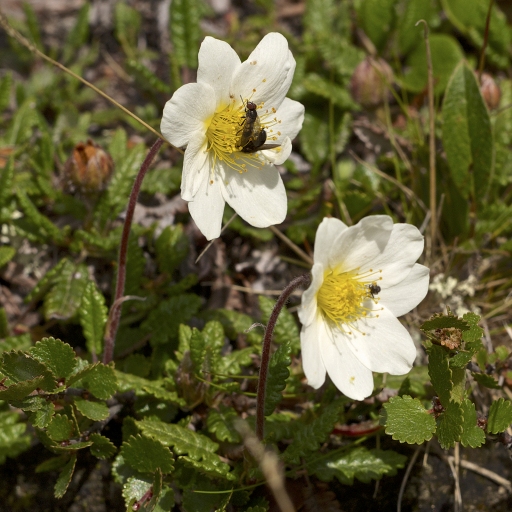
Plant Overview
Known as the Mountain Avens or "Eight-petaled Dryas," this tough little evergreen is a true survivor of the ice ages. It is the national flower of Iceland and a beloved symbol of high-altitude wilderness, often seen clinging to limestone rocks where few other things can grow. Its name "Dryas" comes from the Greek word for oak, referring to its tiny, scalloped leaves that resemble miniature forest giants.
🔍 How to Identify
- 🌼 The Eight Petals: Unlike most members of the Rose family which have five petals, this plant is famous for its creamy white flowers that almost always feature exactly eight petals.
- 🍃 Miniature "Oak" Leaves: The leaves are dark green, leathery, and have distinctively scalloped edges. They are silvery and woolly on the underside to trap heat and moisture.
- 🧶 Feathery Seed Heads: Once the flower fades, it transforms into a striking, twisted plume of silky, feathery seeds that catch the wind like miniature weather vanes.
🏡 In Your Garden
- 🪨 The Rock Specialist: This is a "prostrate" shrub, meaning it grows flat against the ground to stay out of the wind. It is perfect for rock gardens or "scree" beds where it can spill over stones.
- 🧊 High Drainage, Low Heat: It is incredibly cold-hardy but hates "wet feet" and humid summers. It requires gritty, limestone-rich soil and will struggle in heavy clay or overly rich garden beds.
⚠️ Safety & Toxicity
- ✅ Non-Toxic: There are no known toxic effects for humans, cats, or dogs.
- 🧤 Skin Friendly: Unlike many alpine plants that have irritating saps or thorns, the Mountain Avens is soft to the touch and safe to handle without gloves.
✨ Fun Fact
⏳ A Geological Icon: This plant is so significant that two major historical cold snaps in Earth's history—the Younger Dryas and Older Dryas—were named after it. Geologists found massive amounts of its fossilized pollen in European lake sediments, signaling times when the world briefly returned to ice-age conditions.

Detailed Care Instructions
To grow Dryas Octopetala plant, follow these steps:
- Climate and Soil: Ensure you have the appropriate climate and soil conditions to support the growth of Dryas Octopetala. It typically thrives in cool temperate climates and well-drained, sandy or rocky soil.
- Collect Seeds: Obtain Dryas Octopetala seeds from a reputable source. Alternatively, you can collect the seeds from wild plants, if permitted in your region.
- Stratification: Many Dryas Octopetala seeds require a period of cold stratification (exposure to cold temperatures) to break dormancy. Place the seeds in a sealed plastic bag with a moistened paper towel. Refrigerate them for several weeks. This mimics winter conditions and promotes germination.
- Sow Seeds: Once stratification is complete, sow the seeds in small containers filled with a well-draining potting mix. Gently press the seeds into the soil and cover them lightly with more potting mix.
- Watering: Keep the soil slightly moist but not overly wet. Water the seeds regularly, making sure not to let the soil dry out completely.
- Light and Temperature: Provide the seedlings with bright, indirect light. Avoid exposing them to direct sunlight, which may scorch the delicate plants. Maintain a temperature around 15-20°C (59-68°F) during the germination process.
- Transplanting: When the seedlings have grown several sets of true leaves and are sturdy enough, transplant them into larger pots or directly into the garden. Choose a location that offers full to partial sun and well-drained soil.
- Maintenance: Water the plants regularly, especially during dry periods. Mulching around the base of the plants can help retain moisture and suppress weed growth. Monitor for pests and diseases and take appropriate action if necessary.
- Propagation: Dryas Octopetala can also be propagated by division or by rooting stem cuttings. Division is best done in spring, while stem cuttings can be taken during the growing season.
- Pruning: Trim back any dead or damaged foliage, as well as any overgrown or leggy stems, to maintain a compact and healthy plant.
By following these steps, you can successfully grow Dryas Octopetala plants. Patience and care are key, as the germination process may take several months, and the plants may take a few years to reach their full size and maturity.

Place in a bright room that is sun drenched almost all day. Or directly in a south-facing window.

To properly water this plant, monitor the soil moisture level by inserting your finger about one inch into the soil. If it feels dry, water the plant thoroughly. Use clean, distilled water that is free from additives or chemicals. Be careful not to overwater, as too much water can lead to root rot and fungal growth. Additionally, avoid getting water on the leaves or flowers of the plant, as this can cause damage. Watering frequency will vary depending on factors such as humidity, temperature, and light levels, so be sure to monitor the soil regularly.
To fertilize this plant, use a balanced fertilizer with a 10-10-10 ratio. Apply the fertilizer in early spring before new growth emerges and again in early summer after flowering. Water the plant well before and after fertilizing to avoid burning the roots. Spread the fertilizer evenly around the base of the plant, avoiding direct contact with the stems and leaves. Always follow the instructions on the fertilizer package and do not over-fertilize as it can harm the plant.
The ideal soil for this plant should be well-draining and have a slightly acidic pH level. It should have a good balance of organic matter to ensure proper nutrient uptake and water retention, without becoming too soggy. It is recommended to mix the soil with sand or gravel to improve drainage and prevent waterlogging. Additionally, avoid using soil that is too heavy, as this can suffocate the roots and lead to poor growth or even death of the plant. A soil that is loose, friable, and has good aeration is ideal for this plant.
Dryas Octopetala is a plant that can be propagated using various methods such as division, stem cuttings, and seed propagation.
For division, the plants can be carefully dug up and separated into smaller sections, ensuring that each section has enough roots and leaves to support its growth. These sections can then be replanted in separate pots or directly into the garden.
For stem cuttings, select healthy stem sections with at least two nodes. Cut the stem just below the lowest node, remove the lower leaves, and dip the cut end in rooting hormone. Plant the cutting in a well-draining potting mix and keep it moist. After a few weeks, roots should start to develop, indicating successful propagation.
To propagate using seeds, collect mature seeds from the plant and sow them in a well-draining potting mix. Cover the seeds with a thin layer of soil, water regularly, and keep the soil moist. Germination typically occurs within a few weeks.
Regardless of the propagation method, it is important to provide the newly propagated plants with adequate light, water, and nutrients to encourage healthy growth.








