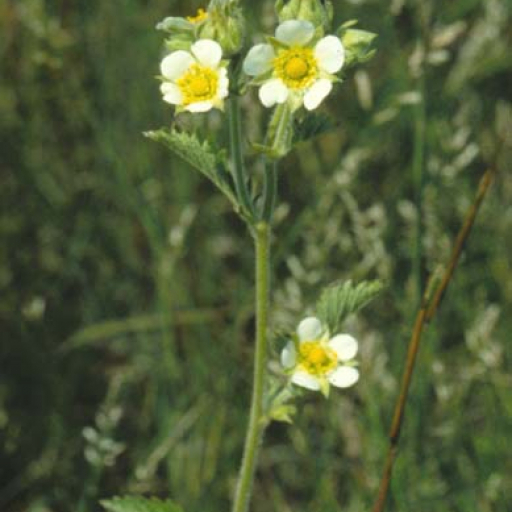
Plant Overview
Often referred to as the Prairie Cinquefoil or Tall Cinquefoil, this resilient wildflower looks like a wild strawberry plant that decided to reach for the stars. Native to the vast grasslands of North America, it is a tough-as-nails perennial that transitions beautifully from wild prairies to structured rock gardens. Its creamy, "fried-egg" flowers and velvety foliage make it a subtle but charming addition to any naturalistic landscape.
🔍 How to Identify
- 🌼 The Blooms: Small, five-petaled flowers that range from creamy white to pale buttery yellow, centered with a cluster of bright golden stamens.
- 🌿 Sticky Foliage: The leaves are "pinnate" (resembling a feather) with jagged, saw-toothed edges. If you touch the stems, you’ll notice they are covered in fine, glandular hairs that feel slightly sticky.
- 📏 Growth Habit: Unlike its low-creeping cousins, this species grows upright on sturdy, reddish-tinted stalks that can reach up to three feet in height.
🏡 In Your Garden
- 🌱 The Taproot Secret: This plant develops a deep, woody taproot, which is its superpower for surviving droughts. However, this means it hates being moved once established—pick its "forever home" carefully!
- ☀️ Low Maintenance Hero: It thrives in poor, rocky, or sandy soils where other plants might wither. It’s an excellent choice for xeriscaping or "wild" corners of the garden that receive full sun.
- 🐝 Pollinator Magnet: While it might look simple to us, it is a high-traffic zone for short-tongued bees, hoverflies, and butterflies looking for a reliable nectar source.
⚠️ Safety & Toxicity
- ✅ Safe Status: Drymocallis arguta is generally considered non-toxic to humans, dogs, and cats.
- 🧤 Mild Irritation: While not poisonous, the sticky, resinous hairs on the stems can occasionally cause very mild skin irritation for people with highly sensitive skin. It’s always a good idea to wear gloves if you are pruning a large patch.
✨ Fun Fact
- 📜 Etymology: The name "Cinquefoil" traditionally comes from the French cinque feuilles, meaning "five leaves." However, this specific variety is a bit of a rebel—it often produces seven to nine leaflets on its lower stems instead of the standard five!

Detailed Care Instructions

Place in a bright room that is sun drenched almost all day. Or directly in a south-facing window.

Some plants require more regular watering than others, which should be done every few days. It's critical to maintain the soil moist all of the time. The water requirements of the same plant placed in pots with varying sizes will differ. Because the water in the smaller pot evaporates faster than the water in the larger pot, it will require more watering. Regardless of pot size, the surface should constantly be maintained moist.








