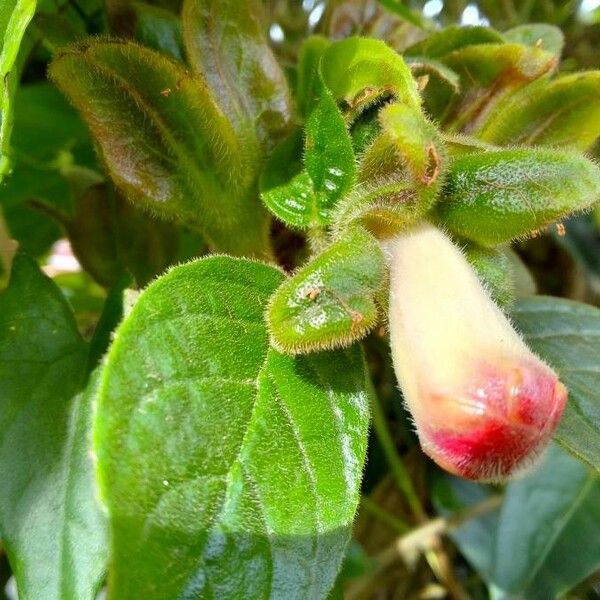
Plant Overview
Known as a hidden gem of the Central American rainforests, Drymonia alloplectoides is a striking relative of the common African Violet. Often nicknamed the "Urn-flowered Drymonia," this plant is a master of adaptation, living its life as an epiphyte (air plant) or a scrambling vine in the misty cloud forests. It is highly prized by rare plant collectors for its waxy, sculptural blooms that look like tiny, hand-painted porcelain vessels.
🔍 How to Identify
- 🔔 The Flowers: The most distinct feature is the "urn-shaped" flower. These blooms are typically creamy-white or pale yellow, often decorated with intricate maroon or purple spots tucked deep inside the throat.
- 🍃 The Foliage: Leaves are thick, lance-shaped, and grow in opposite pairs. They have a slightly succulent feel with a glossy, deep green finish that helps the plant shed excess rainwater in its humid home.
- 🛡️ The Calyx: Each flower is cradled by a large, leaf-like structure called a calyx. In this species, the calyx is often tinged with reddish-purple, providing a beautiful color contrast even before the flower opens.
🏡 In Your Garden
- ☁️ Humidity is King: Because it originates from tropical cloud forests, this plant thrives in high-humidity environments. If you are growing it indoors, a terrarium or a dedicated "plant room" with a humidifier is often necessary to prevent the leaf tips from browning.
- 🌳 The Right "Shoes": Since it grows on trees in the wild, it hates heavy, waterlogged soil. It prefers a very airy, chunky mix—think orchid bark, perlite, and a little peat moss—to ensure its roots can breathe while staying moist.
⚠️ Safety & Toxicity
- 🌿 Safe for Most: Drymonia alloplectoides is generally considered non-toxic to humans and common household pets, much like its cousins in the Gesneriad family.
- 🐾 General Caution: While not inherently dangerous, it is always best to keep exotic plants out of reach of curious nibblers. Ingesting any plant material can cause mild stomach upset or a choking hazard for small cats and dogs.
✨ Fun Fact
In the wild, many Drymonia species have a specialized relationship with "Orchid Bees" (Euglossine bees). The bees are attracted to the flower's scent and shape, and the plant has evolved to "slap" a packet of pollen onto the bee’s back as it enters the urn-shaped bloom!

Detailed Care Instructions








