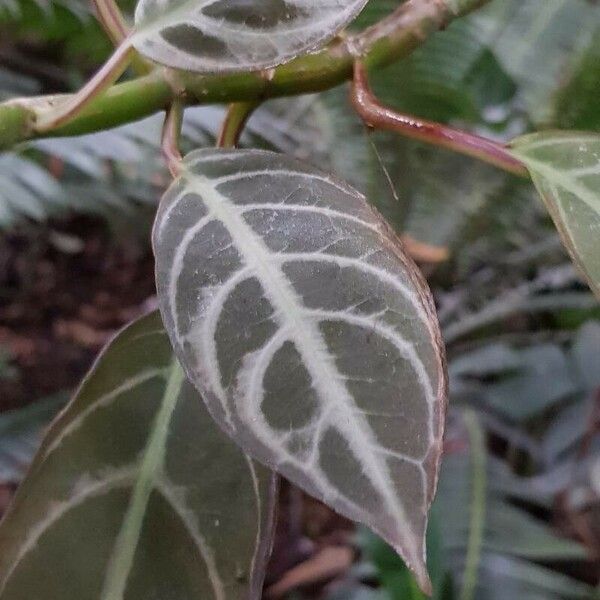
Plant Overview
Hailing from the misty, high-altitude cloud forests of Ecuador, Drymonia chiribogana is a tropical showstopper that looks like it belongs in a sci-fi film. A proud member of the African Violet family (Gesneriaceae), this rare find is often called the "Chiriboga Drymonia" and is prized by collectors for its dramatic, waxy foliage and alien-like blooms.
🔍 How to Identify
- 🍃 The Foliage: It features large, lance-shaped leaves with a deep green, almost metallic sheen. The texture is noticeably thick and waxy, designed to shed heavy tropical rainfall.
- 🔔 The Bloom: The flowers are the real stars—tubular and hooded, they often appear in shades of creamy white or pale yellow, sometimes accented with striking maroon or purple "freckles" deep inside the throat.
- 🌿 Growth Habit: This is a "hemiepiphyte," meaning it can start its life on the ground but loves to climb up tree trunks using adventitious roots to reach the light.
🏡 In Your Garden
- ☁️ Humidity is King: Because it originates in the Ecuadorean cloud forests, it demands high humidity (at least 60-70%). In a typical home, it thrives best in a dedicated greenhouse cabinet or near a high-quality humidifier.
- 🧪 The "Airy" Secret: Do not plant this in heavy potting soil. Because it is naturally epiphytic, its roots need to breathe. Use a chunky mix of orchid bark, perlite, and sphagnum moss to mimic the mossy tree branches it calls home.
- 🌤️ Dappled Light: Think of the jungle floor; it hates direct, scorching sun. Bright, filtered light will keep the leaves vibrant and encourage those strange flowers to emerge.
⚠️ Safety & Toxicity
- 🟢 Status: Generally considered non-toxic.
- 🐾 Details: While members of the Gesneriad family are typically safe for cats and dogs, the waxy leaves can cause mild stomach upset if ingested in large quantities. It is always best to keep exotic tropicals out of reach of curious nibblers.
✨ Fun Fact
The genus name Drymonia comes from the Greek word "drymos," which means "oak wood" or "forest." This refers to the plant’s natural preference for growing on the sturdy trunks of ancient forest trees!

Detailed Care Instructions

Place in a dark room with little light, like a dark bedroom or a spot far away from a window or directly in a north-facing window.

The presence of a dry surface layer of soil does not indicate that the plant requires water. Instead, stick your finger 1-2" (3-5 cm) deep in the soil to feel dampness or moisture content. If the soil seems dry, it's time to water your greens. If the soil is still moist, however, it is better not to water your plant and instead wait a day or two. Overwatering or waterlogging raises the risk of root rot. So if the soil takes longer than a week to dry, check the light conditions because it's likely that the plant isn't getting enough light. It's fine if the upper layer of soil is dry between waterings, but the deeper soil layer should always have some moisture.
These plant needs regular fertilizing during growing seasons. Fertilizing your plants in dormant state during the winter, might result in scorching or browning of the leaf tips. If mature plants display signs of nutrient insufficiency, fertilizer administration is necessary to restore the plant to its previous state.
You may use Flower Fertilizer for your Drymonia Chiribogana








