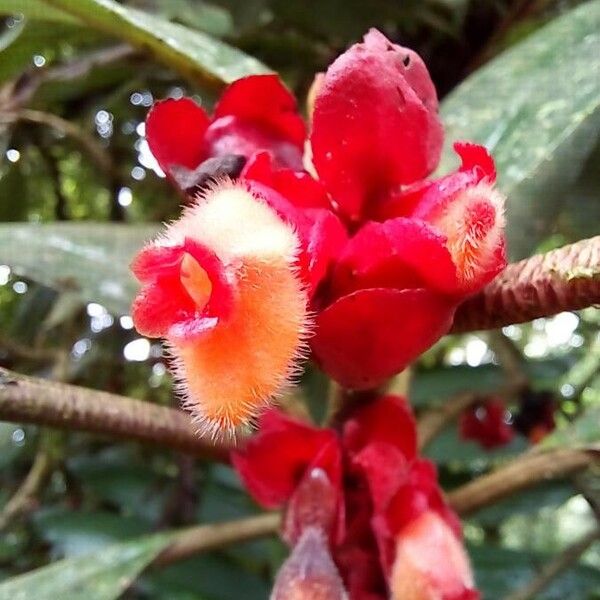
Plant Overview
Often found creeping up tree trunks in the humid rainforests of Central and South America, Drymonia coriacea is a sophisticated choice for tropical plant collectors. Its name "coriacea" literally translates to "leathery," a nod to its resilient, waxy foliage that feels surprisingly tough to the touch. A close relative of the African Violet, this plant swaps fuzzy leaves for a polished, high-contrast look that brings a deep jungle vibe to any indoor space.
🔍 How to Identify
- 🍃 The Leathery Leaves: Features large, elliptical leaves with a distinct waxy sheen. They are thick and sturdy, often displaying a deep emerald green color with prominent veining.
- 🔔 Tubular Blooms: Produces unique, pouch-like or tubular flowers that are typically creamy-white or pale yellow, often hiding a splash of maroon or purple spotting deep inside the throat.
- 🌿 Vining Habit: Unlike its upright cousins, this plant is a natural scrambler. It uses its stems to either trail elegantly from a basket or "shimmy" up a support as it searches for light.
🏡 In Your Garden
- 🧗 Support the Climb: Because it is naturally epiphytic (growing on trees), this plant thrives best when given a moss pole or totem to latch onto. This encourages larger leaf growth and mimics its natural vertical habitat.
- 💧 Humidity is Key: While its leaves are tough, it craves high humidity to prevent the edges from browning. It prefers "airy" roots, so using a chunky orchid-style potting mix is better than standard dense soil to prevent root rot.
⚠️ Safety & Toxicity
- 🟢 Status: Generally considered non-toxic to humans and pets.
- ✋ Sensitive Skin: While not poisonous, the sap of many tropical plants in this family can cause mild skin irritation for those with sensitive skin. It is always a good idea to wear gloves when pruning or taking cuttings.
✨ Fun Fact
In the wild, Drymonia coriacea produces a fleshy fruit that splits open wide when ripe, revealing bright, sticky seeds. This "gaping" look is designed to attract forest birds, who eat the seeds and help the plant travel to new trees!

Detailed Care Instructions








