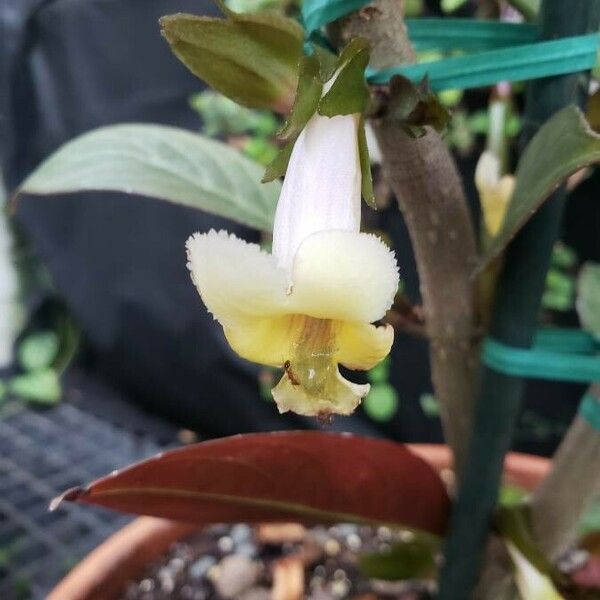
Plant Overview
Hailing from the lush, misty cloud forests of the Andes, Drymonia ecuadorensis is a tropical jewel that captures the essence of Ecuadorian biodiversity. Often sought after by rare plant collectors, this member of the African Violet family (Gesneriaceae) is prized for its dramatic contrast between velvety, deep-green foliage and its intricate, wax-like blooms. In the wild, it often lives as a "scrambler," weaving its way through the humid understory to find patches of dappled sunlight.
🔍 How to Identify
- 🌿 The Foliage: Look for large, elliptical leaves with a distinct quilted texture. The upper surface is often a rich, dark emerald, while the undersides can sometimes flush with deep burgundy or maroon.
- 🎺 The Blooms: Its flowers are the star—usually cream-white or pale yellow, featuring a tubular "trumpet" shape with delicately fringed or "fimbriate" edges on the petals.
- 🌱 Growth Habit: This plant is a hemiepiphyte, meaning it can grow both in the soil and as a climber on tree trunks. It has semi-succulent stems that store moisture for drier periods.
🏡 In Your Garden
- ☁️ Atmospheric Needs: Because it originates from high-altitude forests, this plant thrives in "moving air" and high humidity. It isn't a fan of the stagnant air found in many modern homes; a pebble tray or a humidifier is almost a necessity to keep those velvet leaves from crisping at the edges.
- 🪴 The Roots Matter: It hates "wet feet." In its natural habitat, it grows in leafy debris or moss on trees. When potting it at home, use an airy, chunky mix—think orchid bark, perlite, and a bit of peat—to mimic that well-draining forest floor.
⚠️ Safety & Toxicity
- ✅ Pet Friendly: Like many of its Gesneriad cousins (such as African Violets), Drymonia ecuadorensis is generally considered non-toxic to cats, dogs, and humans.
- 🧤 Handle with Care: While not poisonous, the fine hairs on the leaves and stems can trap dust or sap that might cause mild skin irritation for those with very sensitive skin. It’s always best to wash your hands after pruning.
✨ Fun Fact
- 🦜 Pollinator Partnerships: The specific shape and orientation of the Drymonia flower are evolved perfectly for hummingbirds. The bird must hover and push its beak deep into the tube, inadvertently getting dusted with pollen on its head to carry to the next bloom!

Detailed Care Instructions








