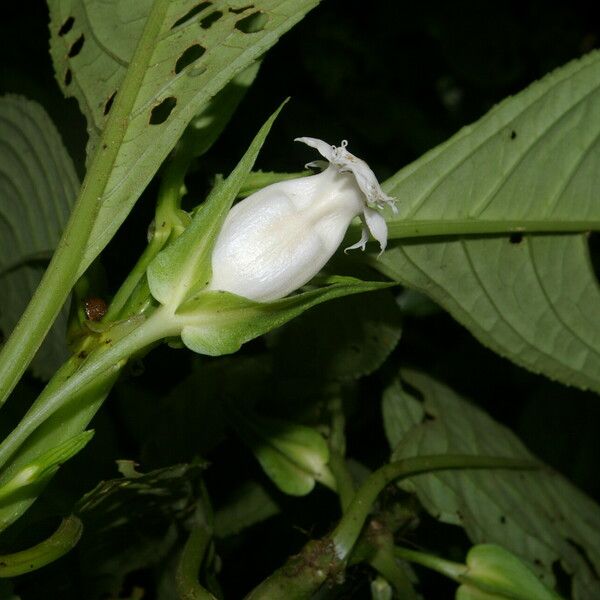
Plant Overview
Hailing from the lush, misty rainforests of Central and South America, Drymonia lanceolata is a stunning member of the Gesneriad family—the same group that gives us African Violets. This tropical "scrambler" is often found growing as an epiphyte, clinging to mossy tree trunks high above the forest floor. It is a favorite among rare plant collectors for its elegant, sword-shaped foliage and its bizarre, almost alien-looking flowers.
🔍 How to Identify
- 🍃 Lance-Like Foliage: True to its name (lanceolata), the leaves are long, narrow, and sharply pointed. They feature a glossy, leathery texture that helps the plant shed heavy tropical rainwater.
- 🌸 Pouchy Blooms: The flowers are tubular and "pouch-like," typically appearing in shades of cream or white. They are often tucked inside a vibrant, star-shaped calyx (the leaf-like structure at the base) which can turn a striking reddish-purple.
- 🪜 Sprawling Stems: Unlike upright shrubs, this plant has a flexible, sprawling growth habit. It will happily "climb" a moss pole or trail gracefully from a high shelf or hanging basket.
🏡 In Your Garden
- ☁️ The Humidity Factor: Because it originated in high-humidity jungles, this plant is not a fan of dry air. It thrives best in a greenhouse, a large terrarium, or a room with a dedicated humidifier to prevent its leaf tips from browning.
- 🪵 Epiphytic Roots: In the wild, it grows on trees, not in heavy mud. To keep it happy at home, avoid standard potting soil. Use a "chunky" mix of orchid bark, perlite, and sphagnum moss to ensure the roots can breathe.
⚠️ Safety & Toxicity
- 🛡️ Low Risk: Drymonia lanceolata is generally considered non-toxic to humans and is not known to be a "poisonous" species.
- 🐾 Pet Precaution: While not listed as a high-hazard plant for pets, ingesting any tropical foliage can lead to mild digestive upset or drooling in cats and dogs. It is best kept out of reach of curious chewers to be safe.
✨ Fun Fact
The unique shape of the Drymonia flower is a "custom fit" for its favorite pollinators: Euglossine bees and Hummingbirds. The plant hides its nectar deep inside the tube, forcing the visitor to brush against the pollen-heavy anthers in just the right way to ensure the next generation of plants can grow!

Detailed Care Instructions

Some plants require more regular watering than others, which should be done every few days. It's critical to maintain the soil moist all of the time. The water requirements of the same plant placed in pots with varying sizes will differ. Because the water in the smaller pot evaporates faster than the water in the larger pot, it will require more watering. Regardless of pot size, the surface should constantly be maintained moist.








