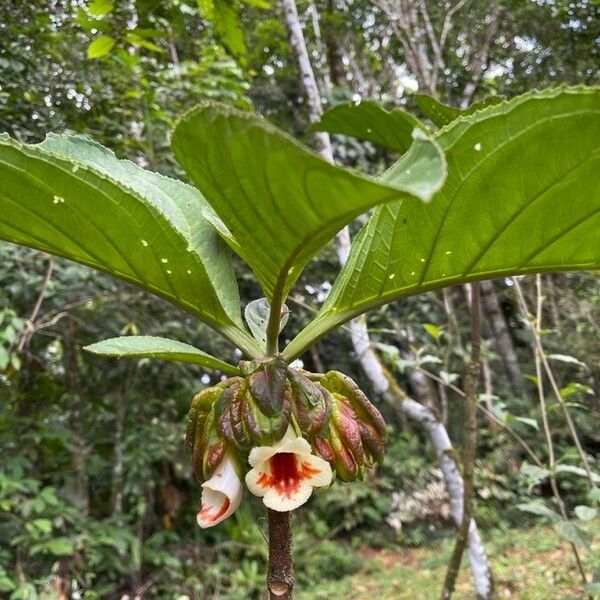
Plant Overview
Known as the "Large-flowered Drymonia," this tropical treasure hails from the humid, shadowed rainforests of Central and South America. It belongs to the Gesneriad family, making it a sophisticated cousin to the common African Violet, though it carries a much more exotic, "jungle-vine" energy. In its native habitat, it lives as a hemiepiphyte, meaning it can grow both in the soil and climb up the mossy trunks of ancient trees.
🔍 How to Identify
- 🔔 The Bloom: Features unusually large, bell-shaped (tubular) flowers that are often creamy-white or pale yellow, frequently decorated with intricate purple or maroon spotting deep inside the throat.
- 🍃 Velvety Foliage: The leaves are large, deep green, and possess a distinct quilted or "rugose" texture, often covered in fine, soft hairs that catch the light.
- 🪜 Climbing Habit: Unlike its low-growing cousins, this plant produces thick, semi-succulent stems that look to scramble upward or trail gracefully from a hanging basket.
🏡 In Your Garden & Home
- ☁️ Humidity is King: Because this plant originates from the "cloud forests," it struggles in dry indoor air. It thrives best in a dedicated plant room, a large terrarium, or positioned right next to a high-quality humidifier to prevent crispy leaf edges.
- 🌬️ Breathable Roots: In the wild, its roots are often exposed to the air. In a pot, it demands a very "chunky" mix—think orchid bark, perlite, and sphagnum moss—rather than heavy potting soil, which can lead to root suffocation.
- 💧 Consistent Moisture: It prefers to stay evenly moist but never "swampy." It lacks the water-storage capacity of true succulents, so skipping waterings for too long will result in dramatic wilting.
⚠️ Safety & Toxicity
- 🌿 Non-Toxic Status: Generally, members of the Gesneriad family are considered non-toxic to humans and common household pets like cats and dogs.
- 🚫 Handle with Care: While not poisonous, the fine hairs on the leaves can sometimes trap dust or pollen, which might irritate sensitive skin. It is always best to keep decorative plants out of reach of curious nibblers to avoid stomach upset.
✨ Fun Fact
The genus name Drymonia comes from the Greek word "drymos," meaning "oak forest" or "woodland," referring to its preference for growing on trees. Its flowers have evolved a specific "trapdoor" shape that perfectly fits the heads of large forest bees, ensuring they get covered in pollen while searching for nectar!

Detailed Care Instructions








