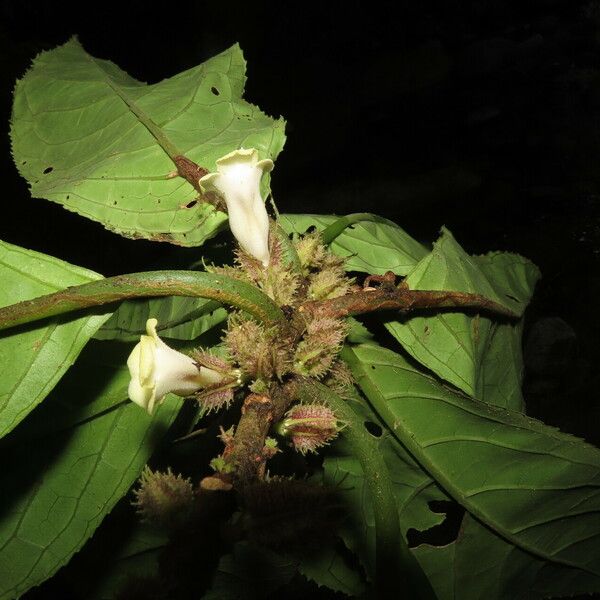
Plant Overview
Often referred to as the Large-leaved Drymonia, this tropical gem is a dramatic relative of the common African Violet. Native to the lush rainforests of Central and South America, it trades the compact "windowsill" look of its cousins for massive, glossy foliage and a climbing habit. It is a true forest dweller that brings a prehistoric, "jungle-floor" aesthetic to any plant collection.
🔍 How to Identify
- 🍃 Oversized Foliage: True to its name (macrophylla means "large leaf"), this plant produces broad, ovate leaves that can grow quite large, featuring prominent veins and a rich, waxy green sheen.
- 🎺 Trumpet-Shaped Blooms: It produces waxy, tubular flowers that are typically creamy-white or pale yellow, often decorated with intricate maroon or purple speckles inside the "throat" to guide pollinators.
- 🪜 Climbing Habit: Unlike many other Gesneriads, this species is a hemiepiphyte, meaning it often begins its life on the ground and uses its stems to scramble up tree trunks toward the canopy light.
🏡 In Your Garden
- ☁️ Humidity is Essential: Coming from the tropics, this plant breathes through moisture in the air. In a home setting, it requires high humidity to prevent its large leaves from developing crispy, brown edges.
- 🪵 Breathable "Feet": Because it naturally climbs trees, its roots hate being smothered in heavy potting soil. It thrives best in a "chunky" mix of orchid bark, perlite, and peat, which mimics the airy debris found in tree crotches.
⚠️ Safety & Toxicity
- 🐾 Safe for Pets: Like most members of the Gesneriad family, the Drymonia macrophylla is generally considered non-toxic to cats, dogs, and horses.
- 🧤 Sensitive Skin: While not poisonous, the sap can be slightly irritating to people with very sensitive skin. It is always a good idea to wash your hands after pruning or taking cuttings.
✨ Fun Fact
The name Drymonia is derived from the Greek word drymos, which means "oak forest" or "woodland." This highlights the plant's natural preference for growing in the deep, shaded canopy of old-growth tropical forests.

Detailed Care Instructions








