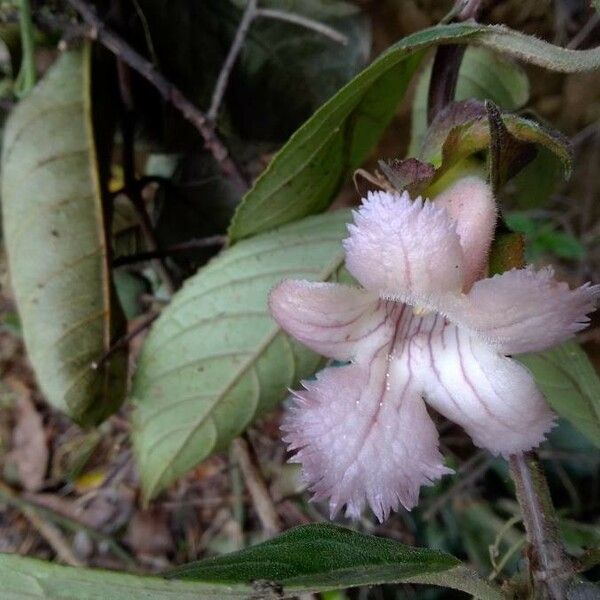
Plant Overview
Known as the Sawtooth Drymonia, this neotropical beauty is a proud member of the Gesneriad family—making it a close cousin to the popular African Violet. In the wild, it is a versatile "clamberer," often found scaling mossy tree trunks or spilling over humid forest floors throughout Central and South America. Its name serrulata is a direct nod to its elegantly jagged leaf edges, which resemble the teeth of a fine-edged saw.
🔍 How to Identify
- 🍃 Saw-Toothed Leaves: The foliage is deep green, slightly textured, and features distinctively serrated (toothed) margins that give the plant its characteristic "sharp" look.
- 🔔 Fringed Blooms: The flowers are creamy-white or pale yellow funnels, often decorated with intricate maroon or purple spots inside, and capped with a delicate, frilly fringe.
- 🌿 Climbing Habit: Unlike its upright cousins, this plant grows as a sprawling shrub or woody vine, often producing "adventitious" roots along the stem to help it grip onto bark.
🏡 In Your Garden
- ☁️ Humidity is Essential: Because it hails from the understory of tropical rainforests, this plant thrives in high-humidity environments. It is an excellent candidate for a large terrarium or a steamy greenhouse.
- 🪴 Airy Roots: It hates heavy, compacted soil. To keep it happy, use a "chunky" potting mix—think orchid bark, perlite, and peat—to mimic the loose leaf litter of its natural habitat.
- 💧 Consistent Moisture: It lacks a thick succulent base, meaning it has little drought tolerance. If the soil dries out completely, the plant will "faint" or drop leaves rapidly.
⚠️ Safety & Toxicity
- 🟢 Generally Safe: Drymonia serrulata is not known to be toxic to humans or common household pets, fitting the general pattern of the Gesneriad family.
- 🐾 Mild Caution: While non-toxic, ingesting any plant material can cause mild stomach upset in curious cats or dogs. It’s always best to display it on a high shelf or in a hanging basket.
✨ Fun Fact
The flowers of Drymonia serrulata are specifically engineered for Buzz Pollination. Large, colorful orchid bees must vibrate their wings at a precise frequency to trigger the flower to release its pollen, ensuring that only the right "partner" gets the prize!

Detailed Care Instructions
To grow Drymonia serrulata (also known as the common name "Trailing Velvet Plant" or "Syngonium podophyllum"), follow these steps:
- Choose the right location: Drymonia serrulata prefers bright, indirect sunlight. Avoid placing it in direct sunlight as it can scorch the leaves.
- Provide appropriate temperature and humidity: This plant thrives in average room temperatures between 60-75°F (15-24°C). It appreciates humidity, so placing a humidifier nearby or misting the leaves regularly can be beneficial.
- Select well-draining soil: Use a well-draining and nutrient-rich potting mix. A mix of peat moss, perlite, and vermiculite works well.
- Planting: Select a container with drainage holes, as excessive moisture can cause root rot. Plant the Drymonia serrulata in the container, ensuring that the roots are covered with soil. Leave a little space at the top for watering.
- Watering: Keep the soil moist but not soggy. Allow the top inch (2.5 cm) of soil to dry before watering again. Avoid overwatering, as it can lead to root rot.
- Fertilizing: Feed the plant with a balanced, water-soluble fertilizer once a month during the growing season (spring and summer). Dilute the fertilizer according to package instructions.
- Pruning: Trim back leggy or overgrown vines to promote bushier growth and a more attractive appearance. You can propagate cuttings from the pruned sections if desired.
- Propagation: Drymonia serrulata can be propagated through stem or tip cuttings. Simply cut a healthy, 4-6 inch (10-15 cm) section of a stem just below a node, remove the lower leaves, and plant the cutting in moist soil or water until it develops roots.
- Support: This plant has vining tendencies, so providing a trellis, moss pole, or stake can help it climb and promote a more trailing growth habit.
- Pests and diseases: Check regularly for pests such as spider mites, aphids, and mealybugs. Treat with appropriate insecticidal soap or neem oil if necessary. Ensure good air circulation around the plant to prevent fungal diseases.
With proper care and attention, your Drymonia serrulata plant should thrive and grow into a beautiful trailing vine.

1. Drymonia Serrulata is a tropical plant that requires regular watering to thrive.
2. Before watering, check the moisture level of the soil by sticking your finger about an inch deep into the soil. If it feels dry, it is time to water the plant.
3. Use room temperature water to avoid shocking the plant's roots.
4. To water the plant, gently pour the water onto the soil near the base of the plant. Avoid getting water directly on the leaves as it can lead to the development of mold or other issues.
5. Water the plant thoroughly until water flows out of the drainage holes at the bottom of the pot. This ensures that the water reaches the roots and helps prevent waterlogging.
6. Allow the excess water to drain out completely and then empty the saucer or tray beneath the pot to avoid standing water.
7. It is essential to maintain a consistent watering schedule, typically once or twice a week. However, frequency may depend on factors such as the plant size, temperature, humidity, and soil type.
8. Avoid overwatering the Drymonia Serrulata as it can lead to root rot or other fungal issues. If the soil feels consistently soggy or the plant shows signs of wilting or discoloration, adjust the watering frequency accordingly.
9. Consider using a well-draining soil mixture for the plant, as it helps prevent waterlogging and promotes healthier root growth.
10. Additionally, misting the plant occasionally can help increase humidity levels, especially during dry periods or in indoor environments with low humidity. However, misting should not replace regular watering.
To fertilize Drymonia Serrulata plant, follow these instructions:
- Choose a balanced, water-soluble fertilizer with an NPK ratio of 10-10-10 or 20-20-20. This indicates the percentage of nitrogen, phosphorus, and potassium in the fertilizer.
- Dilute the fertilizer according to the package instructions. Typically, a common dilution ratio is 1 tablespoon of fertilizer per gallon of water.
- Water the plant thoroughly before applying the fertilizer to ensure the soil is moist.
- Pour the diluted fertilizer solution around the base of the plant, avoiding direct contact with the leaves or stems. Slowly pour until the soil is evenly saturated but not waterlogged.
- Repeat the fertilization process every 4-6 weeks during the growing season, which is usually spring and summer. Avoid fertilizing during the plant's dormant period in fall and winter.
- Keep an eye out for any signs of fertilizer burn, such as yellowing or browning of the leaves. If this occurs, flush the soil with water to remove excess fertilizer and adjust your future fertilization practices.
Remember, it's essential to follow the specific needs and requirements of your Drymonia Serrulata plant. Adjust the fertilization frequency and strength based on the plant's response and any specific recommendations from a horticulturist or plant expert.
Drymonia serrulata plants thrive in well-draining soil that is rich in organic matter. The ideal soil mix for this plant consists of equal parts peat moss, perlite, and coarse sand or vermiculite. The peat moss retains moisture while allowing excess water to drain away, preventing root rot. Perlite helps to maintain soil aeration and drainage, preventing waterlogging. Coarse sand or vermiculite ensures proper airflow and loosens up the soil, promoting healthy root development. These components collectively create a soil mix that is lightweight, moisture-retentive, and conducive to the plant's growth and health.
Drymonia serrulata is a tropical perennial plant that can be propagated through various methods. Here's a detailed guide on how to propagate this plant:
- Propagation by Stem Cuttings:
- Select a healthy and mature stem from the mother plant.
- Using a sharp and sterile knife or scissors, cut a 4-6 inch long section of the stem just below a leaf node.
- Remove the lower leaves from the stem, leaving 2-3 sets of leaves at the top.
- Optional: You can dip the cut end in a rooting hormone to enhance root development.
- Prepare a well-draining potting mix, preferably a blend of peat moss and perlite or vermiculite.
- Make a hole in the potting mix with a pencil or finger and gently insert the cutting into the hole.
- Firmly press the soil around the stem to ensure good contact.
- Place the pot in a warm and humid location with bright indirect light.
- Mist the cutting with water to maintain humidity and prevent the leaves from wilting.
- After a few weeks, roots will begin to form.
- Once the cutting has developed a good root system, transfer it to a larger pot or its permanent location.
- Select a healthy and mature stem from the mother plant.
- Propagation by Division:
- This method is suitable for well-established plants with multiple stems.
- Carefully remove the plant from its pot or dig it out from the garden bed.
- Gently separate the plant into sections, ensuring that each division has healthy roots and stems.
- If necessary, use a sharp and sterile knife to cut through any tangled or densely packed roots.
- Pot each division in a suitable-sized container filled with well-draining potting mix.
- Water the newly divided plants thoroughly and place them in a shaded area.
- Provide regular care and gradually introduce them to brighter light conditions as they grow.
- This method is suitable for well-established plants with multiple stems.
- Propagation by Leaf Cuttings:
- Select a healthy and mature leaf from the mother plant.
- Using a sharp and sterile knife, cut a leaf into sections, making sure each section has prominent veins.
- Optional: You can dip the cut end of each leaf section into a rooting hormone to promote root development.
- Prepare a well-draining potting mix and fill a small tray or container with it.
- Insert the leaf sections halfway into the potting mix, ensuring that the cut ends are covered.
- Water the potting mix lightly to maintain moisture but avoid waterlogging.
- Cover the tray or container with a plastic bag or clear plastic lid to create a humid environment.
- Place the tray in a warm location with bright indirect light.
- Mist the leaf sections regularly to maintain humidity and prevent the potting mix from drying out.
- After a few weeks, new plantlets will start to grow from the base of the leaf sections.
- Once these plantlets have developed roots and established themselves, carefully separate them and pot them individually.
Remember to provide the propagated Drymonia serrulata plants with proper care, including regular watering, well-draining soil, bright indirect light, and a humid environment to ensure their successful growth.
- Select a healthy and mature leaf from the mother plant.








