Plant Overview
Often called the Bristly Drymonia, this tropical climber is a star of the humid rainforests of Central and South America. As a relative of the African Violet, it brings a touch of exotic flair with its velvet-like foliage and unusual, pouch-like flowers that peek out from the leaf axils. It is a true "forest crawler," often found scrambling up mossy tree trunks or trailing elegantly from high branches in its native habitat.
🔍 How to Identify
- 🌿 Stems & Texture: The species name strigosa refers to the stiff, pressed-down hairs that cover the stems and sometimes the leaves, giving the plant a slightly rough or "bristly" feel to the touch.
- 🍃 Foliage: Look for large, oval leaves that grow in opposite pairs. They are typically a deep, vibrant green with prominent veining that creates a textured, quilted appearance on the surface.
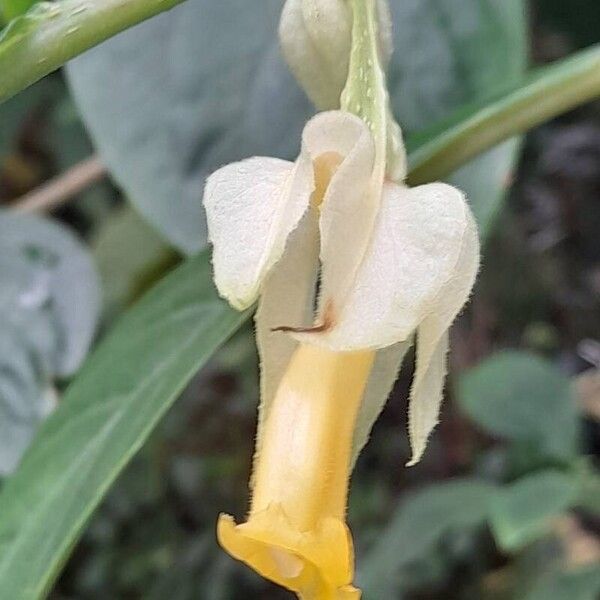
- 🌸 The Blooms: It features tubular, creamy-white or pale yellow flowers, sometimes tinged with red or orange. The flowers are "pouched" or slightly inflated, looking like tiny lanterns tucked snugly against the stem.
🏡 In Your Garden
- ☁️ Humidity is Key: Unlike some of its hardier cousins, Drymonia strigosa thrives in high-humidity environments. If the air is too dry, the leaf edges will quickly turn brown and crisp, reflecting its origins in the misty cloud forests.
- 🪵 The Epiphytic Edge: Because it naturally grows on trees (epiphytic) or scrambles over rocks, it demands a very airy, well-draining potting mix. A blend of orchid bark, perlite, and moss mimics its natural home and prevents the roots from "suffocating" in heavy soil.
⚠️ Safety & Toxicity
- 🐾 Pet Safety: While most members of the Gesneriad family are generally considered non-toxic to cats and dogs, it is always best to keep exotic plants out of reach. Ingesting any ornamental plant can cause mild stomach upset in curious pets.
- 🧴 Skin Sensitivity: The "strigose" (bristly) hairs on the stems can be a minor irritant to people with very sensitive skin. If you are pruning or repotting, wearing gloves can prevent a prickly sensation.
✨ Fun Fact
- 🐦 A Hummingbird's Buffet: In the wild, the specific shape and color of Drymonia flowers are perfectly "engineered" for hummingbird pollination. The birds must hover at a very specific angle to reach the nectar, inadvertently dusting their heads with pollen to carry to the next bloom.

Detailed Care Instructions

Some plants require more regular watering than others, which should be done every few days. It's critical to maintain the soil moist all of the time. The water requirements of the same plant placed in pots with varying sizes will differ. Because the water in the smaller pot evaporates faster than the water in the larger pot, it will require more watering. Regardless of pot size, the surface should constantly be maintained moist.







