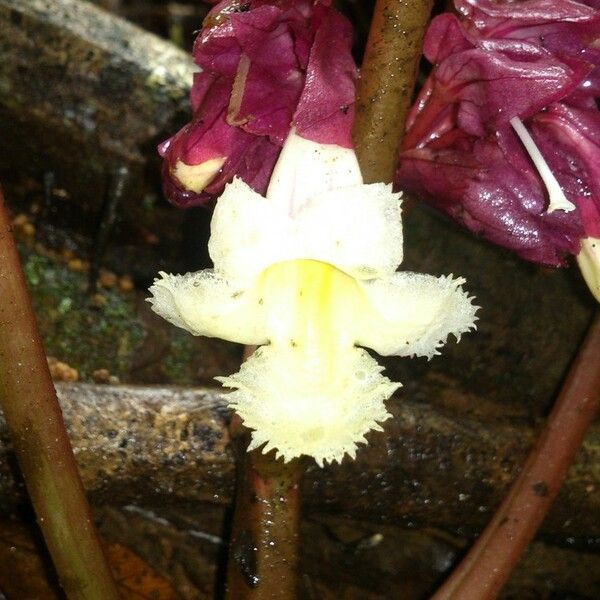
Plant Overview
Known as the Turrialba Drymonia, this Central American gem is a prized find for those who love the "jungle look." Hailing from the misty cloud forests of Costa Rica and Panama, it belongs to the Gesneriad family—the same group as the famous African Violet. However, instead of sitting on a windowsill, this plant behaves like a lush, scrambling vine, reaching out to embrace the humidity of the tropical canopy.
🔍 How to Identify
- 🔔 The Flowers: Large, waxy, and trumpet-shaped. They are typically a creamy white or pale yellow, often featuring dramatic maroon or deep purple "nectar guides" inside the throat to lead pollinators.
- 🍃 The Foliage: The leaves are broad, elliptical, and have a slightly quilted or textured surface. They often possess a subtle, velvet-like sheen that catches the light in dim environments.
- 🌿 Growth Habit: It is a hemiepiphyte, meaning it can grow both in the ground and up trees. You’ll notice thick, fleshy stems that look robust but are actually quite brittle.
🏡 In Your Garden
- ☁️ Humidity is Vital: Because this plant originated near the Turrialba Volcano, it craves high atmospheric moisture. In a home setting, it will struggle in dry air; it is much happier in a large terrarium, greenhouse, or near a high-quality humidifier.
- 🪴 Breathable Roots: In the wild, it often grows on mossy tree branches. Because of this, it hates heavy, compacted potting soil. Use a "chunky" mix of orchid bark, perlite, and sphagnum moss to ensure the roots never feel suffocated or waterlogged.
- ☀️ Filter the Light: Think of the forest floor—it wants bright but dappled light. Direct afternoon sun will quickly scorch those beautiful, waxy leaves.
⚠️ Safety & Toxicity
- 🐾 Status: Generally considered non-toxic to humans and common household pets.
- 👶 Precaution: While not known to be poisonous, the sap of many tropical plants can cause mild skin irritation for those with sensitive skin. It is always best to keep it out of reach of curious toddlers or nibbling pets to avoid digestive upset.
✨ Fun Fact
The genus name Drymonia comes from the Greek word "drymos," meaning "oak wood" or "forest," referring to its natural preference for growing on the sturdy trunks of ancient forest trees.

Detailed Care Instructions
To grow Drymonia Turrialvae plant, follow these steps:
- Start with a healthy plant: Purchase a healthy Drymonia Turrialvae plant from a reputable nursery or online seller. Ensure that the plant has vibrant foliage and is free from pests or diseases.
- Light: Place the plant in a location with bright, indirect light. While Drymonia Turrialvae can tolerate some shade, it prefers bright light to encourage growth and vibrancy.
- Temperature and Humidity: Drymonia Turrialvae plants thrive in warm and humid conditions. Maintain a temperature of around 65-75°F (18-24°C) and provide high humidity by placing the plant on a tray filled with water and pebbles or using a humidifier.
- Watering: Water the plant when the top inch of soil feels dry. Ensure that the potting mix is well-draining to prevent waterlogged roots. Avoid overwatering as it can lead to root rot. Mist the leaves occasionally to increase humidity levels.
- Fertilizer: Feed the Drymonia Turrialvae plant with a balanced houseplant fertilizer every 4-6 weeks during the growing season (spring and summer). Follow the instructions on the fertilizer packaging for proper dosage.
- Repotting: If the plant outgrows its pot or becomes rootbound, repot it into a slightly larger container using well-draining potting soil. This is typically required every 2-3 years.
- Pruning: Trim back leggy or unhealthy growth to encourage denser foliage. Pinch off the tips of the plant to promote branching and bushiness.
- Propagation: Drymonia Turrialvae can be propagated through stem cuttings. Take a 4-6 inch cutting from a healthy plant and remove the lower leaves. Dip the cut end in rooting hormone and plant it in a well-draining potting mix. Keep the soil moist until new roots form.
- Pest and disease control: Monitor the plant for pests such as aphids, mealybugs, or spider mites. If detected, treat the infestation with appropriate insecticides or by wiping the affected areas with a cloth soaked in soapy water. Also, watch out for common plant diseases like powdery mildew or root rot and take corrective measures promptly.

To water this particular plant, it is important to note that it requires consistent moisture, but not water-logging. Before watering, it is recommended to check the top inch of soil to see if it is dry to the touch. If the soil feels dry, it is time to give it a thorough watering. Water should be poured slowly onto the soil until it runs out through the drainage holes. It is important to avoid getting water on the leaves as this can cause damage or encourage fungal growth. The plant should be watered consistently, but the frequency will depend on factors such as the temperature, humidity, and exposure to light. Care should be taken not to overwater the plant, as this can lead to root rot.
To fertilize this plant, dilute a balanced water-soluble fertilizer to half strength and apply it to the soil every two weeks during the growing season (spring and summer). During the dormant period (fall and winter), reduce the frequency of fertilization to once a month. It's important to avoid over-fertilizing, which can cause the plant to become leggy and weak. Always follow the fertilizer manufacturer's directions for application rates and frequency.
Drymonia turrialvae plant grows well in a well-draining soil mix with good water retention ability. Organic potting soils mixed with perlite, vermiculite, and sand can be used to create a suitable environment for the plant's growth. The soil should be airy and light, allowing for proper oxygen flow to the roots. It is recommended to use soil with a pH level of 5.5 to 6.5, slightly acidic to neutral, to support healthy plant growth. The soil should be rich in nutrients to ensure optimal growth, and peat moss can be added to provide the necessary nutrients. In general, moderately fertile soils with good drainage are recommended for the successful growth of Drymonia turrialvae plant.
Drymonia Turrialvae plant can be propagated through stem cuttings. Choose a healthy stem of the plant and cut it just below a node. Remove the lower leaves of the stem so that it has about 2-3 leaves left at the top. Dip the cut end of the stem in a rooting hormone powder to encourage root growth. Plant the cutting in a well-draining potting mix and keep it moist but not waterlogged. Cover the pot with a plastic bag or place it in a propagator to create a humid environment. Place the pot in a warm, bright area but not in direct sunlight. After a few weeks, the cutting should start to develop roots and new growth. Once it has established, it can be transplanted into a larger pot.








