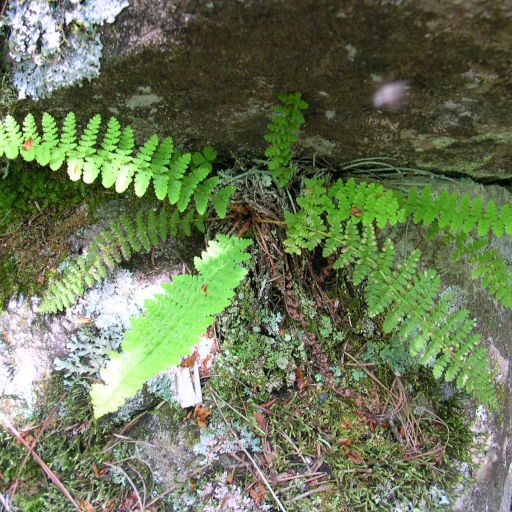
Plant Overview
The Fragrant Wood Fern is a rugged little survivor that smells far more delicate than its harsh environment suggests. Often found clinging to the vertical faces of rocky cliffs or tucked into arctic crevices, this fern is famous for its sweet, spicy aroma—often described as a mix of crushed violets, primroses, or even raspberries. Unlike its lush, moisture-loving cousins, this species is a specialist of the cold and the dry.
🔍 How to Identify
- 🌿 The Fragrance: The most defining trait is the scent produced by tiny glands on the fronds; it is especially strong on warm days or when the foliage is brushed.
- 👗 The "Petticoat": This fern is known for its "shaggy" appearance because it retains its dead, curled-up brown fronds for years, forming a protective skirt around the base.
- 🍂 Leathery Texture: The fronds are narrow, stiff, and leathery, usually growing in a compact, circular tuft that rarely exceeds 10 inches in height.
- 🏷️ Scaly Stems: The base of the plant and the central stalks are densely covered in bright, rusty-brown scales.
🏡 In Your Garden
- ⛰️ Rock Specialist: If you are trying to grow this at home, skip the rich potting soil. It requires exceptional drainage and thrives in rock gardens or stone wall crevices that mimic its alpine home.
- ❄️ Cold Hardiness: This is one of the most cold-tolerant ferns on the planet. It actually prefers northern exposures and can struggle in humid, high-heat summer climates.
- 🌬️ Airflow Matters: Because it grows in exposed areas in the wild, it needs plenty of air circulation to prevent crown rot, especially during wet winters.
⚠️ Safety & Toxicity
- ✅ Generally Safe: The Fragrant Wood Fern is not known to be toxic to humans or common household pets like cats and dogs.
- 🥣 Historical Use: Native indigenous groups in the subarctic once used the dried fronds to brew a fragrant, medicinal tea, though modern enthusiasts should enjoy its scent rather than its flavor to avoid stomach upset.
✨ Fun Fact
The scent of the Fragrant Wood Fern is incredibly long-lasting. Botanists have noted that dried specimens stored in museum archives for over 100 years still release their distinct flowery perfume when the cabinet doors are opened!

Detailed Care Instructions
To grow Dryopteris Fragrans, also known as Fragrant Wood Fern, you can follow these steps:
- Site selection: Choose a location with filtered or partial shade. The plant prefers moist and cool conditions, but can tolerate some sunlight if the soil remains consistently moist.
- Soil preparation: Prepare the soil by adding organic matter such as compost or well-rotted manure. This helps improve drainage and increases the nutrient content.
- Planting: Dig a hole that is slightly larger than the root ball of the fern. Place the fern in the hole and backfill with soil, ensuring that the crown of the fern (the base of the plant where the roots meet the stems) is level with the ground surface.
- Watering: Keep the soil consistently moist but avoid overwatering, as this can lead to root rot. Water deeply when the top inch of soil feels dry.
- Mulching: Apply a layer of organic mulch around the base of the plant to help retain moisture and regulate soil temperature. This also helps suppress weed growth.
- Fertilizing: Fertilization is typically not necessary for Dryopteris Fragrans plants. However, you can apply a slow-release, balanced fertilizer in the spring if desired. Follow the instructions on the fertilizer package for application rates.
- Pruning: Remove any dead or damaged fronds (leaves) as needed throughout the year. Pruning helps maintain the plant's health and appearance.
- Winter care: Dryopteris Fragrans is hardy in USDA zones 5-9. In cooler regions, mulch around the base of the plant in late fall to protect it from freezing temperatures.
By following these steps, you can successfully grow Dryopteris Fragrans and enjoy its lovely foliage. Remember to monitor the plant regularly for any signs of stress or pests and address the issues promptly.

Place in a window with dappled sun or a spot in the middle of a room. Or directly in a window facing west or east.

To properly water Dryopteris Fragrans, you should monitor the soil moisture level by touching the topsoil with your fingers. Wait until the topsoil feels dry before watering the plant. When it's time to water, you should pour water directly onto the soil rather than on the leaves or fronds. Avoid overwatering as this can lead to root rot and other plant diseases. It's also essential to ensure that the plant pot has adequate drainage to prevent waterlogging. Finally, you should keep the plant in a location that receives indirect light to prevent the leaves from drying out.
To fertilize the plant, apply a balanced, water-soluble fertilizer once a month during the growing season. Mix the fertilizer with water according to the package instructions and pour it over the soil around the base of the plant, taking care not to get any on the leaves. Avoid fertilizing during the winter months, as the plant is dormant and does not require as much nutrients.
Dryopteris Fragrans requires well-draining soil that is rich in organic matter and slightly acidic. The ideal soil mix should consist of equal parts of peat moss, coarse sand, and loam. It is important to ensure that the soil is not waterlogged as this can cause root rot. The plant prefers moist soil but not saturated soil. Additionally, fertilizing the plant with a balanced fertilizer every 4-6 weeks during the growing season will help it thrive.
To propagate this plant, you will need to wait until the spores have developed on the underside of the fronds. You can then collect these spores and sow them onto a substrate that will provide the right nutrients, such as a mix of peat moss and perlite. It's important to keep the substrate moist and warm, around 68-77°F (20-25°C), to encourage growth. Once the spores have germinated and little ferns have developed, you can transplant them into individual pots or into a larger container. Keep the soil evenly moist and make sure the plants receive adequate light, but not direct sunlight. As the ferns grow, you may need to repot them into larger containers. It can take some time for the ferns to mature and develop their characteristic foliage, so be patient.








