Plant Overview
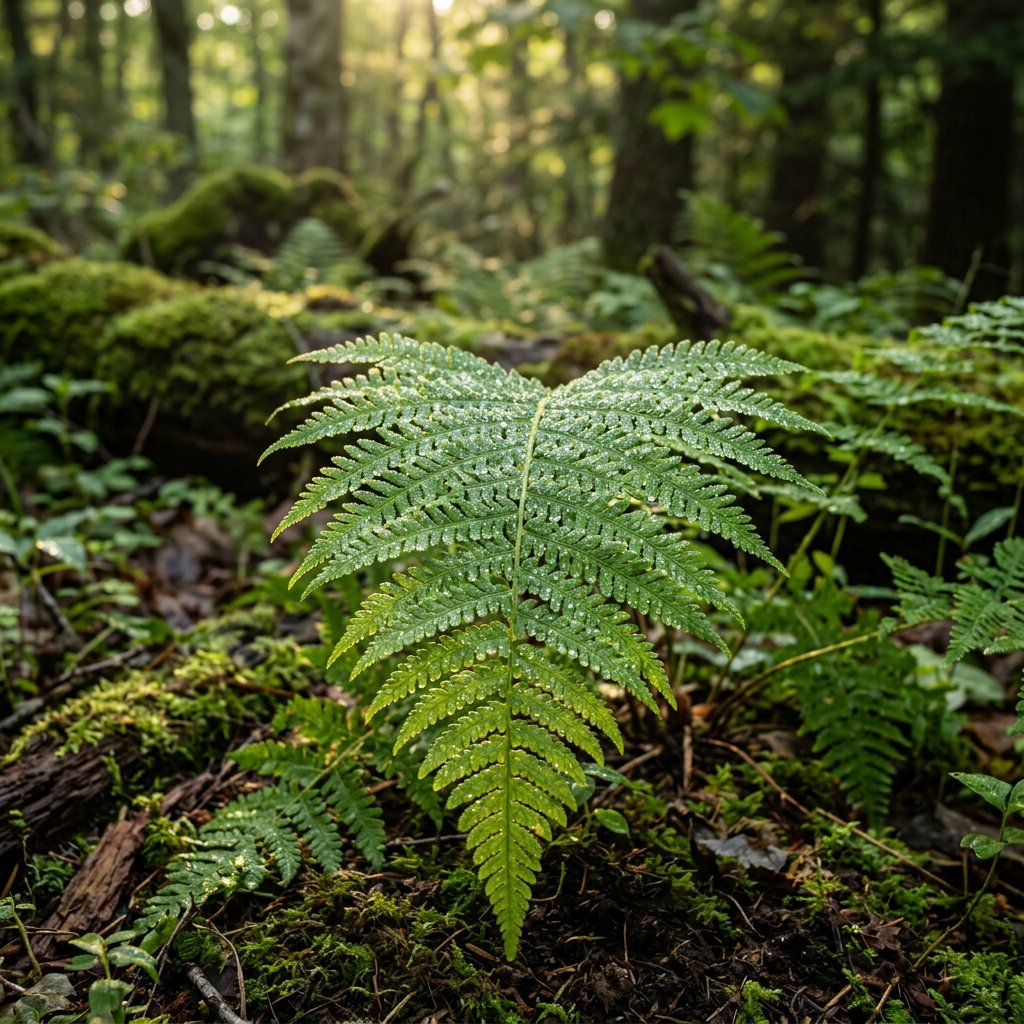
Commonly known as the Intermediate Wood Fern or the "Fancy Fern," this delicate beauty is a staple of North American woodlands. It is highly prized by florists for its lacy, intricate fronds that remain vibrant and green long after being cut. Whether nestled at the base of an old oak or lining a shaded garden path, its fountain-like growth habit adds a touch of prehistoric elegance to any landscape.
🔍 How to Identify
- 🌿 Frond Structure: The leaves (fronds) are tripinnate, meaning they are divided three times, giving them an exceptionally fine, "toothed," or feathery appearance compared to other wood ferns.
- 🟢 Color & Texture: They display a rich, deep green color and have a slightly waxy or leathery feel, which helps the plant maintain its structure through early frosts.
- 🪵 Growth Pattern: The plant grows in a classic circular "crown" or rosette, with fronds arching gracefully outward to create a symmetrical, vase-like shape.
🏡 In Your Garden
- ☁️ Shade Specialist: This fern thrives in dappled sunlight or deep shade; too much direct afternoon sun will quickly scorch its delicate lace-like leaves.
- 🍂 Soil Preference: It mimics the forest floor by preferring loose, organic-rich soil that stays consistently moist but never waterlogged—incorporating leaf mulch is the best way to keep it happy.
⚠️ Safety & Toxicity
- 🐾 Pet Friendly: The Intermediate Wood Fern is generally considered non-toxic to cats, dogs, and horses, making it a "worry-free" choice for pet-filled backyards.
- 🧤 Minor Irritation: While not poisonous, the undersides of the fronds contain spore cases (sori) and fine scales that might cause very mild skin itching for gardeners with highly sensitive skin.
✨ Fun Fact
The "Fancy Fern" nickname comes from the floral industry, where its fronds are the most popular "greenery" used in bouquets and arrangements because they stay green and sturdy for weeks!

Detailed Care Instructions
To grow Dryopteris Intermedia, also known as intermediate wood fern, follow these steps:
- Choose a suitable location: Dryopteris Intermedia prefers partial to full shade. Select a spot in your garden or landscape that receives a few hours of direct sunlight in the morning or evening but is mostly shaded during the day.
- Prepare the soil: The intermediate wood fern grows well in moist, well-draining soil. Amend the soil with organic matter, such as compost, to improve its fertility and drainage.
- Plant the fern: Dig a hole slightly larger than the root ball of the fern. Place the fern in the hole, making sure the top of the root ball is level with the surrounding soil. Backfill the hole with soil, gently firming it around the roots.
- Watering: Keep the soil evenly moist but not waterlogged. Water deeply once or twice a week, especially during dry spells. Avoid overhead watering, as the fern prefers to be watered at its base.
- Mulching: Apply a layer of organic mulch, such as wood chips or leaf litter, around the base of the fern. This will help conserve moisture, prevent weed growth, and provide organic matter as it breaks down.
- Fertilizing: Dryopteris Intermedia generally doesn't require frequent fertilization. However, you can apply a balanced, slow-release fertilizer in early spring to provide some nutrients.
- Pruning: Remove any dead or damaged fronds from the fern to maintain its appearance and prevent the spread of diseases. Prune these fronds at their base, close to the crown of the plant.
- Winter care: Intermediate wood fern is hardy in USDA zones 4-8. If you live in a colder region, provide some winter protection by piling mulch or fallen leaves around the base of the plant to insulate it from freezing temperatures.
- Propagation: Dryopteris Intermedia can be propagated by spores or division. Spores can be collected from mature fronds and sown on a suitable growing medium. Dividing the plant can be done in early spring or early fall, carefully separating the rhizomes and replanting them.
With proper care and attention to its growth requirements, your Dryopteris Intermedia plant should thrive and provide an attractive addition to your garden or landscape.

Place in a window with dappled sun or a spot in the middle of a room. Or directly in a window facing west or east.

To water this plant, you should check the soil moisture level regularly to ensure it does not dry out completely. When watering, it is important to avoid getting water on the foliage and focus on watering the soil directly. This can be achieved by either slowly pouring water onto the soil or by using a drip irrigation system. Watering frequency will depend on environmental factors such as temperature and humidity levels. It is important to note that overwatering can lead to root rot and other diseases, so it is recommended to wait until the soil has dried out slightly before watering again.
For best results, fertilize this plant once a month during its active growing season, which typically occurs in the spring and summer months. Choose a balanced fertilizer with equal proportions of nitrogen, phosphorus, and potassium. Mix the fertilizer according to package instructions and apply to the soil around the base of the plant. Be sure to water the plant thoroughly after fertilizing to help the nutrients reach the roots. Avoid over-fertilizing as this can damage the plant's growth.
Dryopteris Intermedia has a specific soil requirement to grow healthy and strong. It prefers well-draining soil that is rich in organic matter. The soil should be slightly acidic with a pH range of 5.5 to 6.5. A mix of peat moss, perlite, and sandy loam would be an excellent choice for soil composition. It is also important to keep the soil consistently moist, but not waterlogged, to prevent root rot. Additionally, regular fertilization with a balanced, slow-release fertilizer is recommended to provide the necessary nutrients for optimal growth.
Dryopteris Intermedia is a fern species that can be propagated in several ways. One method is to divide the plant by separating the root ball into smaller sections and replanting each section in its own pot. Another way is to propagate by spores, which are small reproductive cells produced on the underside of the fronds.
To propagate by spores, collect mature fronds from the plant and place them in a paper bag. After a few days, the spores should have released from the fronds and collected at the bottom of the bag. Alternatively, you can cut off a frond that has sori (spore-producing structures) on the undersides and place it in a plastic bag to collect spores.
To sow spores, prepare a sterile potting mix of peat moss and perlite or sand. Spread the spores evenly across the surface of the soil and mist with water. Cover the pot with plastic wrap to create a humid environment and place in a warm, bright location. The spores should germinate within a few weeks, and the resulting plants can be transplanted to individual pots once they are large enough to handle.
Regardless of the propagation method used, it’s important to keep the new plants well-watered and in a humid environment until they are well-established.
Common pests of the intermediate woodfern include Mealybugs, spider mites, aphids. Make a habit of checking your intermediate woodfern frequently for pests so that any infestations can be caught and managed early.








