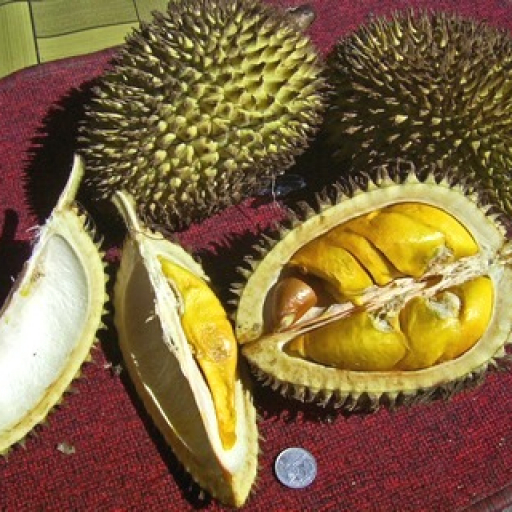
Plant Overview
Known as the "Paken" or "Kutej Durian" in its native Borneo, Durio kutejensis is often celebrated as the most beautiful member of the durian family. Unlike its more famous, pungent cousin (Durio zibethinus), this species produces stunning, vibrant flowers and a fruit with a much milder, creamier fragrance. It is a prized forest treasure that bridges the gap between a wild fruit and a cultivated masterpiece.
🔍 How to Identify
- 🌸 The Flowers: Unlike common durian trees that have pale, greenish-white blossoms, this species produces clusters of magnificent, large flowers in shades of fiery orange and deep red.
- 🍈 The Fruit: The fruit is typically smaller and more ovoid than a standard durian, with "soft" spines that are relatively blunt and flexible, making it easier to handle without gloves.
- 🍯 The Flesh: Inside, you’ll find deep, golden-yellow or orange-tinted arils (flesh). The texture is exceptionally smooth and waxy, often described as having the consistency of thick custard.
🏡 In Your Garden
- 🌳 A Tropical Giant: In its native habitat, it can reach massive heights, but in a garden setting, it requires significant vertical space and high humidity. It is often planted as an ornamental tree specifically for its brilliant floral display, which attracts a variety of pollinators.
- 💧 Moisture & Drainage: While it loves the drenching rains of the tropics, it is sensitive to "wet feet." It needs deep, well-draining soil to accommodate its extensive root system, which hates being disturbed once established.
⚠️ Safety & Toxicity
- ✅ Status: Generally safe and highly edible. The fruit is a local delicacy and is often preferred by those who find the smell of common durian too intense.
- 🐶 Pet Caution: While the flesh is non-toxic, the large, hard seeds (pits) and the fibrous rind are significant choking hazards for dogs and can cause intestinal blockages if ingested.
- 🌱 Seed Preparation: Like most durians, the seeds are edible for humans but must be cooked (boiled or roasted) before consumption to neutralize anti-nutritional factors.
✨ Fun Fact
While the common durian is famously banned from many hotels and airplanes due to its "socks-and-onions" aroma, the Durio kutejensis is known for its pleasant, mild scent that many compare to a blend of almonds and sweet caramel!

Detailed Care Instructions








