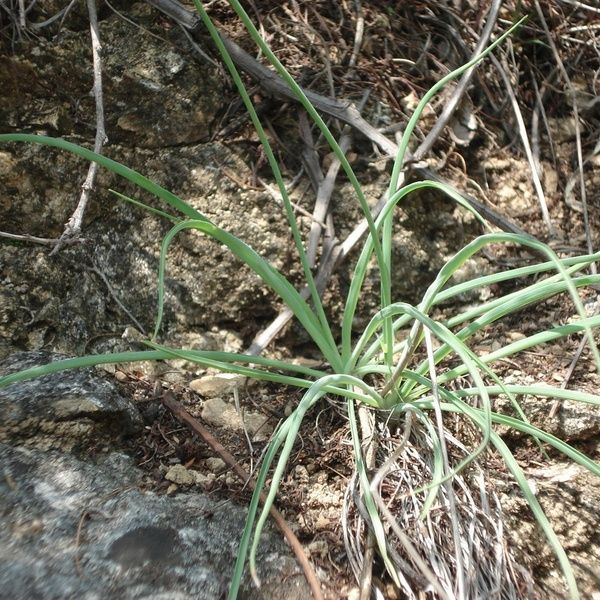
Plant Overview
Often called the Torrey’s Craglily or simply the Yellow Craglily, this delicate wildflower is a hidden gem of the American Southwest and Mexico. Rising from rocky slopes and oak woodlands, its golden, star-shaped blossoms appear like dancing sparks against the rugged landscape. While it looks fragile, it is a hardy survivor designed to thrive in the transition zones between deserts and mountains.
🔍 How to Identify
- 🌼 The Flowers: Small, bright yellow blossoms with six distinct petals (tepals) that curve slightly backward. They typically bloom in a loose cluster along the upper half of the stem.
- 🍃 The Foliage: Long, narrow, grass-like leaves that mostly grow from the base of the plant. They are often folded or channeled down the center.
- 📏 The Stature: A slender, upright flowering stalk that can reach up to 3 feet tall, though it often stays shorter in drier conditions.
🏡 In Your Garden
- 🏜️ Natural Resilience: Because it originates in rocky, well-draining habitats, this plant is an excellent choice for rock gardens or native wildflower meadows. It is highly drought-tolerant once its underground corms are established.
- ⏳ Seasonal Vanishing: Don't be alarmed if the plant disappears entirely after blooming; it is a geophyte. It retreats into its underground storage organs to survive the winter or extreme dry spells, waiting for the right moisture to return.
⚠️ Safety & Toxicity
- 🟢 General Safety: Echeandia flavescens is generally considered non-toxic and is not known to be a high-risk plant for humans or livestock.
- 🐾 Pet Caution: While there are no specific reports of severe toxicity for cats or dogs, many wild lilies and their relatives can cause mild stomach upset if ingested. It is always best to keep curious chewers away from ornamental wildflowers.
✨ Fun Fact
The genus name Echeandia honors Atanasio Echeverría y Godoy, a famous 18th-century Mexican botanical artist who accompanied Spanish expeditions to document the stunning flora of the New World!

Detailed Care Instructions
To grow Echeandia flavescens, also known as the Mexican hat plant or yellow torch, you can follow these steps:
- Choose suitable growing conditions: Echeandia flavescens requires a bright location with indirect sunlight. It can tolerate some direct sunlight but may prefer partial shade, especially in hotter climates. The plant also prefers well-draining soil.
- Propagation: You can propagate the plant by collecting seeds or by dividing the offsets (pups) from the mother plant. Seeds can be sown in a pot or directly in the garden during the spring. Offsets can be carefully separated from the mother plant and planted in a new pot or location.
- Planting: If you are planting Echeandia flavescens in a pot, choose a pot with good drainage holes. Fill the pot with well-draining soil, preferably a cactus and succulent mix. For outdoor planting, loosen the soil and add some organic matter to improve drainage.
- Watering: During the growing season, which is typically spring and summer, water the plant thoroughly when the soil dries out. Avoid overwatering, as it can lead to root rot. In winter, reduce watering and let the soil dry out more between waterings.
- Fertilizing: Feed the plant with a balanced, water-soluble fertilizer once a month during the growing season to support healthy growth.
- Maintenance: Remove any dead or yellowing leaves regularly to promote a neat appearance and prevent diseases. Protect the plant from extreme temperatures and frost by bringing it indoors or covering it during cold spells.
- Pruning: Echeandia flavescens may produce tall flower spikes. After the blooming period, you can remove the spent flower stems to encourage new growth.
With proper care and suitable conditions, your Echeandia flavescens plant should grow well and potentially produce beautiful yellow flowers.

Place in a bright room that is sun drenched almost all day. Or directly in a south-facing window.

Watering the Echeandia Flavescens plant involves providing the correct amount of water to meet its moisture requirements. The soil around the plant should be kept moist but not waterlogged. It is important to allow the topsoil to dry out slightly before watering the plant again to prevent the soil from becoming too saturated. One way to determine if the plant needs water is by sticking your finger into the soil to a depth of around an inch. If the soil feels dry at that depth, it is time to water the plant. The plant should be watered deeply, so the water reaches the roots, and any excess water should be allowed to drain away. Overwatering can lead to root rot, so care should be taken not to water the plant excessively. Additionally, the Echeandia Flavescens plant prefers distilled or rainwater, as tap water often contains chlorine and other chemicals that can harm the plant's roots.
To fertilize this plant, use a balanced fertilizer with equal amounts of nitrogen, phosphorus, and potassium. Apply the fertilizer during the growing season, from spring to fall, every two weeks. Dilute the fertilizer in water according to the package instructions. Apply the solution to the soil around the base of the plant, avoiding getting any on the leaves. Do not fertilize during the winter dormant period.
In order to successfully grow the plant species known as Echeandia Flavescens, it is recommended to use soil that is well-draining and rich in organic matter. The soil should be slightly acidic or neutral in pH and have good aeration to prevent the roots from becoming waterlogged. It is also important to avoid using heavy soils or soils that are prone to compaction, as they can impede root growth and nutrient uptake. Adding a layer of mulch on top of the soil can help to retain moisture and prevent weed growth around the plant. Additionally, fertilizing the soil with a balanced fertilizer every few months can help to promote healthy growth and flowering.
To propagate this plant, first take stem cuttings of about 5-7 inches long from the parent plant using clean, sharp shears. Remove the bottom leaves, leaving only the top 2-3 sets of leaves. Dip the cut end into rooting hormone powder and plant it in a well-draining potting mix. Moisten the soil and cover the container with a plastic bag to create a greenhouse effect. Place the container in bright, indirect light and mist the plant occasionally to keep the soil moist. After about 4-6 weeks, the plant should begin to develop roots and new growth. Once the plant has established roots and has several new leaves, it can be transplanted into a larger pot or outdoor location.








