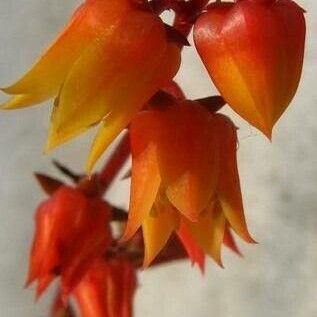
Plant Overview
Often referred to as the "Bronze Echeveria," Echeveria compressicaulis is a moody masterpiece of the succulent world. While many of its cousins favor soft pastels, this Venezuelan native stands out with its deep maroon, almost metallic foliage. It’s a rare gem that brings a dramatic, dark elegance to any windowsill or rock garden.
🔍 How to Identify
- 🍃 The Leaves: Unlike many flat-leaved succulents, these are thick, lance-shaped, and appear "compressed" or pinched toward the base. They have a glossy, leathery texture.
- 🎨 Color Palette: The foliage ranges from a deep olive green in the shade to a rich, sun-baked burgundy or bronze when given enough light.
- 📏 Growth Habit: This is a "shrubby" Echeveria. Instead of staying flat against the ground, it grows on a thick, dark stem that can eventually reach about 6 inches in height, creating a miniature tree-like appearance.
🏡 In Your Garden
- ☀️ Sun-Kissed Pigment: To maintain that striking "goth" aesthetic, this plant needs plenty of bright light. Without it, the dark bronze fades back to a dull green, and the stem begins to stretch and lean (etiolation).
- 🪴 The Drainage Rule: Because its leaves are so thick and store vast amounts of water, it is highly susceptible to root rot. It prefers a gritty, porous soil mix and "soak and dry" watering—never let it sit in a saucer of water, or the roots will suffocate.
⚠️ Safety & Toxicity
- 🐾 Pet Friendly: Like most members of the Echeveria genus, Echeveria compressicaulis is considered non-toxic to cats, dogs, and horses.
- 👶 Child Safe: It is generally safe for curious toddlers, though the leaves are quite brittle and can snap off easily if handled roughly, which might "scar" the plant's appearance.
✨ Fun Fact
🗺️ The Venezuelan Outlier: Most Echeveria species are native to Mexico and Central America, but Echeveria compressicaulis is a rare explorer—it is one of the few species in the genus that is naturally found as far south as Venezuela!

Detailed Care Instructions

Place in a bright room that is sun drenched almost all day. Or directly in a south-facing window.

When the top few inches of soil dry out, water your plants. If the top few inches of soil are still moist, do not water your plant. Wait a few days, then poke your finger into the soil to see if anything has changed. Overwatering poses a disease risk, such as the development of fungal diseases in the roots. These plants have adaptations in there leaves that allow them to survive in low water supply.
These plants can thrive without taking help from any fertilizer. However, if the medium of growth is something other than soil for instance sand then you may need to add little fertilizer. The best way to know if your plants need fertilizer or not is to check for yellowing of leaves. If the leaves start to turn yellow it’s fertilizing time.
You may use All Purpose Plant Food or Cactus Fertilizer for your Echeveria Compressicaulis
Common pests of the echeveria compressicaulis include Mealybugs, aphids, thrips. Make a habit of checking your echeveria compressicaulis frequently for pests so that any infestations can be caught and managed early.








