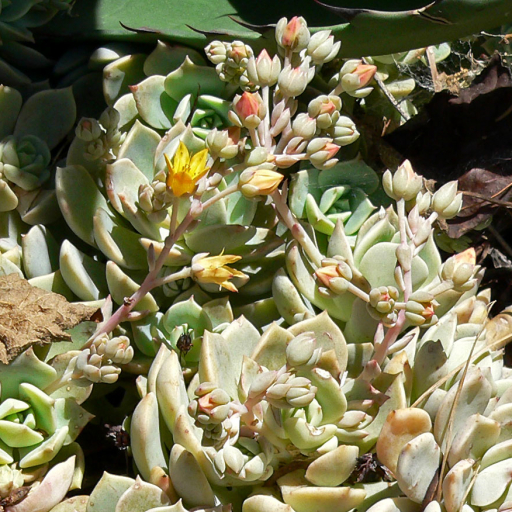
Plant Overview
Often called the "Copper Rose," Echeveria multicaulis is a standout in the succulent world because it breaks the rules of typical ground-hugging rosettes. Instead of sitting flat against the soil, it grows upward on sturdy, branching stems, creating a miniature, shrub-like forest effect. Originating from the rocky terrains of Guerrero, Mexico, it brings a rich, bronzed elegance to any collection with its high-gloss finish.
🔍 How to Identify
- 🍃 Glossy Foliage: The leaves are exceptionally smooth and shiny, lacking the "farina" (powdery wax) found on many other Echeverias. They feature deep green centers with striking reddish-brown or "copper" margins.
- 🎋 Branching Stems: Unlike solitary varieties, this species develops multiple woody, upright stems that can reach up to 8 inches in height, giving it a distinct bushy silhouette.
- 🔔 Bicolor Blooms: During the flowering season, it sends out arching stalks topped with urn-shaped flowers that are vibrant red on the exterior and bright yellow inside.
🏡 In Your Garden
- ☀️ Light for Color: To maintain those signature copper edges, this plant craves bright, indirect sunlight. If kept in too much shade, the stems will stretch (etiolate) and the reddish tints will fade to a uniform green.
- 🪴 The "Clean" Succulent: Because it lacks the delicate powdery coating of its cousins, the leaves don't show fingerprints or water spots as easily, making it a great choice for hobbyists who prefer a polished, low-maintenance look.
- 💧 Drainage Nuance: It is highly sensitive to "wet feet." Using a terracotta pot is highly recommended, as the porous material helps pull excess moisture away from the roots, preventing the rot that often plagues branching succulents.
⚠️ Safety & Toxicity
- 🐾 Pet Friendly: This plant is non-toxic to cats, dogs, and horses, making it a worry-free addition to a household with curious pets.
- 👶 Safe for Humans: There are no known toxins or irritants in the sap, and the plant lacks sharp spines, making it safe for homes with small children.
✨ Fun Fact
The name multicaulis literally translates from Latin to "many-stemmed." While most Echeverias are prized for their perfect geometric rosettes that hug the earth, this species was historically nicknamed "The Shrubby Echeveria" by early 19th-century botanists.

Detailed Care Instructions
To successfully grow Echeveria Multicaulis plants, follow these steps:
- Location: Choose a spot with bright, indirect sunlight. Echeveria Multicaulis plants thrive in warm temperatures between 65-80°F (18-26°C), so make sure they are protected from extreme heat or cold.
- Soil: Use a well-draining soil mix that is specifically formulated for succulents. A mix of regular potting soil and perlite or sand works well. It is crucial to ensure that the soil is not overly compacted, as it can lead to root rot.
- Potting: Select a pot with drainage holes to prevent waterlogging. Echeverias have shallow roots, so a shallow pot with a wide base is preferable. Plant the Echeveria Multicaulis gently, ensuring that the roots are covered and the base is firm.
- Watering: Echeverias are drought-tolerant plants and are susceptible to root rot if overwatered. Allow the soil to dry out completely between waterings. When watering, thoroughly soak the soil, but do not let the plant sit in any excess water. In winter, reduce watering frequency as the plant goes into its dormant phase.
- Fertilizer: Echeveria Multicaulis plants do not require frequent fertilization. In spring and summer, use a diluted, balanced succulent fertilizer once a month. Avoid feeding during winter when the plant is resting.
- Pruning: To encourage compact growth and to remove dead or damaged leaves, you can prune the Echeveria Multicaulis. Use clean scissors or shears and cut close to the stem base.
- Propagation: Echeveria Multicaulis plants can be propagated through leaf or stem cuttings. Allow the cut ends to callus over for a day or two before planting in well-draining soil. Keep the soil slightly moist until new roots form.
- Pests and Diseases: Watch out for common succulent pests like mealybugs or aphids. In case of an infestation, use an insecticidal soap or neem oil to control the problem. Overwatering can cause root rot, so always ensure the soil is well-draining.
Remember that Echeveria Multicaulis plants, like all succulents, have their own growth patterns. It is essential to provide them with the optimal conditions mentioned above and maintain a consistent care routine.

Place in a bright room that is sun drenched almost all day. Or directly in a south-facing window.

To water this plant, you should first check the moisture level of the soil by inserting your finger about an inch deep into the soil. If the soil feels dry, it is time to water the plant. When watering, pour water slowly and evenly around the base of the plant, making sure to avoid getting water on the leaves. Allow the water to fully drain out of the pot and avoid leaving the plant in standing water. Watering frequency should be determined by the soil moisture level and the environment in which the plant is growing. It is best to water this plant only when the soil is completely dry to avoid overwatering and root rot.
To fertilize this type of succulent plant, you'll want to use a balanced fertilizer with equal parts nitrogen, phosphorus, and potassium. You should fertilize during the plant's active growing period, which typically takes place from spring to early fall. Be sure to dilute the fertilizer to half strength before applying, and only fertilize once per month. Avoid fertilizing during periods of dormancy or during the winter months.
The ideal soil for the plant with green triangular leaves and pink flowers is well-draining and porous, with a high content of organic matter. It should have a pH of around 6.0 to 6.5 and be composed of a mixture of coarse sand, perlite, and peat moss. The soil should be kept slightly moist but never waterlogged, as this can cause root rot. It is recommended to use a shallow pot to prevent excessive wetness. The plant should be placed in a sunny location to ensure optimal growth and flowering.
To propagate this particular plant, select healthy leaves or stem cuttings from the parent plant. Make sure to leave enough stem attached to the leaf or cutting for it to be able to propagate. Let the cuttings dry for a few days until calluses form at the cut end. Once the callus has formed, plant the cutting in a well-draining soil mix and water sparingly. Place the new plant in a bright, sunny location but protect it from direct sunlight until it has established roots. Water the plant only when the soil is completely dry to avoid overwatering. With proper care, the new plant will begin to grow and thrive.
Common pests of the copper-roses include Mealybugs, aphids, thrips. Make a habit of checking your copper-roses frequently for pests so that any infestations can be caught and managed early.








