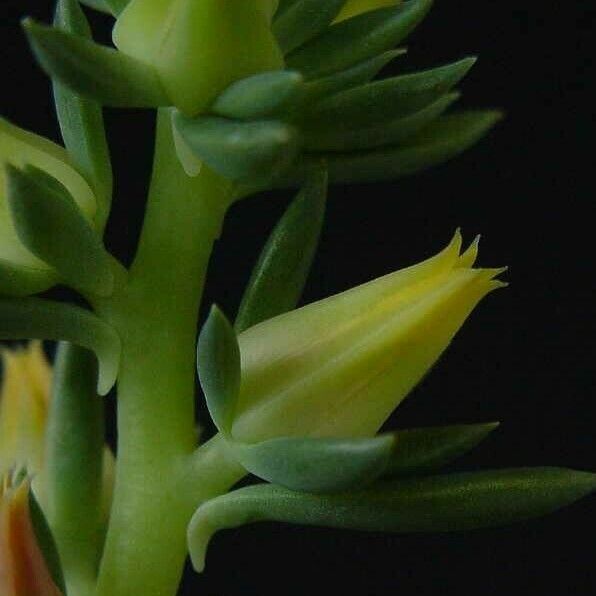
Plant Overview
Known as the "Flat-leaved Echeveria," this Mexican beauty is a favorite for those who love the geometric perfection of succulents but want something a bit more delicate. Its name comes from the Greek words for "broad leaf," perfectly describing its elegant, spoon-shaped foliage. While many succulents look chunky, the Echeveria platyphylla offers a more refined, flattened rosette that looks like a hand-carved stone rose.
🔍 How to Identify
- 🍃 Leaf Shape: The leaves are distinctly thin and spoon-shaped (spathulate), featuring a smooth texture and a subtle pointed tip at the end of each blade.
- 🎨 Color Palette: Usually a soft, powdery blue-green or "glaucous" grey. When the plant is "stressed" by cool temperatures or bright sun, the edges often blush with a delicate rose-pink or coral hue.
- 📏 Growth Habit: It forms tight, low-growing rosettes that can reach about 6 inches in diameter. Over time, it may produce offsets (pups) at the base, creating a beautiful mounded cluster.
🏡 In Your Garden
- ☀️ Light Nuance: While it craves bright light to keep its rosette tight, the thinner leaves make it slightly more prone to sunburn than its thicker-leaved cousins. If you’re moving it outdoors for the summer, give it a week of "hardening off" in dappled shade first.
- 🪴 The Shallow Life: Because it has a relatively shallow root system, it thrives in terracotta "azalea pots" or shallow bowls. This prevents excess soil from sitting wet at the bottom, which is the fastest way to cause root rot in this species.
⚠️ Safety & Toxicity
- 🐾 Pet Friendly: Like most members of the Echeveria genus, this plant is considered non-toxic to cats, dogs, and horses. It is a safe choice for a "pet-proof" windowsill.
- 👶 Gentle Touch: While not poisonous, the leaves are covered in "farina"—a waxy, powdery coating that acts as a natural sunscreen. Avoid touching the leaves, as the oils from your fingers will smudge this coating, and it does not grow back.
✨ Fun Fact
The Echeveria platyphylla is a master of survival; it creates its own "sunscreen" (the white powdery farina) not just to reflect UV rays, but also to help water beads slide off the leaves and down to the roots, ensuring it drinks every drop of morning dew in its arid native habitat.

Detailed Care Instructions







