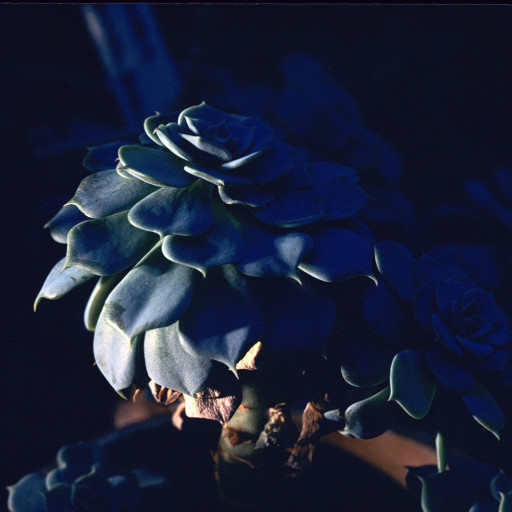
Plant Overview
Known fondly as the "Blue Rose Echeveria," this stunning succulent is a masterpiece of geometry. Originating from the high-altitude regions of Mexico, it forms tight, symmetrical rosettes that look almost too perfect to be real. It is one of the most beloved members of the "Hen and Chicks" family because of its prolific ability to sprout tiny clones around its base, creating a living carpet of blue.
🔍 How to Identify
- 🌹 The Rosette: Features tight, cabbage-like clusters of fleshy leaves that grow up to 6 inches in diameter.
- 🎨 Color Palette: The leaves are a pale, glaucous blue-green, often finished with a delicate reddish or pink tint along the very tips when "stressed" by sunlight.
- 🔔 Summer Blooms: Produces arching, reddish-pink stems topped with yellow, lantern-shaped flowers that are a favorite for hummingbirds.
🏡 In Your Garden
- 💧 The Drainage Rule: Like most mountain succulents, it hates "wet feet." It thrives in gritty, sandy soil; if kept in standard potting soil, the roots may succumb to rot quickly.
- ☀️ Light & Color: While it loves bright light, the most vibrant pink edges appear when the plant is kept in a spot with cool nights and sunny days. However, in extreme heat, it appreciates a bit of afternoon shade to prevent "sunburn" scars on its waxy leaves.
- 🌱 The "Chicks": This plant is a generous grower. It naturally produces offsets (babies) tucked under the mother plant's leaves. You can easily twist these off to start an entirely new colony.
⚠️ Safety & Toxicity
- 🛡️ Pet Friendly: Great news for animal lovers! Echeveria secunda is considered non-toxic to cats, dogs, and horses.
- 👶 Gentle for Kids: It has no sharp spines or irritating sap, making it a "touch-friendly" plant for curious little hands, though the leaves are brittle and snap easily.
✨ Fun Fact
The species name secunda is a botanical term meaning "arranged on one side." If you look closely at its flower stalk, you’ll notice all the bell-shaped blossoms tend to hang from just one side of the stem rather than circling it!

Detailed Care Instructions
To grow Echeveria Secunda plants, follow these steps:
- Choose a suitable pot: Select a pot that has drainage holes to prevent water from accumulating at the bottom. Echeveria plants prefer well-draining soil.
- Soil: Use a well-draining mixture of cactus or succulent soil. You can also add pumice, perlite, or sand to improve drainage.
- Planting: Place the plant in the pot, ensuring the roots are covered with soil. Press the soil gently around the base of the plant to secure it.
- Light: Echeverias require bright, indirect sunlight for at least six hours a day. Place them near a south or east-facing window or provide them with artificial grow lights.
- Watering: Allow the soil to dry out between waterings. Echeverias are drought-tolerant plants and can suffer from root rot if overwatered. Water thoroughly, making sure excess water drains from the pot.
- Temperature and humidity: Echeverias prefer temperatures between 60-75°F (15-24°C). They can tolerate higher temperatures but may need some protection from direct sunlight during extreme heat. Average room humidity is suitable, but avoid excessively humid environments.
- Fertilizer: Feed your Echeveria Secunda with a balanced, water-soluble fertilizer diluted to half strength once a month during the growing season (spring and summer). Avoid fertilizing during the dormant period (fall and winter).
- Pruning: Trim off any dead or dying leaves to keep the plant looking neat and promote airflow.
- Propagation: Echeverias can be propagated from stem or leaf cuttings. Allow the cuttings to dry and callus for a few days before planting them in well-draining soil.
- Repotting: As the plant grows, you may need to repot it every couple of years. Choose a slightly larger pot and fill it with fresh succulent soil.
Remember to monitor your Echeveria Secunda plant regularly for pest infestations or signs of disease. With proper care, your plant should thrive and grow steadily.

Place in a bright room that is sun drenched almost all day. Or directly in a south-facing window.

To water this particular plant, it is important to water it sparingly and only when the soil is dry to the touch. It is recommended to water from the bottom of the pot, allowing the roots to absorb the water and prevent water from sitting on the leaves and causing damage. Overwatering can be fatal to this plant, so it is important to be mindful of the watering frequency and amount. Additionally, it is important to provide good drainage to avoid waterlogging the soil.
To fertilize this plant, use a balanced liquid or granular fertilizer with an N-P-K ratio of 10-10-10 or 20-20-20 once a month during the growing season (spring and summer). Dilute the fertilizer to half strength and apply it to the soil around the base of the plant. Avoid getting the fertilizer on the leaves or stem, as this can cause burning or damage. In the winter months, reduce fertilization to once every two to three months.
For Echeveria Secunda plant, it is recommended to use a well-draining soil mix that is specifically designed for succulent plants. The soil should have good drainage properties and be able to retain moisture while also allowing excess water to drain away easily. It is important to avoid using soil that is heavy or clay-based, as this can lead to waterlogged soil and root rot. A mixture of coarse sand, perlite, and potting soil can be used to create a suitable soil mix for Echeveria Secunda plants. Additionally, it is important to ensure that the soil is not overly fertile, as succulent plants tend to prefer nutrient-poor soil.
To propagate this succulent plant, you can start by taking stem cuttings from a mature plant. Make a clean cut below a leaf node using a sharp, sterilized knife. Allow the cuttings to dry and callus over for a day or two before potting them in well-draining soil. Water sparingly and keep the pot in a bright but sheltered location until new growth appears.
Another method is by dividing the offsets that form at the base of the mother plant. Gently separate the young plants and pot them individually in fresh soil. Keep them in a shady location until they establish new roots and begin to grow. Water only when the soil is completely dry to avoid overwatering and rotting.
Finally, leaf cuttings can also be used to propagate Echeveria Secunda. Simply remove a healthy leaf from the parent plant and place it on top of the soil. Mist the cutting occasionally and keep it in a bright but protected position until roots and new growth appear. Once the cutting has established itself, it can be potted as its own individual plant.
Common pests of the blue echeveria include Mealybugs, aphids, thrips. Make a habit of checking your blue echeveria frequently for pests so that any infestations can be caught and managed early.








