Plant Overview
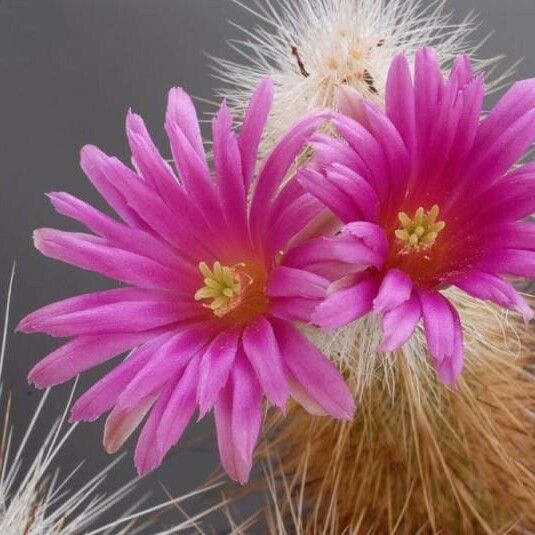
Known as the Rayones Hedgehog Cactus, this Mexican beauty is a master of the "clumping" lifestyle. Originating from the steep limestone cliffs of Nuevo León, it grows in dramatic, spiny mounds that look like a colony of silver-green hedgehogs sunning themselves on the rocks. It is highly prized by collectors for its brilliant, neon-pink flowers that appear to glow against its pale, needle-dense body.
🔍 How to Identify
- 🌵 The Stem: Features cylindrical, light-green bodies that grow upright, typically forming dense clusters or "mats" that can contain dozens of individual heads.
- 🪡 The Spines: Covered in a dense coat of glassy, white to pale-yellow spines. These needles are quite fine but very numerous, giving the plant a slightly "fuzzy" or frosted appearance from a distance.
- 🌸 The Bloom: Produces large, funnel-shaped flowers in a striking shade of magenta or purplish-pink, usually featuring a distinctive emerald-green center (stigma).
🏡 In Your Garden
- 🏜️ Mineral Craving: Because it grows naturally in rocky crevices, this cactus demands a very gritty, mineral-heavy soil. It is prone to root rot if kept in standard potting soil that holds onto moisture.
- ☀️ Light & Spines: To keep those white spines looking dense and bright, it needs maximum sunlight. In low-light conditions, the new growth will stretch (etiolate), and the beautiful spiny "armor" will become thin and weak.
⚠️ Safety & Toxicity
- 🛡️ Non-Toxic but Sharp: This plant is not chemically poisonous to humans, cats, or dogs. However, it is a physical "stay away" plant.
- 🩹 Mechanical Injury: The spines are sharp and can easily puncture the skin or become lodged in a pet's paw. It is best placed on a high shelf or a low-traffic area of the garden where it won't be accidentally brushed against.
✨ Fun Fact
Most members of the Echinocereus genus are nicknamed "Strawberry Cactuses." This is because once the spectacular flowers fade, they produce small, spiny fruits that, once peeled, are said to have the sweet aroma and flavor of fresh strawberries!

Detailed Care Instructions








