Plant Overview
Often called the Lamb's Tail Cactus, this Mexican native looks more like a soft, fuzzy creature than a desert dweller. Its trailing, slender stems are shrouded in dense white bristles, making it a standout choice for hanging baskets. While it appears cuddly, it is a resilient survivor from the semi-arid regions of Querétaro, where it has adapted to blend into the rocky landscape.
🔍 How to Identify
- 🌵 The Stems: Long, thin, cylindrical stems that grow upright when young but eventually trail or creep downward, resembling a lamb’s tail.
- 🧶 Woolly Coating: The ribs are densely covered in soft, hair-like white spines that give the plant a silver-grey, fuzzy appearance.
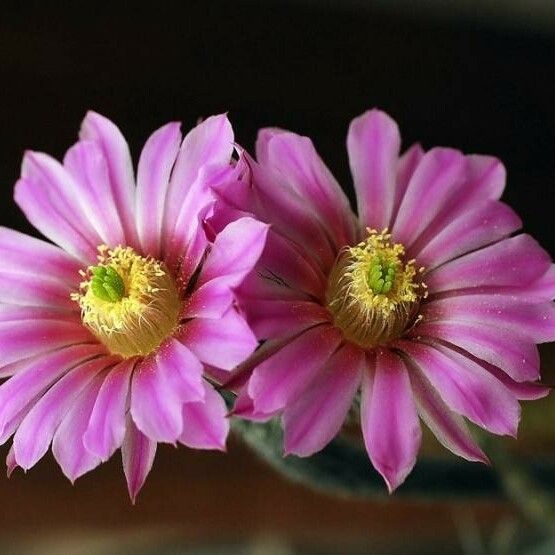
- 🌸 The Bloom: In late spring, it produces surprisingly large, funnel-shaped flowers in vibrant shades of magenta or deep pink that sit proudly at the stem tips.
🏡 In Your Garden
- 🥕 The Root Secret: This cactus possesses a large, tuberous "turnip-like" root system used for water storage. Because of this, it is extremely sensitive to overwatering and requires a very gritty, porous soil mix to prevent rot.
- ☀️ Light & Texture: To keep its "wool" thick and white, it needs intense sunlight. In low-light conditions, the new growth will look green and spindly, losing the characteristic fuzzy charm that collectors love.
⚠️ Safety & Toxicity
- ✅ Status: Generally non-toxic.
- 🧤 Details: While it is not poisonous to cats, dogs, or humans, the "soft" hairs actually hide small, sharp spines. These can easily lodge in the skin or a curious pet's nose, so it is best handled with tongs or thick gloves.
✨ Fun Fact
Echinocereus schmollii is considered a "Critically Endangered" species in the wild. If you own one, you are likely nurturing a rare piece of botanical history that is increasingly difficult to find in its native Mexican habitat!

Detailed Care Instructions








