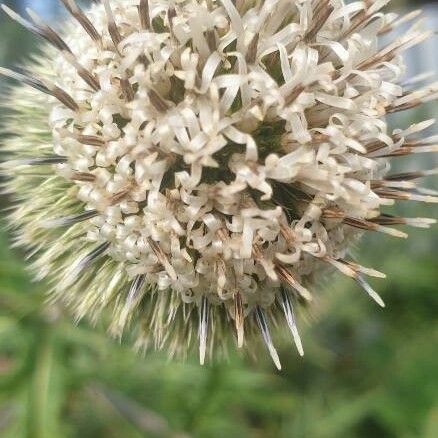
Plant Overview
Known as the "Kebericho" in its native Ethiopia, this striking globe thistle is far more than a decorative garden piece; it is a plant steeped in ancient ritual and medicinal history. In the Ethiopian highlands, it is considered a sacred botanical, with its roots traditionally burned as incense to ward off "evil spirits" and persistent insects. With its architectural, moon-like flower heads and jagged, silvery foliage, it brings a touch of high-altitude drama and spiritual heritage to any landscape.
🔍 How to Identify
- 🌐 The Globe Bloom: It produces perfectly spherical, golf-ball-sized flower heads made up of tiny, packed tubular florets, usually in shades of silvery-white or pale blue.
- 🗡️ Jagged Foliage: The leaves are deeply lobed and serrated with sharp, prickly edges, sporting a dusty green color on top and a white, fuzzy "felt" underneath.
- 🏗️ Architectural Stature: This is a tall, upright perennial with sturdy, ribbed stems that can reach impressive heights, making it a natural focal point in the back of a border.
🏡 In Your Garden
- ⚓ The Taproot Rule: Like most thistles, Kebericho grows a very deep, stubborn taproot. This makes it incredibly drought-tolerant once established, but it also means it hates being moved—choose its "forever home" carefully!
- 🦋 Pollinator Magnet: While humans might find the leaves intimidating, bees and butterflies are obsessed with the nectar-rich globes, making it an essential pick for a wildlife-friendly garden.
- 🏜️ Tough Love: It actually prefers "poor" soil. If the ground is too rich or over-fertilized, the plant can become "leggy" and flop over; it thrives best in rocky, well-draining spots with maximum sun.
⚠️ Safety & Toxicity
- 🌵 Physical Hazard: The primary risk is the sharp spines on the leaves. Always wear thick gardening gloves when pruning or handling to avoid painful pricks and skin irritation.
- 🐾 Pet Safety: While not specifically listed as high-toxicity, the prickly texture can cause mechanical injury to a curious dog’s mouth or paws.
- 🧪 Medicinal Caution: Though used in traditional Ethiopian medicine for respiratory issues, the raw plant should never be ingested without professional guidance, as concentrated compounds in the root can be potent.
✨ Fun Fact
In Ethiopian culture, the dried root of the Kebericho is so highly valued that it is often sold in traditional markets as a "holy" fumigant. It is burned in homes not just for its earthy aroma, but because it is scientifically proven to have potent antimicrobial and insect-repelling properties!

Detailed Care Instructions








