Plant Overview
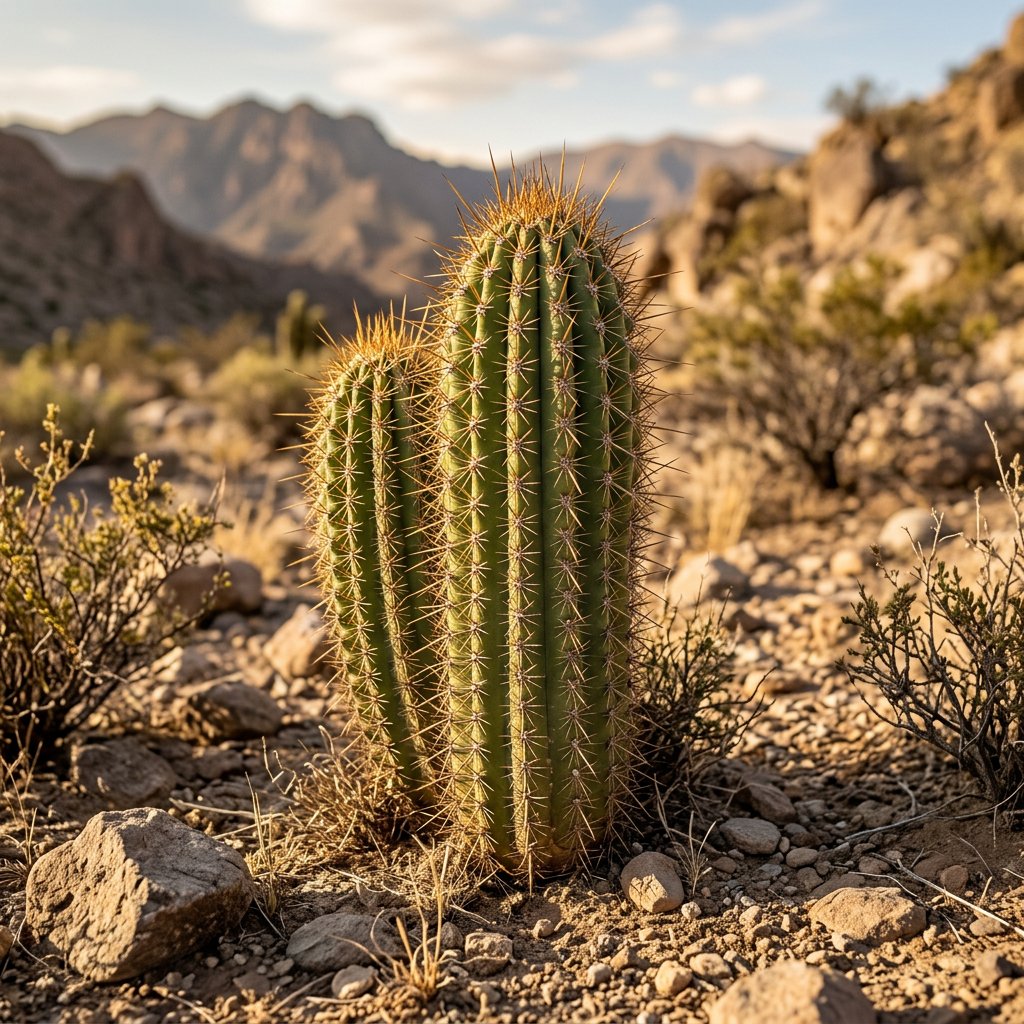
Often called the Teardrop Cactus or the Hexagonal Column Cactus, Echinopsis thelegona is a striking, low-growing succulent from the rocky slopes of Argentina. Unlike its cousins that reach for the sky, this cactus has a "creeping" habit, sprawling across the ground like a geometric serpent. It is highly prized by collectors for its architectural stem patterns and its surprisingly massive, nocturnal blooms.
🔍 How to Identify
- 🌵 The Tubercles: The stems are covered in distinct, nipple-like bumps called tubercles that are arranged in a precise hexagonal pattern, giving the plant a "braided" or armored look.
- ⚔️ Spiky Armor: Each tubercle holds a cluster of needle-like spines. The central spine is particularly long and sharp, often starting out dark brown or black before fading to a weathered gray.
- 🌸 Nighttime Blossoms: It produces giant, funnel-shaped white flowers that can reach up to 8 inches in length. These blooms open at night to attract specialized pollinators like hawk moths.
🏡 In Your Garden
- 🏘️ Spreading Space: Because this cactus grows horizontally (decumbent) rather than perfectly upright, it requires a wider pot or a dedicated spot in a rock garden where it can "crawl" and hang over edges.
- ☀️ Light & Color: While it thrives in bright light, its deep green skin can actually scorch in intense, direct afternoon sun. It prefers "bright-indirect" light or a spot that gets plenty of morning sunshine.
- 💧 The Drainage Rule: Like most mountain-dwelling cacti, it hates "wet feet." It requires a very gritty, porous soil mix. If the soil stays damp for too long, the sprawling stems are prone to rot where they touch the ground.
⚠️ Safety & Toxicity
- 🩹 Physical Hazard: This plant is non-toxic if accidentally ingested, but it is physically dangerous. The spines are long, stiff, and capable of deep punctures.
- 🐾 Pets & Kids: It should be placed in a low-traffic area. Curious pets or toddlers can easily be injured by the sharp, outward-pointing spines. Always wear thick gloves when repotting.
✨ Fun Fact
The name "Thelegona" is derived from the Greek words thele (nipple) and gonia (angle), which literally translates to "angled nipples"—a perfect, if cheeky, description of its unique hexagonal stem structure.

Detailed Care Instructions
To grow an Echinopsis thelegona plant, also known as the Easter Lily Cactus or the Golden Torch Cactus, you can follow these steps:
- Purchase a healthy Echinopsis thelegona plant from a reputable nursery or online seller. Ensure it is free from diseases or pests.
- Choose a suitable location for your plant. Echinopsis thelegona requires bright but indirect sunlight. A spot near a window with filtered light or partial shade outdoors would be ideal.
- Select a pot with drainage holes to ensure proper water drainage. The pot should be slightly larger than the current root size to allow future growth. Echinopsis thelegona prefers a well-draining soil mixture, so you can use a cactus or succulent potting mix.
- Gently remove the plant from its current container and shake off excess soil, being careful not to damage the roots. Handle the plant with care, as its spines can cause injury.
- Place the plant in the new pot, ensuring it is planted at the same depth as it was in the previous container. Add the cactus potting mix around the roots, lightly pressing it down to secure the plant.
- Water the Echinopsis thelegona thoroughly, allowing the water to drain out of the pot. Wait until the top inch of soil feels dry before watering again, as overwatering can lead to root rot.
- Fertilize the plant during the growing season, which is usually from spring to summer. Use a balanced cactus fertilizer at half strength, following the instructions on the packaging.
- Maintain a temperature range of 60-80°F (15-27°C) for the plant. Protect it from freezing temperatures, as Echinopsis thelegona is sensitive to cold.
- Prune any dead or withered parts of the plant using clean and sharp pruning shears. Be cautious of the spines while pruning.
- Monitor the plant for any signs of pests or diseases, such as mealybugs or rot. If detected, take appropriate measures to control the issue, such as using an insecticidal soap or a fungicide.
- Echinopsis thelegona plants often produce beautiful flowers in spring or summer. Ensure they have proper lighting conditions and regular care to encourage blooming.
- If the plant outgrows its current pot, you can repot it into a larger container following similar steps as mentioned before.
Remember to research and understand the specific needs of your Echinopsis thelegona plant to provide it with optimal care and conditions for healthy growth.
Watering the Echinopsis plant requires a few considerations. First, it is important to only water the plant when the soil is completely dry. This ensures that the roots do not become waterlogged and susceptible to rot. Secondly, when watering the plant, it is best to use room temperature water. Using water that is too cold or too hot can shock the plant and cause damage. Finally, it is important to water the plant slowly and evenly, allowing the water to soak into the soil and reach the root system. Overwatering or watering too quickly can cause the water to run off and not reach the roots, which can lead to dehydration.
To fertilize this plant, use a balanced fertilizer with equal amounts of nitrogen, phosphorus, and potassium. Feed the plant every two weeks during the growing season, which is typically from spring to early fall. Dilute the fertilizer to half strength and water the plant thoroughly before and after feeding. Avoid overfertilizing as it can cause damage to the plant.
Echinopsis Thelegona plant prefers well-draining soil that is slightly acidic with a pH range of 6.0-7.0. The soil should be porous and contain a mixture of sand, perlite, and peat moss to provide adequate drainage and aeration. The plant requires good moisture retention but not waterlogged soil, therefore avoid using heavy clay soils. The addition of organic matter, such as compost or aged manure, can improve the soil quality and fertility for the Echinopsis Thelegona plant.
To propagate this plant, first, select a healthy stem segment that is free from damage and diseases. Use a sterilized blade to cut the stem segment and allow it to dry out for a few days until the cut end has scabbed over.
Prepare a well-draining potting mix with sand, perlite, and peat moss in equal amounts. Plant the stem segment in the potting mix and water it well. Place the pot in a bright, but indirect light, and maintain a temperature of 60-80°F (15-27°C).
Water the plant infrequently, only when the soil is dry, as overwatering can lead to root rot. After a few weeks, new growth should appear from the cut end of the stem segment, indicating that the plant has taken root.
Once the plant has established roots, it can be transplanted into its final container or garden bed. With proper care, the plant will continue to grow and produce beautiful blooms.








