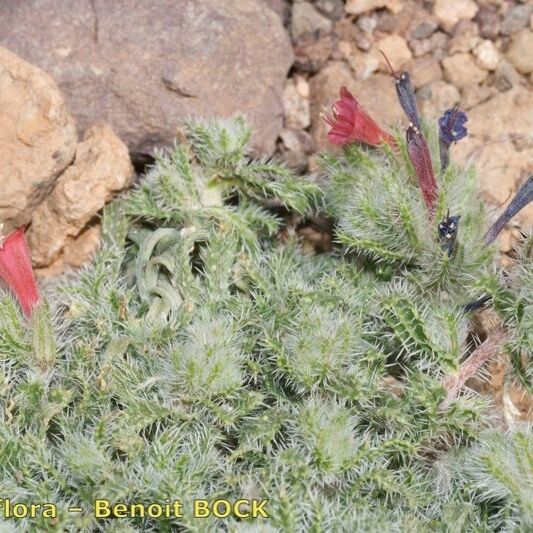
Plant Overview
Living up to its intimidating name, Echium horridum is the "tough guy" of the arid plant world. Known for its incredibly prickly exterior, this North African and Middle Eastern native is a master of survival in harsh, rocky landscapes where other plants wither. While it might look like a botanical pincushion, it surprises onlookers with delicate, vibrant blooms that act as a magnet for desert pollinators.
🔍 How to Identify
- 🌵 The "Horrid" Bristles: The most defining feature is the dense covering of stiff, white, needle-like hairs (trichomes) that coat the stems and leaves, giving the plant a silvery, fuzzy, but very sharp appearance.
- 🌸 Trumpet Blooms: It produces coiled clusters of small, tubular flowers, typically in shades of deep blue, violet, or occasionally pale pink, which unfurl as the plant grows.
- 🌿 Lance-Shaped Leaves: The leaves are narrow and elongated, growing in a basal rosette at the bottom and alternating up the flower spike, which can reach up to 15–20 inches in height.
🏡 In Your Garden
- 🏜️ Thrives on Neglect: This plant is an "extremophile" that actually prefers poor, stony, or sandy soil. Giving it too much fertilizer or rich organic matter will often cause the plant to become "leggy" and collapse under its own weight.
- ☀️ Sun-Seeker: To maintain its compact, bristly form and vibrant flower color, it requires intense, direct sunlight. It is an excellent choice for xeriscaping or rock gardens where water is scarce and the heat is high.
⚠️ Safety & Toxicity
- 🛑 Mechanical Irritation: The stiff hairs are designed to deter herbivores and can easily penetrate human skin, causing itching, redness, or a stinging sensation. Always wear thick gloves when handling.
- 🐾 Internal Toxicity: Like many members of the Echium genus, it contains pyrrolizidine alkaloids. These are toxic if ingested in large quantities, potentially causing liver damage in horses, cattle, and household pets. Keep it away from curious nibblers.
✨ Fun Fact
The genus name Echium comes from the Greek word "echis," meaning viper. This is partly because the seeds of these plants are shaped like tiny snake heads, and ancient herbalists once believed the plant could cure venomous snake bites—though modern science says otherwise!

Detailed Care Instructions








