Plant Overview
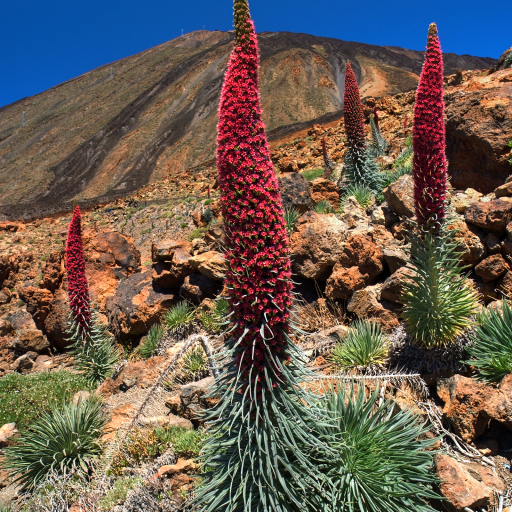
Standing like a crimson monolith against the volcanic landscape, the Tower of Jewels is one of nature’s most dramatic architectural masterpieces. Native to the high-altitude slopes of Mount Teide in the Canary Islands, this plant spends years as a humble silvery rosette before exploding into a three-meter-tall spire of thousands of red blossoms. It is a "monocarpic" wonder, meaning it puts all its energy into one spectacular grand finale bloom before completing its life cycle.
🔍 How to Identify
- 🗼 The Spire: Its most famous feature is the massive, conical flower spike that can reach up to 10 feet (3 meters) in height, densely packed with flowers.
- 🗡️ Silvery Foliage: Before it blooms, it forms a dense, low-growing rosette of narrow, sword-shaped leaves covered in fine, silvery-grey hairs.
- 🌋 The Bloom: The flowers are a vibrant, deep coral-red or pinkish-red, arranged in a spiral pattern that creates a "tower" effect from a distance.
🏡 In Your Garden
- ☀️ Sun Seeker: This plant craves intense sunlight and "lean" soil. In its native habitat, it grows in volcanic grit, so it will rot quickly in heavy, wet clay or overly rich garden soil.
- ⏳ Patience is Key: Be prepared for a wait; the Tower of Jewels usually takes two to three years of growth before it is ready to produce its famous flower spike.
- 🚫 Don't Move Me: Like many members of the Boraginaceae family, it has a sensitive taproot and absolutely hates being transplanted once established. Choose its "forever home" carefully.
⚠️ Safety & Toxicity
- 🧤 Skin Irritant: The beautiful silvery leaves are covered in tiny, stiff hairs (gloquids) that can cause significant skin irritation or "contact dermatitis." Always wear gloves when handling.
- 🐾 Toxic if Ingested: It contains pyrrolizidine alkaloids, which are toxic to humans, cats, dogs, and horses if eaten, potentially causing liver damage over time.
- 🐝 Pollinator Magnet: While it may be prickly to humans, it is a paradise for bees and butterflies, who will flock to the tower by the hundreds during its blooming season.
✨ Fun Fact
The Tower of Jewels is so well-adapted to its high-altitude home that it can survive temperatures as low as -15°C (5°F) by using its dense, hairy leaves to trap a layer of insulating air against its core!

Detailed Care Instructions
To successfully grow Echium wildpretii (also known as the Tower of Jewels or Red Bugloss), follow these steps:
- Start with seeds: Echium wildpretii is typically grown from seeds. Purchase fresh seeds from a reputable source or collect them from mature plants if available.
- Prepare the soil: Echium wildpretii prefers well-draining soil with a slightly acidic to neutral pH. Amend the soil with compost or well-rotted manure to improve fertility and drainage.
- Planting: Sow the Echium wildpretii seeds in early spring. The seeds require light to germinate, so only lightly cover them with a thin layer of soil. Alternatively, you can stratify the seeds by placing them in the refrigerator for a few weeks before planting.
- Germination: Place the seeds in a warm and sunny location, keeping the soil moist but not waterlogged. Germination can take anywhere from 1 to 6 weeks, so be patient.
- Transplanting: Once the seedlings have developed several sets of true leaves, transplant them into individual pots or their permanent location in the garden. Space them about 12-18 inches apart.
- Location and sunlight: Echium wildpretii thrives in full sun but can also tolerate partial shade. Choose a location that receives at least 6 hours of sunlight per day.
- Watering: While Echium wildpretii requires regular watering, it is important not to overwater as it is susceptible to root rot. Water deeply when the top inch of soil feels dry, allowing the excess water to drain away.
- Fertilizing: Apply a balanced, slow-release fertilizer once or twice a year during the growing season to promote healthy growth and blooming.
- Pruning: Prune Echium wildpretii after flowering to encourage bushier growth and prevent the plant from becoming too leggy. Remove the spent flower spikes but leave the basal rosette intact.
- Winter protection: In colder climates, protect Echium wildpretii from frost by covering it with a layer of mulch or bringing potted plants indoors.
By following these guidelines, you can successfully grow and enjoy the beautiful Echium wildpretii plant.

Place in a bright room that is sun drenched almost all day. Or directly in a south-facing window.

To water this plant, first consider the moisture level of the soil. It prefers a well-draining soil that is consistently moist but not waterlogged. Too much water can cause root rot and kill the plant.
You should water the plant deeply once a week during the growing season, and reduce watering during the winter dormant period.
It is important to water the base of the plant and avoid getting water on the leaves to prevent leaf spotting and other fungal diseases.
In drought conditions, the plant may require more frequent watering, but be careful to not overwater.
Regular monitoring of the soil moisture level and adjusting watering accordingly is essential for the health of this plant.
- Choose a balanced fertilizer with a nitrogen-phosphorus-potassium (NPK) ratio of 10-10-10 or similar.
- Apply the fertilizer in early spring before new growth appears.
- Water the soil thoroughly before applying the fertilizer to prevent root burn.
- Use a slow-release fertilizer to avoid over-fertilizing and damaging the plant.
- Apply the fertilizer according to the package directions, typically 1-2 tablespoons per plant.
- Spread the fertilizer evenly around the base of the plant, avoiding direct contact with the foliage.
- Water the plant again after fertilizing to help the nutrients absorb into the soil.
- Repeat fertilization once or twice during the growing season, if desired.
The Echium Wildpretii plant prefers a well-draining soil that is slightly acidic to neutral in pH. A mixture of sandy loam and perlite is recommended to promote good drainage and prevent waterlogging. To provide the plant with essential nutrients, it is recommended to add a slow-release fertilizer to the soil mix. The plant also benefits from the addition of organic matter such as compost or well-rotted manure to promote healthy growth. Adding a layer of mulch around the base of the plant can help to conserve soil moisture and regulate soil temperature.
To propagate this type of plant, you will need to collect seeds from mature plants. Wait until the blooms have faded and the plant's seed pods have turned brown and dry before harvesting them. Once the seed pods have dried out, remove the seeds from within, and store them in a cool, dry place until you are ready to use them.
To start the propagation process, plant the seeds in a potting mix that is well-draining and keep them in a warm place, such as a windowsill or greenhouse. Make sure the soil stays moist, but not overly wet, during germination. The seeds should sprout within a few weeks.
Once the plants have grown to a height of around 5 cm, they can be transplanted into separate containers or directly into your garden bed. Keep the young plants in a protected area, such as a covered patio or porch, until they have grown large enough to handle direct sunlight.
Overall, growing new plants from seed takes time and patience. However, with proper care and attention, you can successfully propagate Echium Wildpretii and enjoy their stunning blooms for years to come.








