Plant Overview
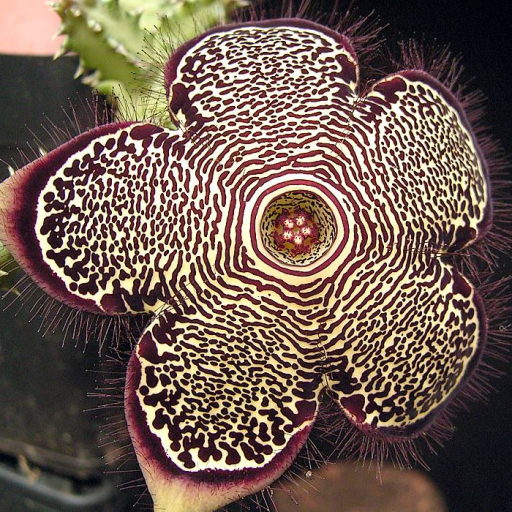
Known as the "Persian Carpet Flower," Edithcolea grandis is widely considered to have one of the most intricate and visually stunning flowers in the succulent world. Native to the arid regions of East Africa and the Arabian Peninsula, it spends most of the year looking like a humble, toothy cactus. However, when it blooms, it reveals a massive, star-shaped flower with patterns so complex they resemble a hand-woven oriental rug.
🔍 How to Identify
- 🌵 The Stems: The plant consists of succulent, 5-angled stems that grow prostrate along the ground. They are typically grey-green to brownish and are lined with sharp, hard, tooth-like tubercles.
- 🎨 The Bloom: The flower is the primary identifier—a large, five-lobed star (up to 5 inches across) featuring a pale yellow base covered in a dense "map" of reddish-brown spots and concentric circles.
- 🪶 Fringed Edges: Look closely at the edges of the petals; they are often fringed with dark, purple-to-black hairs (cilia) that move with the slightest breeze to attract pollinators.
🏡 In Your Garden
- 🏜️ Drainage is Vital: This is not a beginner succulent. It has a very sensitive root system that will rot almost instantly if kept in standard potting soil. It requires a "mineral-heavy" substrate—think mostly pumice, grit, and lava rock with very little organic matter.
- ☀️ The Heat Factor: Unlike some succulents that enjoy a cool evening, the Persian Carpet Flower demands warmth. It thrives in high heat and bright, indirect light. If the temperature drops below 50°F (10°C), the plant may go into shock or succumb to fungal infections.
- 💧 Sipping, Not Soaking: During the growing season, water only when the stems start to look slightly wrinkled. In the winter, it should be kept almost entirely dry to mimic its natural dormant cycle in the desert.
⚠️ Safety & Toxicity
- 🌵 Physical Hazard: While the plant is not known to be chemically toxic to humans or pets, the "teeth" along the stems are quite sharp and can cause painful punctures. Handle with thick gloves or soft-tipped tongs.
- 🐱 Pet Caution: Although not listed as a high-risk toxic plant, the sap of most stapeliads (the family this belongs to) can cause mild stomach upset if chewed. It is best kept on a high shelf away from curious cats and dogs.
✨ Fun Fact
The Edithcolea grandis is a master of deception. To ensure pollination in the desert, it produces a faint scent of decaying meat. This "carrion" smell attracts blowflies, which are tricked into laying their eggs on the flower, picking up pollen in the process!

Detailed Care Instructions
| Humidity | Normal |
| Lighting | Part Sun |
| Difficulty | Medium |
| Hardiness Zones | 10B - 11 |
To grow an Edithcolea grandis plant, also known as the "Persian carpet flower," you should follow these steps:
- Obtain a healthy Edithcolea grandis plant: Purchase seeds or a young plant from a reputable nursery or online store. Ensure that it is well-packaged and free from any diseases or pests.
- Provide the right conditions: Edithcolea grandis plants thrive in warm, dry climates, similar to their native habitat in the arid regions of North Africa. They prefer full sun exposure, so choose a location where the plant will receive direct sunlight for at least six hours a day. Maintain a minimum of 65°F (18°C) temperature.
- Choose the right soil: The Persian carpet flower prefers well-draining soil, as excessive moisture can lead to root rot. Use a cactus potting mix or create a blend of sandy soil with some organic matter. This will provide good drainage and prevent waterlogging.
- Planting: If you are starting from seeds, sow them directly into the pot or soil. Gently press the seeds into the soil surface, as they require light to germinate. If using a young plant, dig a hole slightly wider and deeper than the root ball, place the plant in the hole, and backfill with the soil mix. Ensure that the plant is planted at the same depth as it was in the nursery pot.
- Watering: Water the Edithcolea grandis plant thoroughly after planting, and then allow the soil to dry out significantly before watering again. The plant is drought-tolerant, so water sparingly, only when the soil feels dry to the touch. Overwatering can be detrimental.
- Fertilization: In the growing season, you can provide a balanced, water-soluble fertilizer once a month. Dilute the fertilizer per the manufacturer's instructions and apply it to the soil.
- Pruning: Minimal pruning is required for Edithcolea grandis plants. If you notice any dried or dead leaves, you can remove them to maintain the plant's appearance and prevent disease.
- Provide support: As the plant grows, it might require support due to its vining nature. Provide trellises, stakes, or other support structures for the plant to cling onto as it grows taller.
- Pest and disease control: Edithcolea grandis is relatively pest and disease resistant. However, it can be susceptible to common houseplant pests such as aphids or mealybugs. Regularly inspect the plant for any signs of infestation and treat accordingly, using natural or chemical insecticides if necessary.
- Enjoy your beautiful plant: With proper care, your Edithcolea grandis plant should grow and produce its distinctive flowers, resembling Persian carpets.
Remember to research and understand the specific care requirements of the Edithcolea grandis plant to provide the best conditions for its growth.

Place in a bright room that is sun drenched almost all day. Or directly in a south-facing window.

To water this plant, you should first check the soil moisture level by touching the top layer of soil. If it feels dry, then it's time to water. Use room temperature water and pour it slowly around the base of the plant, making sure to avoid splashing water on the leaves. Allow the excess water to drain out from the pot. Avoid overwatering as it can cause root rot. The frequency of watering depends on the temperature, humidity, and amount of sunlight the plant is receiving. It's best to let the top inch of soil dry out before watering again.
- Choose a balanced fertilizer with equal parts nitrogen, phosphorous, and potassium.
- Dilute the fertilizer to half strength before applying to the plant.
- Apply the fertilizer once every two weeks during growing season.
- Water the plant thoroughly before and after fertilizing to prevent burning the roots.
- Do not fertilize during the winter dormant period.
- Consider adding a soil amendment such as compost or worm castings for added nutrients.
Edithcolea Grandis is a perennial plant that requires well-draining soil with a pH range of 6.0 to 7.5. The soil should be a loose mix of sand, loam, and small gravel or pumice to ensure proper drainage. A good potting mix for this plant should contain a high percentage of organic matter such as peat moss or coconut coir to promote healthy root growth. Adding perlite or vermiculite can also aid in drainage and aeration of the soil. It is important to avoid using heavy clay soils or soils that retain too much water as this can lead to root rot and other fungal diseases. In addition, it is recommended to fertilize the plant once every two to three months with a balanced fertilizer to promote healthy growth.
To propagate this plant, you will need to carefully remove healthy stem cuttings from the parent plant. Look for stems that have grown about 4-6 inches in length and have at least one or two leaves attached. Using a clean, sharp pair of scissors or pruning shears, make a diagonal cut at a 45-degree angle just below a node (where a leaf meets the stem).
After you have your cuttings, remove the lower leaves, leaving only one or two leaves at the top. Dip the cut end into a rooting hormone powder to encourage root growth. Then, plant the cutting in a well-draining soil mix, covering the cut end by about half an inch.
Water the cutting thoroughly, making sure the soil is moist but not waterlogged. Cover the pot with a plastic bag or cling wrap to help retain moisture and create a humid environment. Place the pot in a bright, warm spot out of direct sunlight.
Check the soil regularly to make sure it stays moist, but not too wet. You can remove the plastic bag or cling wrap once you start to see new growth, indicating the cutting has rooted. It may take several weeks for the cutting to root, so be patient.
Once the plant has established a strong root system, you can transplant it into a larger pot with fresh soil. Water regularly and provide bright, indirect light to encourage healthy growth.
Common pests of the persian carpet flower include Scale insect, mealybugs, spider mites, thrips. Make a habit of checking your persian carpet flower frequently for pests so that any infestations can be caught and managed early.








