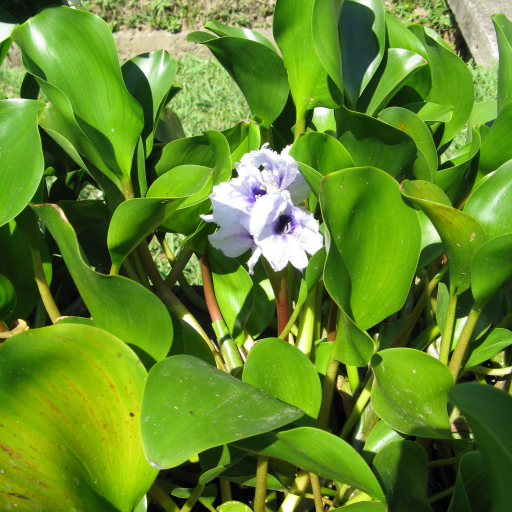
Plant Overview
Known as the Rooted Water Hyacinth or the "Peacock Hyacinth," Eichhornia azurea is the more stationary, elegant cousin of the common floating water hyacinth. Originating from the sun-drenched wetlands of Central and South America, this aquatic beauty is famous for its striking lavender blooms that look like they were painted by hand. Unlike its free-floating relatives, this species prefers to keep its feet on the ground—or rather, its roots in the mud.
🔍 How to Identify
- 🪷 The Fringed Bloom: It produces spikes of 7 to 20 flowers. Each petal is delicately "fringed" or toothed at the edges, featuring a soft lavender hue with a bold, peacock-like yellow spot on the upper petal.
- 🍃 Two-Faced Foliage: This plant exhibits "heterophylly," meaning it has two types of leaves. Submerged leaves are long and strap-like, while the leaves above the water are broad, round, and glossy green.
- ⚓ Rooted Stems: Unlike the common water hyacinth that drifts with the current, Eichhornia azurea features thick, submerged stems that root firmly into the pond or river bottom.
🏡 In Your Garden
- 🌱 Substrate Lovers: Because this plant is not a floater, it requires a heavy clay or loamy soil substrate in a pot submerged under about 6–12 inches of water. It "climbs" toward the surface, so it needs space to stretch its stems.
- ✂️ Growth Management: In a backyard pond, it can be quite vigorous. To keep it from taking over, it’s best to keep it in a large container to restrict its root spread and prune the stems regularly once they reach the surface.
⚠️ Safety & Toxicity
- 🟢 General Safety: Eichhornia azurea is considered non-toxic to humans and common household pets like dogs and cats.
- 🚫 Ecological Warning: The biggest "danger" this plant poses is to the environment. In many regions (including parts of the USA), it is classified as a Federal Noxious Weed. Never release this plant into local waterways, as it can quickly choke out native species and deplete oxygen for fish.
- 🐱 Pet Interaction: While not poisonous, the high fiber content can cause mild stomach upset if a curious cat or dog decides to munch on the leathery leaves.
✨ Fun Fact
The Rooted Water Hyacinth is a master of transformation; its underwater leaves look so much like blades of grass that you might not even realize it’s the same plant until the round "adult" leaves finally break the water's surface!

Detailed Care Instructions

Place in a bright room that is sun drenched almost all day. Or directly in a south-facing window.

Some plants require more regular watering than others, which should be done every few days. It's critical to maintain the soil moist all of the time. The water requirements of the same plant placed in pots with varying sizes will differ. Because the water in the smaller pot evaporates faster than the water in the larger pot, it will require more watering. Regardless of pot size, the surface should constantly be maintained moist.








