Plant Overview
Meet the "Ebbinge’s Silverberry," the ultimate coastal warrior of the plant world. Often called a gardener’s "secret weapon," this hybrid is a powerhouse shrub that thrives where others falter. Known for its shimmering foliage and surprisingly sweet autumn scent, it’s the go-to choice for anyone looking to create a lush, evergreen screen in challenging conditions.
🔍 How to Identify
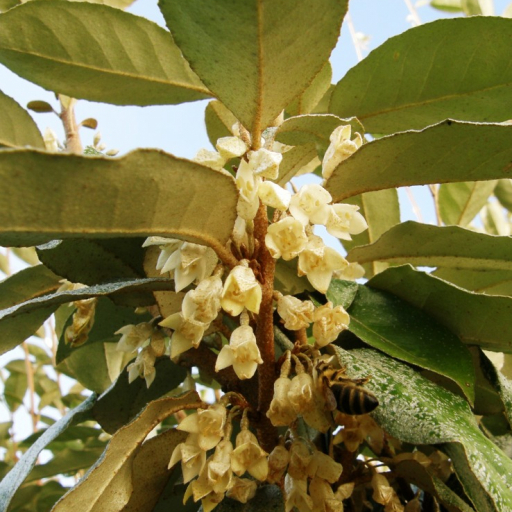
- 🍃 Metallic Foliage: The leaves are leathery and oval, featuring a glossy dark green top and a stunning, stippled silver underside that "flashes" when the wind blows.
- 🔔 Hidden Blooms: In late autumn, it produces tiny, creamy-white, bell-shaped flowers. They are easy to miss visually because they hide under the leaves, but their intense fragrance is unmistakable.
- ✨ Speckled Stems: Look closely at the new growth and you'll see a unique "scurfy" texture—tiny brown and silver scales that look like the plant has been dusted with metallic glitter.
🏡 In Your Garden
- 🌬️ Coastal Champion: This plant is virtually bulletproof against salt spray and gale-force winds. It is the gold standard for seaside hedging because its tough leaves act as a natural windbreak without getting "burnt" by salt.
- ✂️ The Perfect Screen: Because it grows rapidly and responds exceptionally well to heavy pruning, it can be shaped into a tight, formal hedge or left to grow into a dense, informal privacy barrier.
- 🌱 Nitrogen Fixer: Unlike many garden shrubs, Elaeagnus has a special relationship with soil bacteria that allows it to "fix" nitrogen from the air, meaning it can thrive even in poor, sandy, or depleted soils.
⚠️ Safety & Toxicity
- ✅ Generally Safe: This plant is considered non-toxic to humans, dogs, and cats. It is a very "family-friendly" choice for high-traffic areas.
- 🧤 Pruning Note: While this specific hybrid is much smoother than its parent species, older branches can occasionally develop blunt, thorn-like spurs. It’s always a good idea to wear gardening gloves when doing heavy maintenance.
✨ Fun Fact
The silver scales on the leaves aren't just for decoration; they are specialized hairs called "trichomes." They act like tiny mirrors to reflect harsh sunlight and create a micro-climate on the leaf surface, helping the plant survive extreme heat and drought.

Detailed Care Instructions
To grow Elaeagnus × Submacrophylla plant, follow these steps:
- Select a suitable location: Choose a spot that receives full sun to partial shade. The plant can tolerate a range of soil types but prefers well-draining soil.
- Prepare the soil: Loosen the soil in the planting area and amend it with organic matter like compost or well-rotted manure to improve drainage and fertility.
- Planting: Dig a hole slightly larger than the root ball of the plant. Place the plant in the hole, ensuring that it is at the same level as it was in the container. Backfill the hole with soil and gently firm it around the plant.
- Watering: Give the plant a deep watering after planting to settle the soil and help the roots establish. Water regularly, especially during dry periods, to keep the soil moist but not waterlogged.
- Mulching: Apply a layer of organic mulch around the base of the plant after planting. Mulching helps retain moisture, suppresses weeds, and keeps the roots insulated.
- Pruning: Elaeagnus × Submacrophylla generally requires minimal pruning. However, you can shape and control the size of the plant by selectively pruning any unwanted or overgrown branches. Pruning is best done in late winter or early spring before new growth starts.
- Fertilizing: Apply a balanced fertilizer in early spring to promote healthy growth. Follow the instructions on the fertilizer packaging for application rates.
- Pests and diseases: Elaeagnus × Submacrophylla is generally resistant to pests and diseases. However, keep an eye out for aphids, spider mites, or scale insects. Treat infestations with appropriate insecticides or insecticidal soaps if necessary.
Remember to regularly monitor the plant's progress, provide adequate care, and adjust watering and fertilizing based on its needs. With proper care, your Elaeagnus × Submacrophylla plant should thrive and grow well.

Place in a bright room that is sun drenched almost all day. Or directly in a south-facing window.

To properly water this plant, it is important to understand its specific watering needs. When watering, be sure to water deeply and thoroughly, allowing the water to reach down to the roots. It is best to water in the early morning or late evening to avoid water evaporation during hot temperatures. Avoid overwatering, as this plant prefers well-draining soil and can be susceptible to root rot if kept too wet. Additionally, it is helpful to mulch around the base of the plant to help retain moisture in the soil.
- Choose a balanced fertilizer with equal parts of nitrogen, phosphorus, and potassium.
- Apply the fertilizer in early spring before new growth appears.
- Spread the fertilizer evenly around the base of the plant, avoiding direct contact with the stem.
- Use a rake or garden fork to lightly work the fertilizer into the top layer of soil.
- Water the plant thoroughly after fertilizing to help the nutrients reach the roots.
- Repeat the fertilization process once a year to maintain healthy growth.
To ensure proper growth and health of the Elaeagnus × Submacrophylla plant, it is recommended to use a well-draining soil mix that is rich in organic matter. The soil should have a pH level between 6.0 to 7.5, which is considered slightly acidic to neutral. It is also important to ensure that the soil is moist but not waterlogged, as waterlogged soil can lead to root rot and other problems. Adding in perlite or sand to the soil mix can help improve drainage.
When planting the Elaeagnus × Submacrophylla plant, it is important to ensure that the hole is large enough to accommodate the root ball without bending or breaking any of the roots. Once planted, it is recommended to water the plant thoroughly and add a layer of mulch around the base of the plant to help retain moisture and prevent weed growth. Regular fertilization with a balanced fertilizer is also important to ensure healthy growth.
To propagate this plant, take a cutting from the desired portion of the plant. Use sharp, clean pruning shears or a knife to make the cut. Remove any leaves from the lower part of the cutting, leaving only the top few leaves. Dip the cut end of the cutting into a rooting hormone powder, then plant the cutting in soil or a rooting medium. Keep the soil consistently moist, but not waterlogged, and place the cutting in a bright, indirect light. It may take several weeks to several months for the cutting to root and begin to grow.








