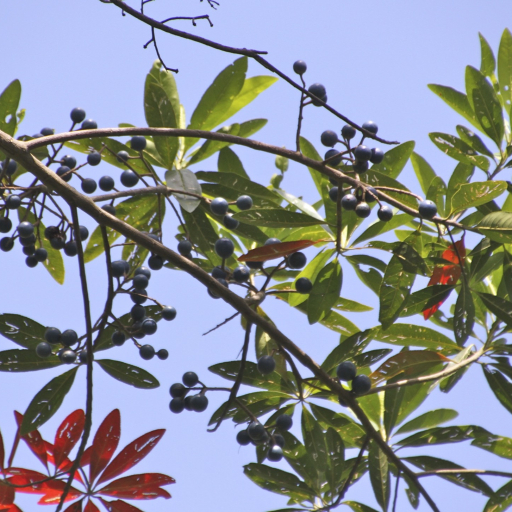
Plant Overview
Often called the Blue Marble Tree or Blue Quandong, this Australian rainforest giant is a true showstopper. Known for its incredible iridescent fruit that looks more like a polished gemstone than something grown in nature, it has long been a favorite in tropical landscapes. In its native habitat, it plays a vital role in the ecosystem, providing a feast for fruit-eating birds like the Wompoo Fruit-dove.
🔍 How to Identify
- 🔵 The Fruit: The most recognizable feature is the perfectly spherical, bright metallic blue fruit. This color is unique because it isn't caused by pigment, but by the physical structure of the fruit's skin reflecting light.
- 🍂 The Foliage: The leaves are long, glossy, and have slightly serrated edges. A key identifying trait is that old leaves turn a brilliant, fiery red just before they drop, creating a beautiful contrast against the green canopy.
- 🔔 The Flowers: In spring, the tree produces clusters of delicate, creamy-white flowers. They are bell-shaped and feature distinctively fringed petals, looking almost like tiny, shredded lace lampshades.
🏡 In Your Garden
- 🌳 Space Requirements: While beautiful, this is a fast-growing tree that can reach massive heights. It often develops impressive "buttress roots" (wide, plank-like roots at the base), so it needs plenty of room away from pipes, paths, or foundations.
- 💧 Thirst for Life: Coming from the rainforest, the Blue Marble Tree loves consistent moisture and high humidity. It isn't very drought-tolerant, especially when young, so keeping the soil mulched and damp is the key to a happy tree.
⚠️ Safety & Toxicity
- 🟢 Non-Toxic: The fruit of the Elaeocarpus grandis is generally considered non-toxic to humans and pets.
- 👄 Palatability: While the thin layer of flesh is technically edible, it is often quite sour and fibrous. The main "danger" is the hard, pitted seed inside, which can be a choking hazard for dogs or small children if they try to swallow the fruit whole.
✨ Fun Fact
The "stones" or pits inside the fruit are incredibly ornate and hard. They are closely related to the Rudraksha seeds used in India to make prayer beads and jewelry. Because they are so durable, they can last for decades as natural ornaments!

Detailed Care Instructions








