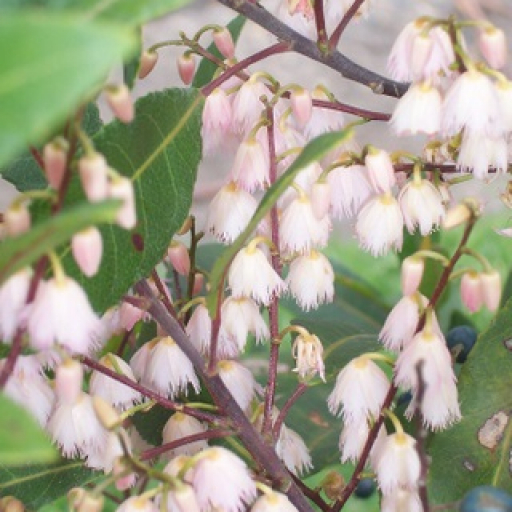
Plant Overview
Known affectionately as the "Blueberry Ash," this Australian native is a showstopper in any temperate or subtropical garden. It earns its name from the brilliant, metallic-blue berries that decorate its branches, but it is perhaps best loved for its "fairy-skirt" blossoms. This hardy evergreen serves as a versatile backbone for landscapes, offering a changing palette of colors throughout the seasons.
🔍 How to Identify
- 🌸 Fringed Flowers: Delicate, bell-shaped white or pale pink blossoms that look like tiny, shredded tutus or silk tassels.
- 🫐 Bejeweled Berries: Hard, round, electric-blue fruits that persist on the branches long after the flowers have faded, providing a striking winter display.
- 🍃 Telltale Foliage: Glossy, dark green leaves with serrated edges; uniquely, a few old leaves will turn a brilliant, fiery red before falling, creating a permanent "autumn" look within the green canopy.
🏡 In Your Garden
- 🐦 A Wildlife Sanctuary: This tree is a magnet for local biodiversity; honeyeaters are drawn to the nectar-rich flowers, while fruit-eating birds like the Pied Currawong and King Parrot adore the blue berries.
- 🪴 Hardy & Versatile: While it naturally thrives in moist gullies, it is surprisingly tough. It handles coastal winds and light frost well, though it prefers a spot with consistent moisture to reach its full, lush potential.
- 🧱 Non-Invasive Roots: Unlike many other trees of its size, the Blueberry Ash has a relatively polite root system, making it a popular choice for planting near fences, pools, or as a dense privacy screen.
⚠️ Safety & Toxicity
- 🐾 Pet & Child Friendly: The Blueberry Ash is generally considered non-toxic and safe for planting in family gardens where pets and children play.
- 🚫 Not for Consumption: Despite the tempting name and "blueberry" appearance, the fruit is very hard with a large woody pit and is not considered edible for humans. It is best left for the birds!
✨ Fun Fact
The Regent Bowerbird is famously obsessed with the color blue. Male birds have been observed collecting the fallen berries of the Blueberry Ash to decorate their elaborate stick-built bowers to impress potential mates!

Detailed Care Instructions
To grow Elaeocarpus Reticulatus, also known as the Blueberry Ash, follow these steps:
- Climate and soil: This plant is native to Australia and thrives in temperate to subtropical climates. It prefers well-draining soil with a slightly acidic to neutral pH.
- Planting location: Choose a sunny spot in your garden that gets at least 6 hours of direct sunlight per day. The Blueberry Ash can also tolerate partial shade.
- Planting time: Plant the Elaeocarpus Reticulatus in the spring or fall, avoiding extreme heat or cold.
- Digging the hole: Dig a hole that is two to three times wider and as deep as the plant's nursery container. Loosen the soil in the hole to promote root growth.
- Planting: Gently remove the plant from its container and place it in the center of the hole. Backfill the hole with soil, lightly firming it around the plant. Make sure to avoid covering the trunk or stem.
- Watering: Water the plant thoroughly after planting to settle the soil. Afterward, water regularly, keeping the soil consistently moist but not waterlogged. Reduce watering during the cooler months.
- Mulching: Apply a layer of organic mulch around the base of the plant, maintaining a 2-3 inch thickness. Mulching helps retain moisture and prevents weed growth.
- Pruning: Prune the Blueberry Ash lightly to maintain shape and remove any dead or damaged branches. However, avoid heavy pruning or excessive trimming, as it can hinder flowering and fruiting.
- Fertilizing: Apply a balanced, slow-release fertilizer in spring and early summer to provide essential nutrients for growth and flowering.
- Pests and diseases: Blueberry Ash is generally resistant to pests and diseases. However, keep an eye out for aphids, scale insects, or fungal infections, and treat with appropriate organic or chemical controls if necessary.
Remember to check with local gardening resources or consult a professional for specific guidance based on your climate and conditions.

Place in a bright room that is sun drenched almost all day. Or directly in a south-facing window.

To water this plant, it is important to ensure that the soil around the roots is well-moistened, but not excessively wet. This can be achieved by watering deeply every 7-10 days, or more frequently if the plant is growing in a particularly dry or hot location. When watering, aim to soak the soil to a depth of at least 6 inches, and be careful not to wet the leaves or foliage, as this can encourage fungal diseases. In addition to regular watering, it is important to ensure that the plant has good drainage, as stagnant water around the roots can also lead to root rot and other issues. Overall, monitoring soil moisture levels and adjusting watering frequency as needed is key to keeping this plant healthy and thriving.
To fertilize this plant, begin by choosing a high-quality fertilizer that is specifically formulated for acid-loving plants. Mix the fertilizer with water according to the manufacturer's instructions, and use a watering can or sprayer to apply it to the soil around the base of the plant. Be careful not to get any fertilizer on the foliage, as this can cause damage. Repeat the fertilization process every 4-6 weeks during the growing season, being careful not to over-fertilize.
For Elaeocarpus Reticulatus plant, it is recommended to use a well-draining soil mix that is also rich in organic matter. The soil should ideally be slightly acidic to neutral with a pH range of 5.5 to 7.5. The plant prefers a soil that is moist but not waterlogged, so it is important to ensure that the soil is well-aerated. It is also recommended to add a layer of organic mulch to the soil to help retain moisture and prevent weed growth. Additionally, adding slow-release fertilizer to the soil mix can help to promote healthy growth and development of the plant.
One way to propagate this plant is by taking stem cuttings. Choose a healthy stem from the parent plant and make a clean cut with a sharp knife, making sure the cutting is at least 5-8cm in length. Remove any leaves from the lower part of the stem and dip the cut end into rooting hormone powder. Plant the cutting into a pot filled with a well-draining soil mix, and water thoroughly. Cover the pot with a clear plastic bag or a dome to maintain high humidity, and keep the soil moist. After a few weeks, new growth should appear on the cutting, which means it has successfully rooted. Gradually expose the plant to more light and reduce humidity, and eventually transplant it into a larger container or into the ground.








