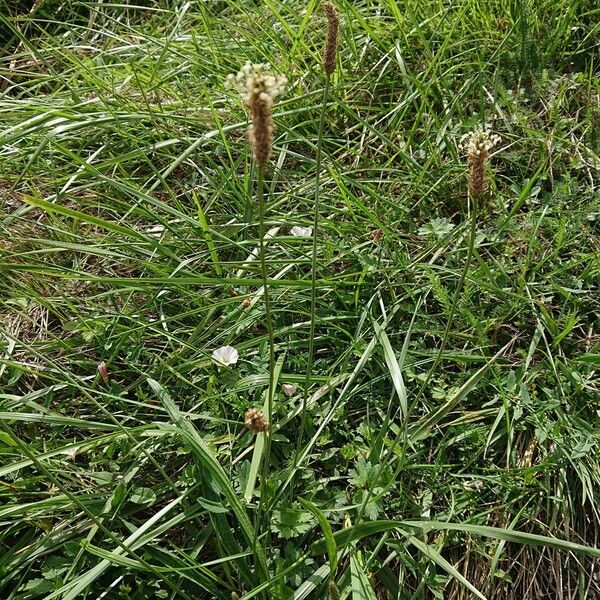
Plant Overview
Known as the Elegant Spikerush, Eleocharis elegans is the minimalist architect of the wetland world. Native to the tropical regions of Central and South America, this perennial sedge creates a striking vertical accent in water features, resembling a cluster of sleek, green knitting needles. Its name "elegans" is well-earned, as it brings a sophisticated, clean structure to the often-wild edges of ponds and marshes.
🔍 How to Identify
- 🌿 The Stems (Culms): Unlike many plants, this sedge is essentially "leafless." It features bright green, cylindrical, hollow stems that grow in dense, upright clumps, typically reaching 1 to 3 feet in height.
- 🌾 The Spikelet: At the very tip of every stem sits a single, solitary flower head. This oblong, brownish-tan "spike" is where the plant gets its common name, the Spikerush.
- 🍂 Base Sheaths: If you look closely at the bottom of the plant, you’ll see the "leaves" have been reduced to thin, papery, reddish-brown sheaths that wrap tightly around the base of the stems.
🏡 In Your Garden
- 💧 A Water Lover: This is an obligate wetland plant, meaning it doesn't just like water—it needs it. It is most at home in the "marginal" zone of a pond (the shallow shelf) where its roots can stay permanently submerged in up to 6 inches of water.
- ☀️ Structural Strength: While it can tolerate partial shade, full sun is required to keep the stems stiff and upright. In low-light conditions, the "elegance" fades as the stems become weak and prone to flopping over into the water.
- 🌱 Containment: Because it spreads via rhizomes (underground runners), it can be an enthusiastic grower. Planting it in a submerged pot or bucket is a smart way to keep it from taking over the entire shoreline.
⚠️ Safety & Toxicity
- ✅ Non-Toxic: Eleocharis elegans is generally considered safe and non-toxic for humans, dogs, and cats.
- 🦆 Ecosystem Support: It is a "safe" plant for local wildlife; it provides excellent underwater cover for tadpoles and small fish, while the stems offer a perfect perching spot for dragonflies to rest and hunt.
✨ Fun Fact
The stems of the Spikerush are multitasking marvels! Because the plant has no traditional flat leaves to capture sunlight, the stems themselves have evolved to contain all the chlorophyll, performing 100% of the plant's photosynthesis.

Detailed Care Instructions
| Humidity | Normal |
| Difficulty | Medium |
| Hibernation | Cold Period |
| Temperature | 18°C - 25°C |
To grow Eleocharis elegans, also known as dwarf hairgrass, you can follow these steps:
- Choose a suitable aquarium or planting container: Make sure you have an aquarium or a planting container with proper lighting and suitable conditions for aquatic plants.
- Prepare the substrate: Use nutrient-rich substrate specifically designed for freshwater aquarium plants. This will provide essential nutrients for the plant's growth.
- Plant the hairgrass: Spread the hairgrass evenly across the substrate. Ensure that the roots are well buried in the substrate while keeping the sprouting leaves above the substrate.
- Provide sufficient lighting: Hairgrass requires bright lighting to grow properly. Ideally, use high-intensity lighting of around 3-4 watts per gallon or LED lights specifically designed for aquatic plants.
- Maintain proper water conditions: Hairgrass prefers slightly acidic to neutral water with a pH range of 6.5-7.5. The water temperature should be around 72-82°F (22-28°C). Ensure that the water is not too hard, as soft water is more suitable for hairgrass growth.
- Supplement with CO2: Adding carbon dioxide (CO2) to the aquarium or planting container can encourage the growth of hairgrass. You can use a CO2 system or opt for liquid carbon supplements.
- Fertilize regularly: Use liquid or root fertilizers to provide essential nutrients like nitrogen, phosphorus, and potassium. Regularly fertilizing the hairgrass will promote healthy growth.
- Perform regular maintenance: Trim the hairgrass regularly to maintain the desired length and shape. Remove any dead or decaying leaves to prevent algae growth.
- Avoid fish or other species that may damage hairgrass: Some fish or invertebrates like shrimp can uproot or damage the hairgrass, so choose compatible tankmates to ensure the plants thrive.
- Be patient: Hairgrass can take some time to establish and grow. Be patient and provide consistent care, and you will see healthy growth over time.
By following these steps, you can successfully grow Eleocharis elegans in your aquarium or planting container.
To water this plant, you should first check the soil to make sure it is dry before watering. The frequency of watering will depend on the temperature and humidity of the environment, as well as the size of the container the plant is in. When watering, be sure to pour water directly onto the soil and avoid getting water on the leaves or stems of the plant. The water should be allowed to drain out of the bottom of the container so that the plant does not sit in water, which can cause root rot. If the plant is in a container without drainage holes, be careful not to overwater it and monitor the soil closely.
For optimal growth of this plant, it is recommended to provide it with a balanced liquid fertilizer once a week during the growing season. Dilute the fertilizer according to the instructions on the package and apply it directly to the water around the base of the plant. Avoid over-fertilization, which can lead to algae growth and harm to the plant. It is also important to regularly monitor the water quality and replace a portion of the water on a weekly basis to keep the plant healthy.
The optimal soil type and composition for the Eleocharis Elegans plant should be well-draining and nutrient-rich, containing a mixture of organic matter and minerals. It should have a slightly acidic to neutral pH level between 6.0 and 7.5. Additionally, the soil should be heavy enough to provide stability for the plant's root system but loose enough to allow for proper aeration and water circulation. When planting, it is important to ensure that the soil is evenly moist and not too wet, as this may lead to root rot and other fungal infections. A substrate specifically designed for aquatic plants is highly recommended for best results.
Eleocharis Elegans plant can be propagated through a process known as division. This involves separating the plant into smaller sections, each with its own roots and foliage, which can then be replanted and grown into new plants. To achieve this, gently lift the plant out of the soil, being careful not to damage the roots or foliage. Use a sharp, sterile knife or pair of scissors to carefully cut the plant into smaller sections, each containing at least one healthy root system and several stems with foliage. Replant these sections in appropriate soil, making sure that the roots are covered and the foliage is exposed to sunlight. Water the newly divided plants regularly and monitor their growth closely, ensuring that they are receiving appropriate light, water, and nutrients. Over time, the new sections of the plant will grow into healthy, mature plants, which can be propagated further if desired.








