Plant Overview
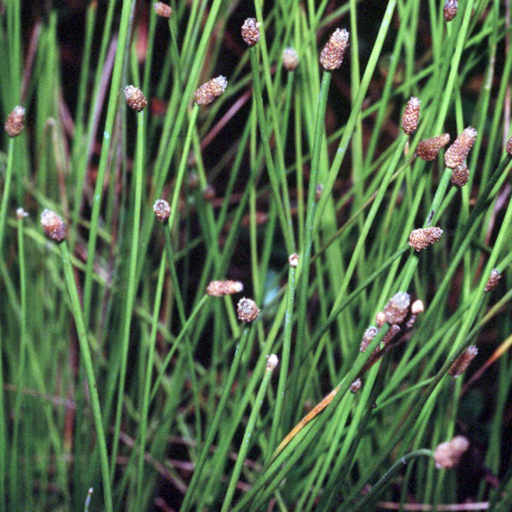
Known affectionately as the Blunt Spikerush, this charming wetland native looks like a collection of knitting needles topped with tiny, toasted marshmallows. It is a master of the "mud-life," thriving in places where other plants would literally drown. Often found bordering quiet ponds or decorating the edges of marshes, it acts as a natural fringe that bridges the gap between land and water.
🔍 How to Identify
- 🌿 The Stems: Look for bright green, leafless, straw-like stems that grow in dense, upright tufts. They are soft to the touch and usually reach about 4 to 18 inches in height.
- 🟤 The "Spike": At the very tip of each stem sits a single, egg-shaped flower head (spikelet). It is blunt and rounded—hence the name obtusa—and turns a rich cinnamon brown as it matures.
- 💧 The Base: If you look closely at the bottom of the stem, you won't find traditional leaves; instead, you’ll see small, reddish-purple sheaths wrapped tightly around the base.
🏡 In Your Garden
- 🌱 The "Wet Feet" Rule: This plant is an obligate wetland species, meaning it doesn't just like water—it requires it. It is the perfect choice for the "bog zone" of a backyard pond or a rain garden that stays consistently soggy.
- 🌾 Soil & Stability: It prefers heavy clay or muddy silts. Because it grows in tight clumps, it’s excellent for preventing soil erosion along a shoreline, acting as a living anchor for shifting mud.
- ☀️ Sun Seeker: While it can handle a bit of afternoon shade, it produces the most vibrant green stems and prolific seed heads when basked in full sun.
⚠️ Safety & Toxicity
- ✅ Status: Generally Non-Toxic.
- 🐾 Details: Eleocharis obtusa is not known to be poisonous to humans, dogs, cats, or livestock. In fact, its seeds provide a vital food source for migrating waterfowl, making it a "friendly" addition to any ecosystem.
✨ Fun Fact
Spikerushes are often confused with grasses, but they belong to the Sedge family. Botanists have a famous rhyme to tell them apart: "Sedges have edges, rushes are round, and grasses are hollow right down to the ground." While Eleocharis stems are actually round, they are classified as sedges because of the unique way their flowers and fruits are structured!

Detailed Care Instructions
To grow Eleocharis Obtusa (commonly known as Dwarf Hairgrass) plant, you can follow these steps:
- Select the right substrate: Eleocharis Obtusa thrives best in fine-grained substrate like aquatic soil or sand. Ensure that the substrate is at least 2 inches deep for good root development.
- Provide ample lighting: This plant requires bright lighting conditions to promote healthy growth. Use full-spectrum aquarium lights or LED lights with a color temperature of around 6500K.
- Maintain proper water parameters: Eleocharis Obtusa prefers slightly acidic to neutral water with a pH range of 6-7.5. The temperature should be in the range of 68-82°F (20-28°C). Regular water changes are necessary to keep the water clean and free from excess nutrients.
- Supplement with nutrients: Provide essential nutrients to the plant by adding a liquid fertilizer specifically formulated for aquarium plants. Carbon dioxide (CO2) injection can also enhance their growth.
- Planting technique: Separate the plant into smaller clumps and plant them about 1 inch apart in the substrate. Ensure that the roots are sufficiently buried to promote anchorage. Press the substrate gently around each plant to keep them in place.
- Maintain good water circulation: Eleocharis Obtusa grows better in well-circulated water. Use a filter or an air pump to maintain adequate water movement.
- Prune regularly: To encourage thick and dense growth, trim the plant regularly. Trim the leafy tops with sharp scissors and remove any dead or decaying plant material.
- Be patient: Eleocharis Obtusa can be slow to grow initially. It may take some time for it to adapt to the tank conditions and start growing vigorously. Provide consistent care and be patient with the growth process.
Remember to regularly monitor the health of the plant and make any necessary adjustments to the care routine. With proper care, Eleocharis Obtusa can create a beautiful carpeting effect in your aquarium.

Place in a bright room that is sun drenched almost all day. Or directly in a south-facing window.

Eleocharis Obtusa plant prefers to grow in a moist environment, so it's important to ensure that it receives an adequate amount of water. You can water this plant by pouring water into the soil directly, being careful not to disturb the plant's roots. Alternatively, you can mist the plant with water using a spray bottle, which can help to create humidity and keep the leaves looking fresh and healthy. It's important not to overwater the plant, as this can cause root rot and other issues. Instead, check the soil regularly and water only when the top layer feels dry to the touch. When watering, make sure to avoid getting water directly on the leaves, as this can cause damage and lead to mold or disease. Overall, a consistent and moderate watering schedule is key to keeping Eleocharis Obtusa healthy and thriving.
To fertilize this aquatic plant, you should use a balanced liquid fertilizer that contains nitrogen, phosphorus, and potassium. It is best to dilute the fertilizer with water according to the manufacturer's instructions.
Apply the fertilizer once a week during the growing season, which is typically from spring through summer. Be careful not to over-fertilize, as this can cause the plant to become stressed and susceptible to disease.
When applying the fertilizer, avoid getting any on the leaves or stems of the plant, as this can cause damage. Instead, pour the fertilizer directly into the water and allow it to distribute naturally.
In addition to fertilizing, make sure to maintain good water quality by performing regular water changes and keeping the tank clean. This will help to ensure that the plant stays healthy and thrives in its environment.
The Eleocharis Obtusa plant prefers a well-draining soil that is slightly acidic to neutral pH. It requires a soil that is rich in nutrients while being able to retain moisture without becoming waterlogged. A mix of sand, peat moss, and perlite or vermiculite is ideal for this plant. A layer of gravel at the bottom of the pot or container can help with drainage. It is important to keep the soil consistently moist, but not wet. Fertilizer can be added to the soil once a month during the growing season to promote healthy growth.
To propagate this plant, you can take a cutting from the healthy parent plant. Cut a stem that is at least 4 inches long and has a few leaves attached. Remove any leaves from the bottom half of the stem. Plant the stem cutting in a pot with a mix of soil and sand. Keep the soil moist and place the pot in a bright, indirect light location.
Alternatively, you can propagate Eleocharis Obtusa through division. Carefully remove the parent plant from its pot and gently separate the clumps. Plant the separated clumps in a pot with soil and sand mix. Keep the soil moist and place the pot in bright, indirect light location.
Propagation can be done all year round, but it's best to do it during the spring or summer. It's important to keep the soil moist and provide a bright location for the new plant. With proper care, the new plant should establish roots and start growing in a few weeks.








